Comunicar Design XI
Event
Conferences, exhibitions, masterclasses, workshops, author objects fair
Collaborative work with Leonor de Almeida and Marta Almeida
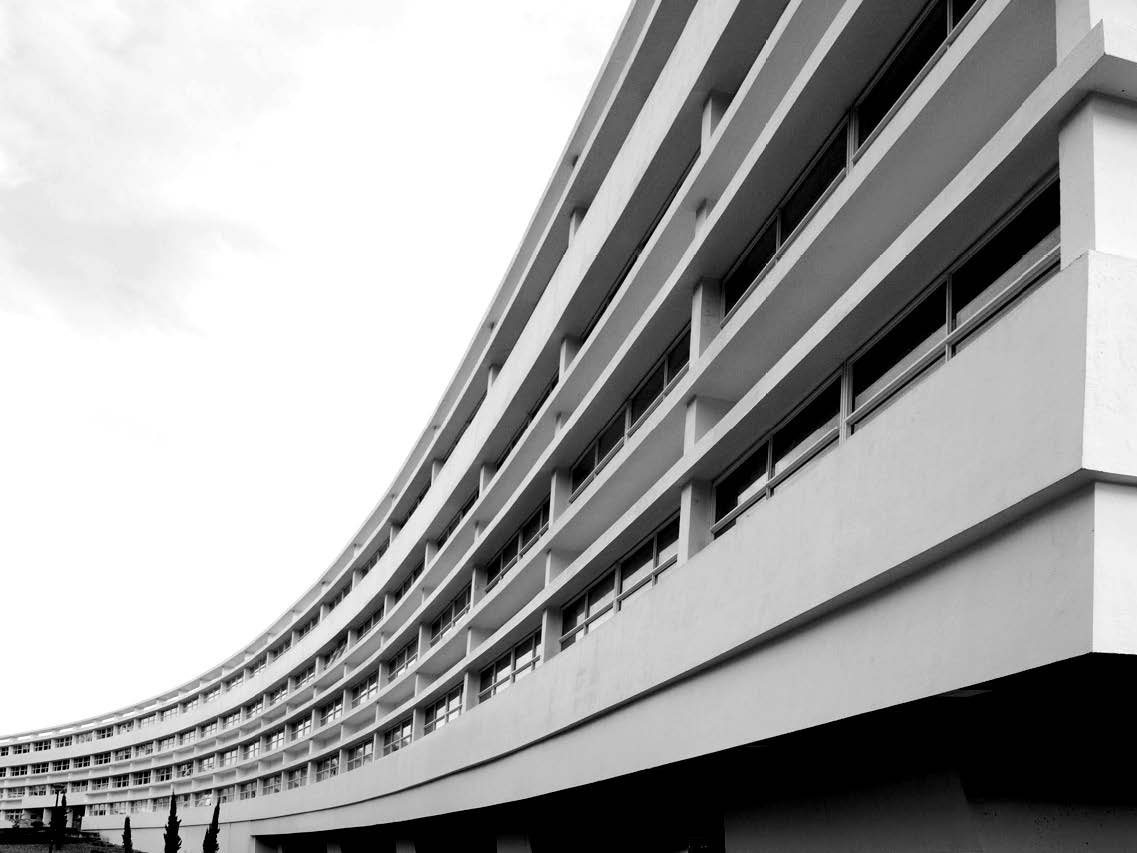
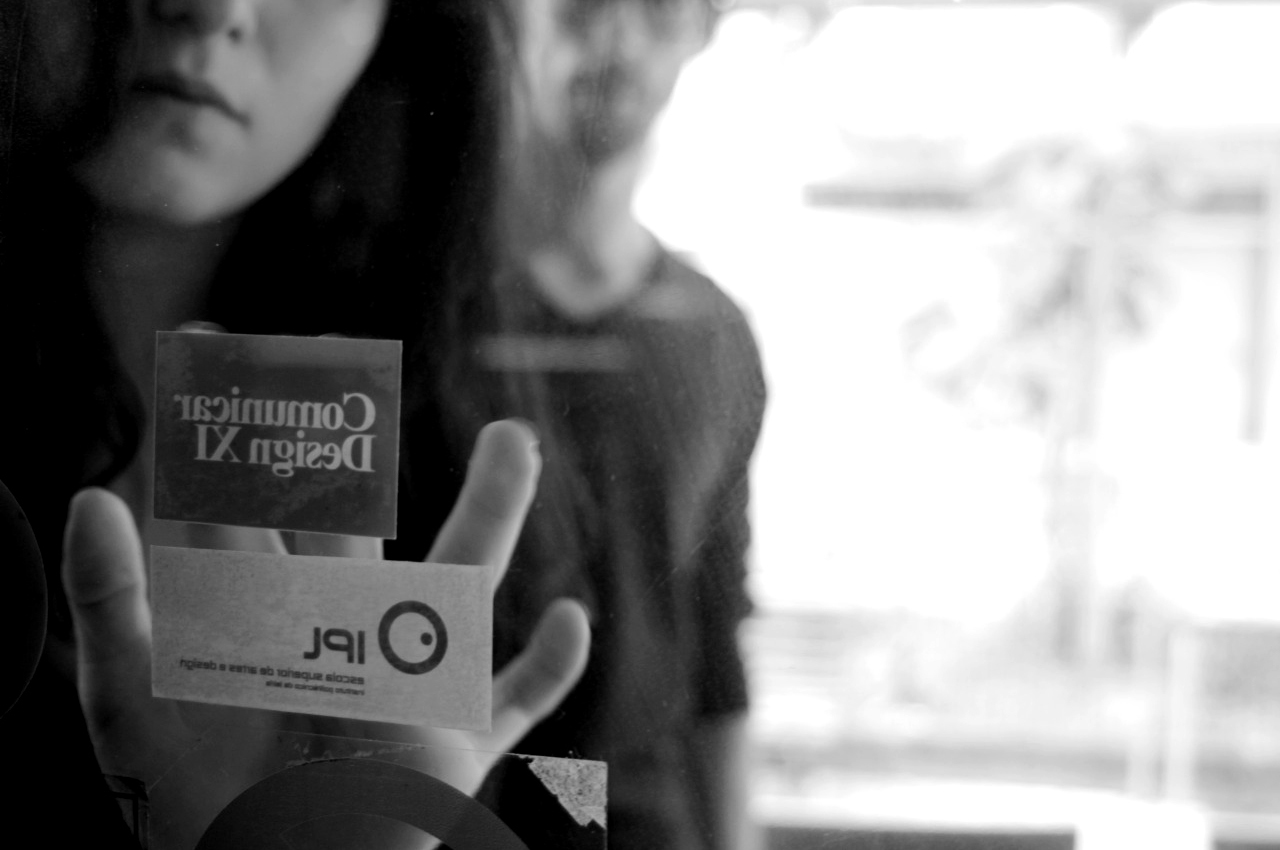
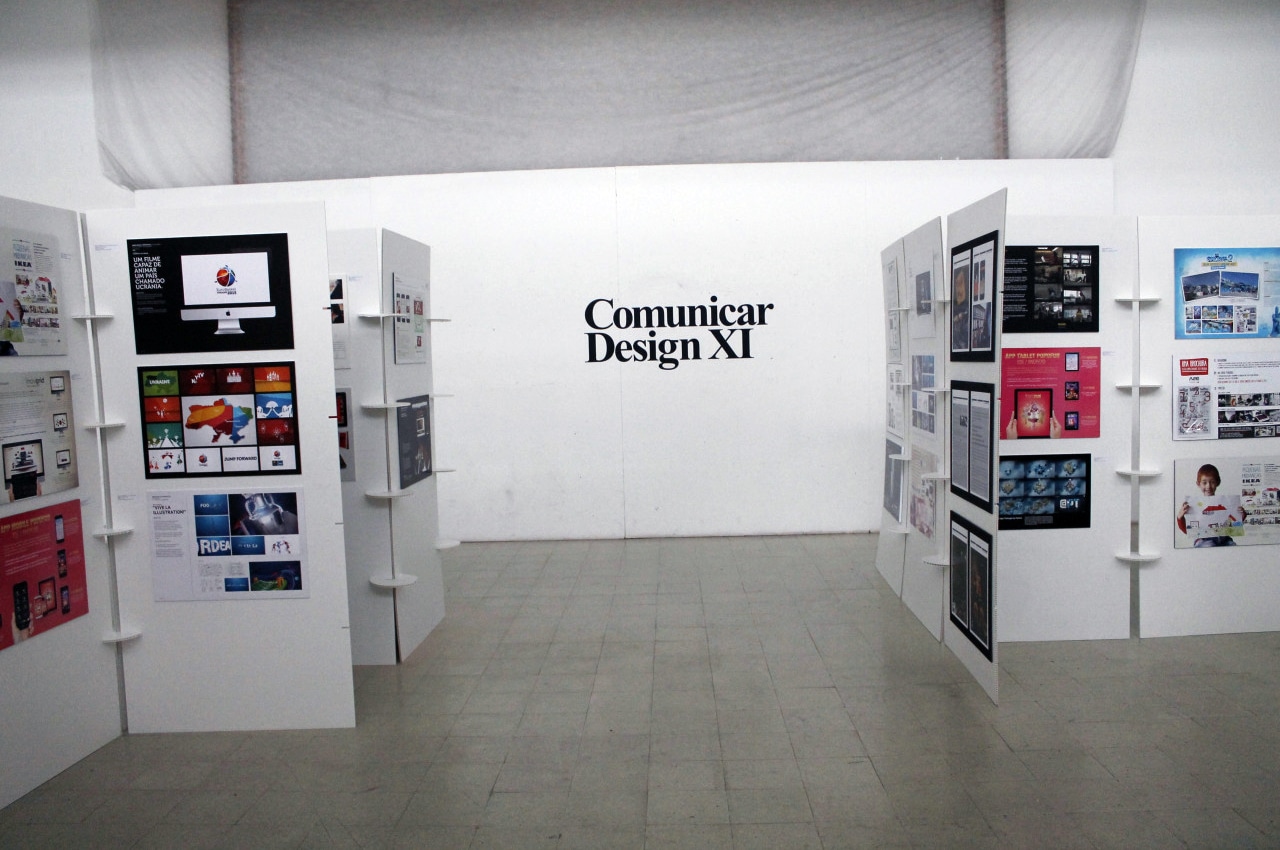
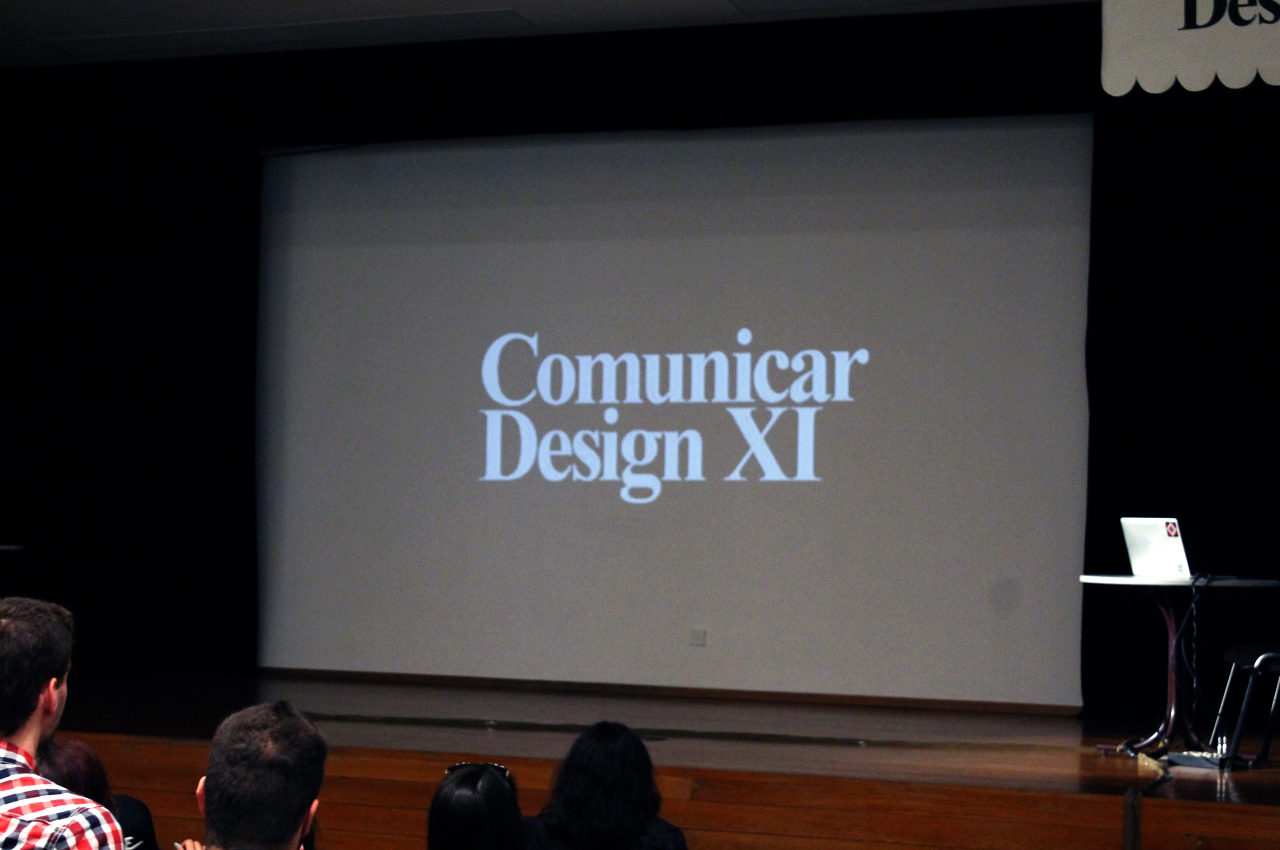
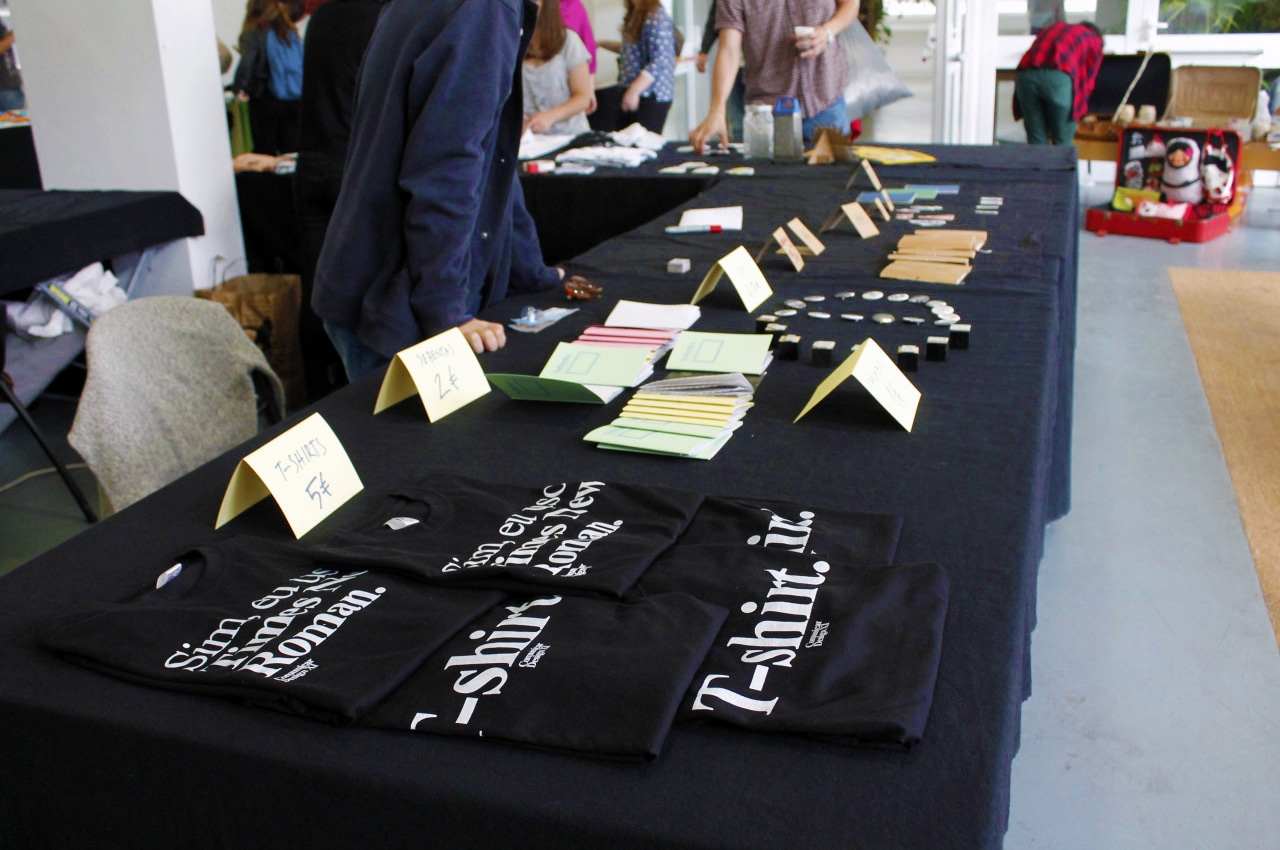
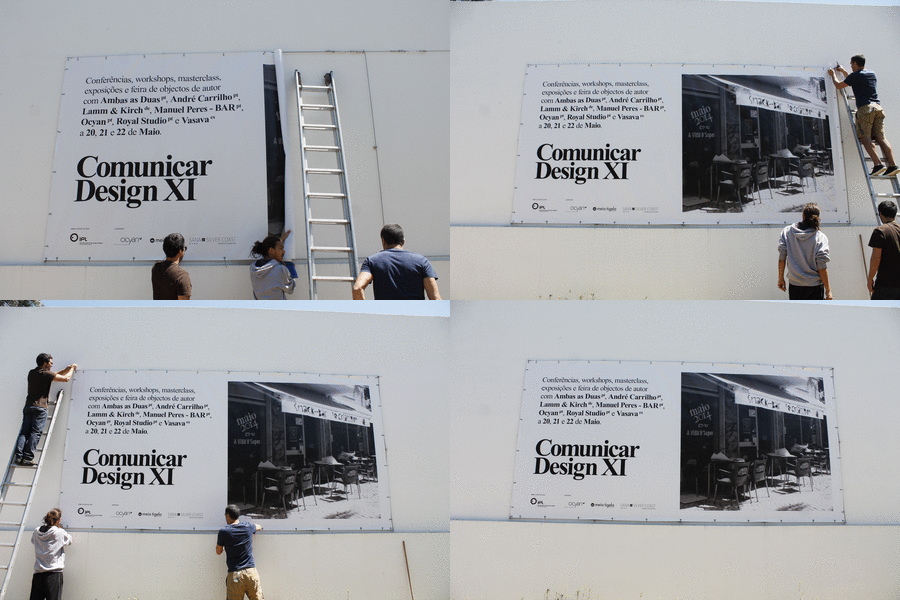
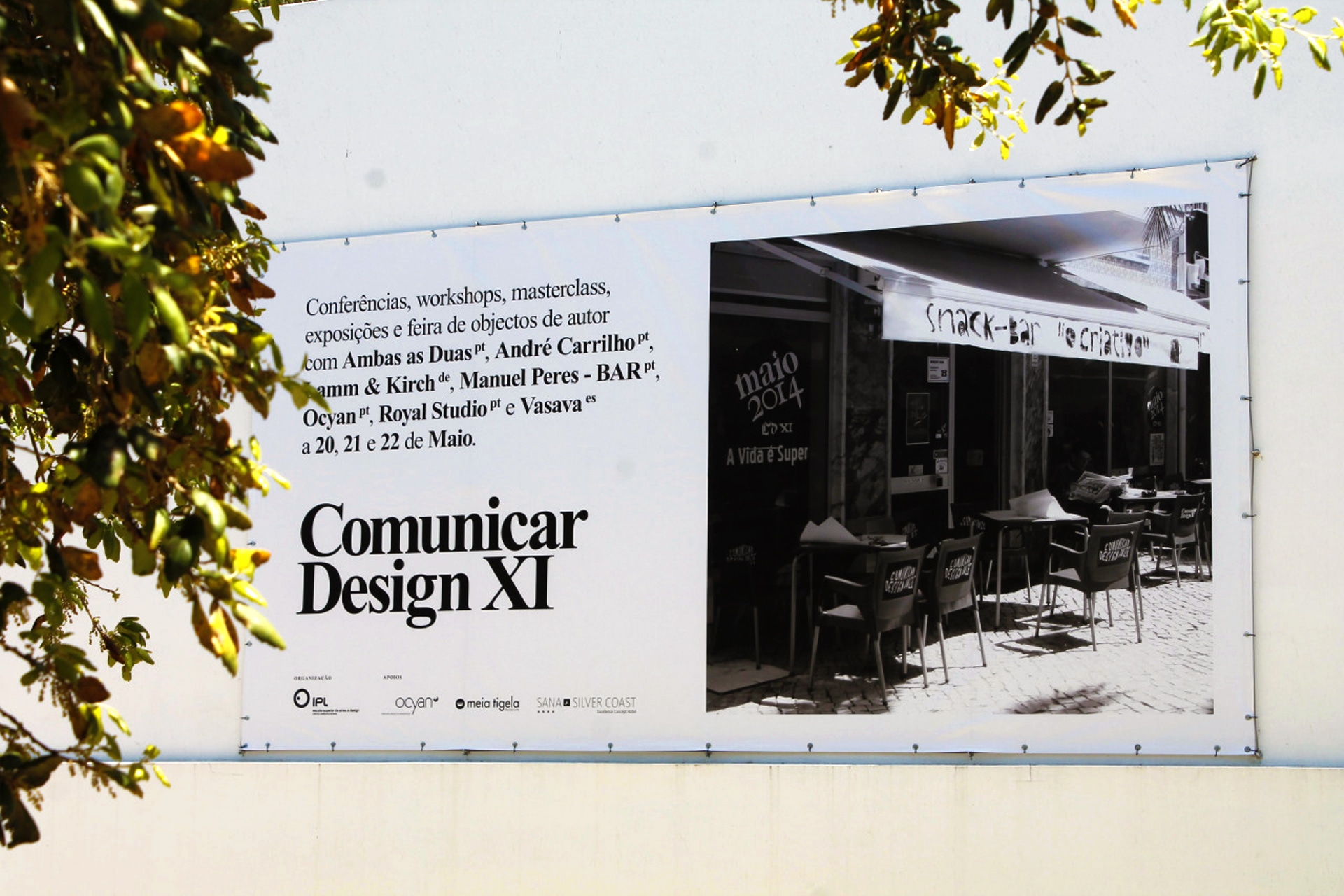
● Comunicar Design XI took place on 20, 21 and 22 May 2014 at ESAD.CR. Conferences, exhibitions, masterclasses, workshops and an author objects fair make up the programme of an event that is designed year after year to stimulate creativity and the sharing of experiences. It is an event organised by students and lecturers from the Graphic Design and Multimedia programme, aimed at reflecting on design, its processes and its players. The thematic and visual proposal that Leonor, Marta and I designed for this edition was the chosen one, following a competition among third‑year graphic design students.
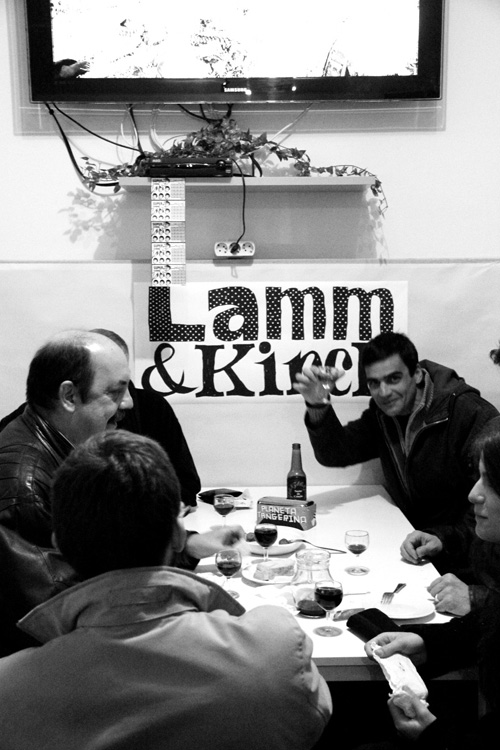
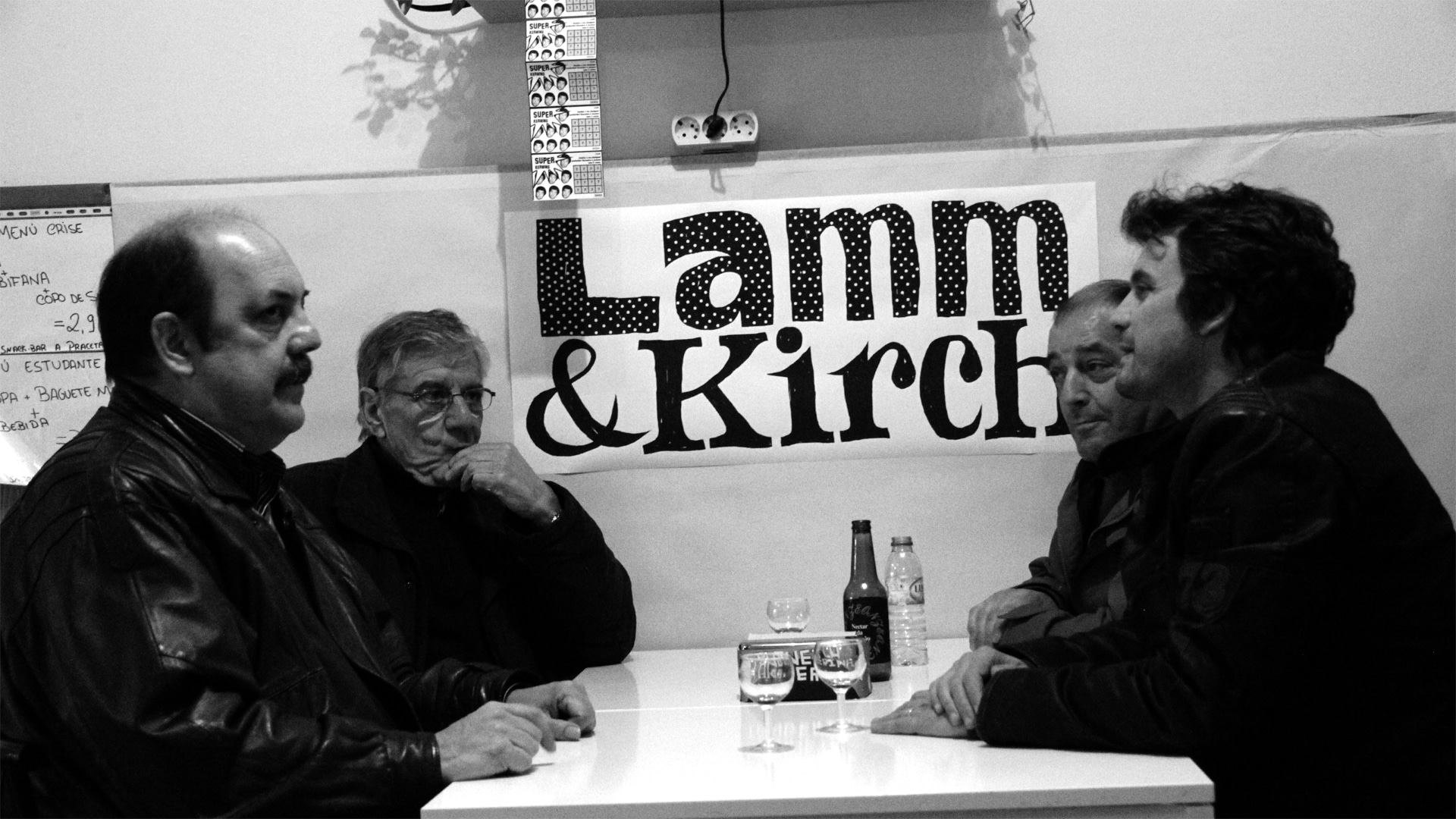
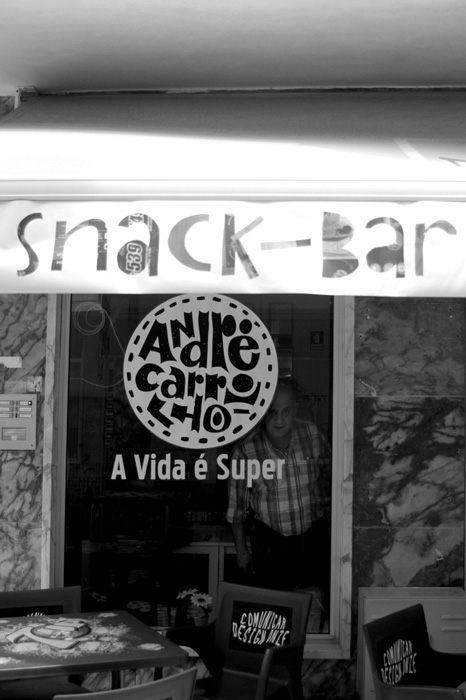
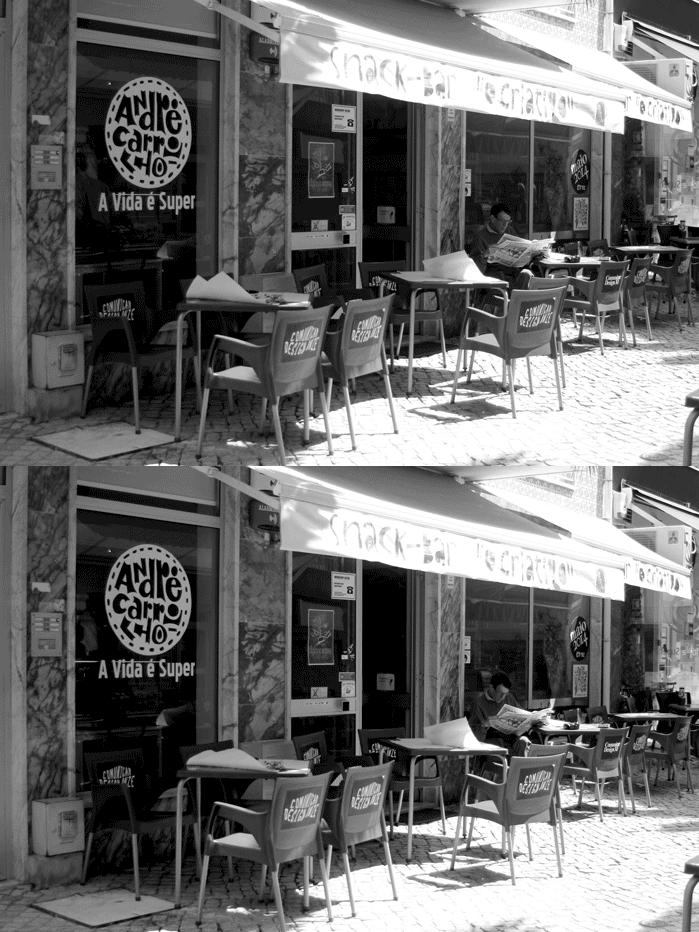
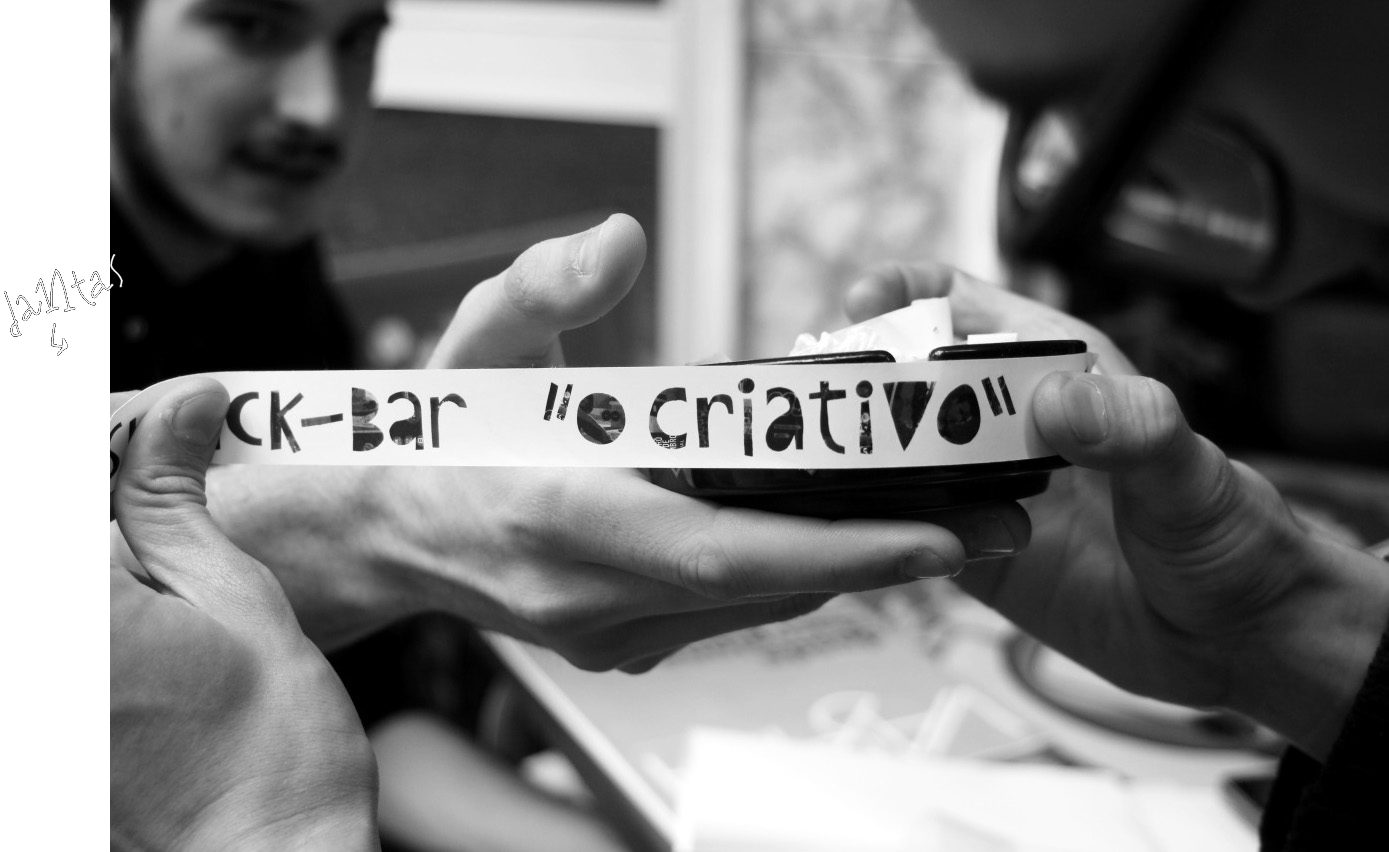
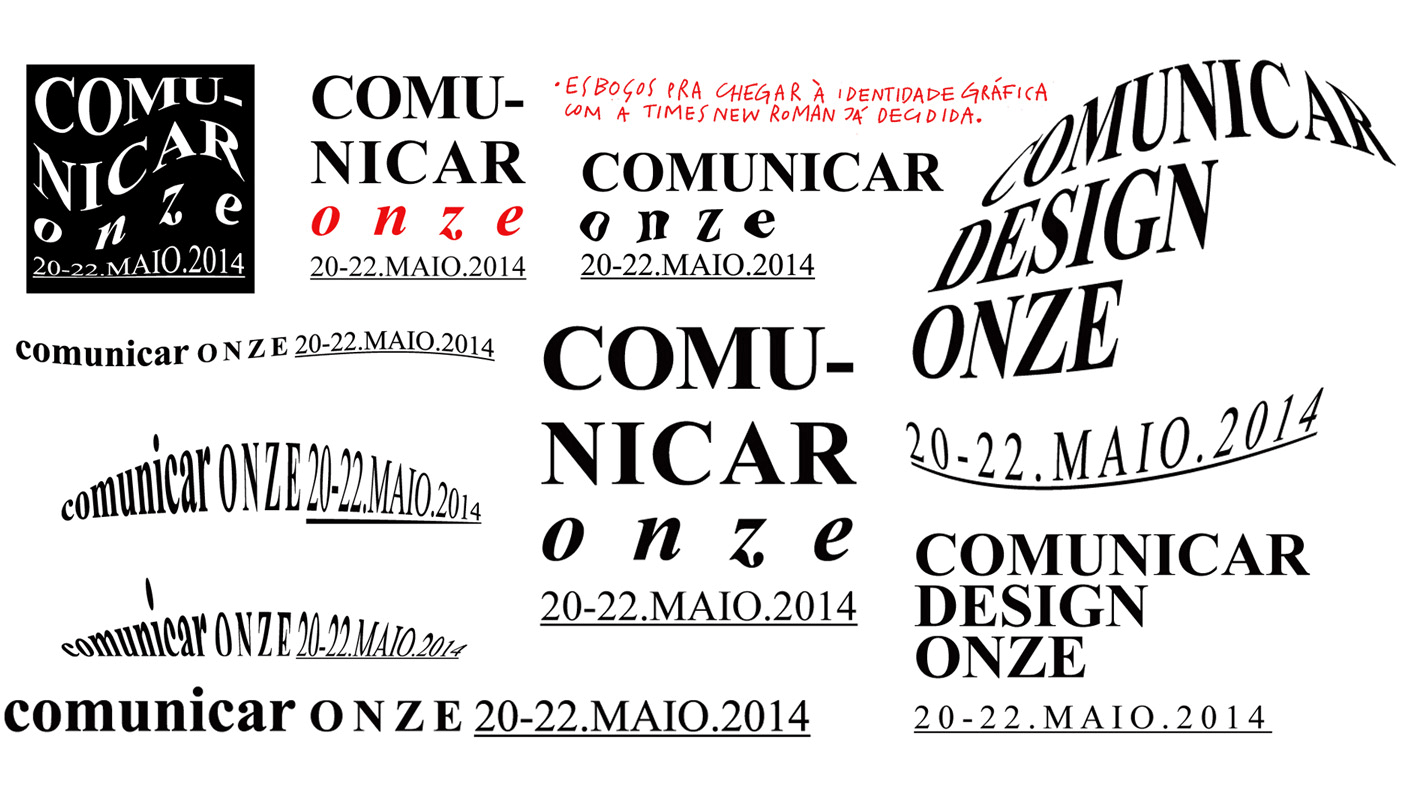
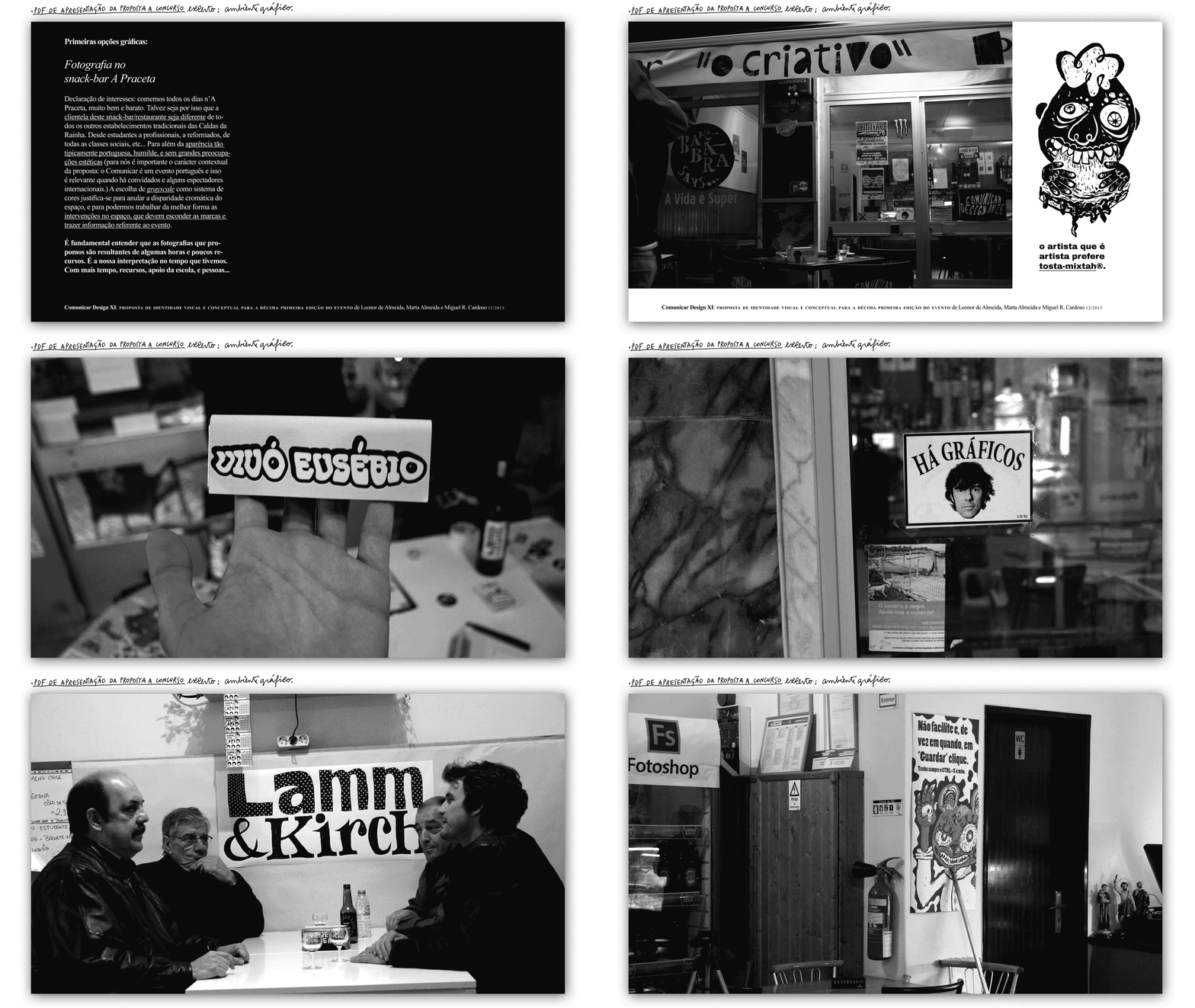
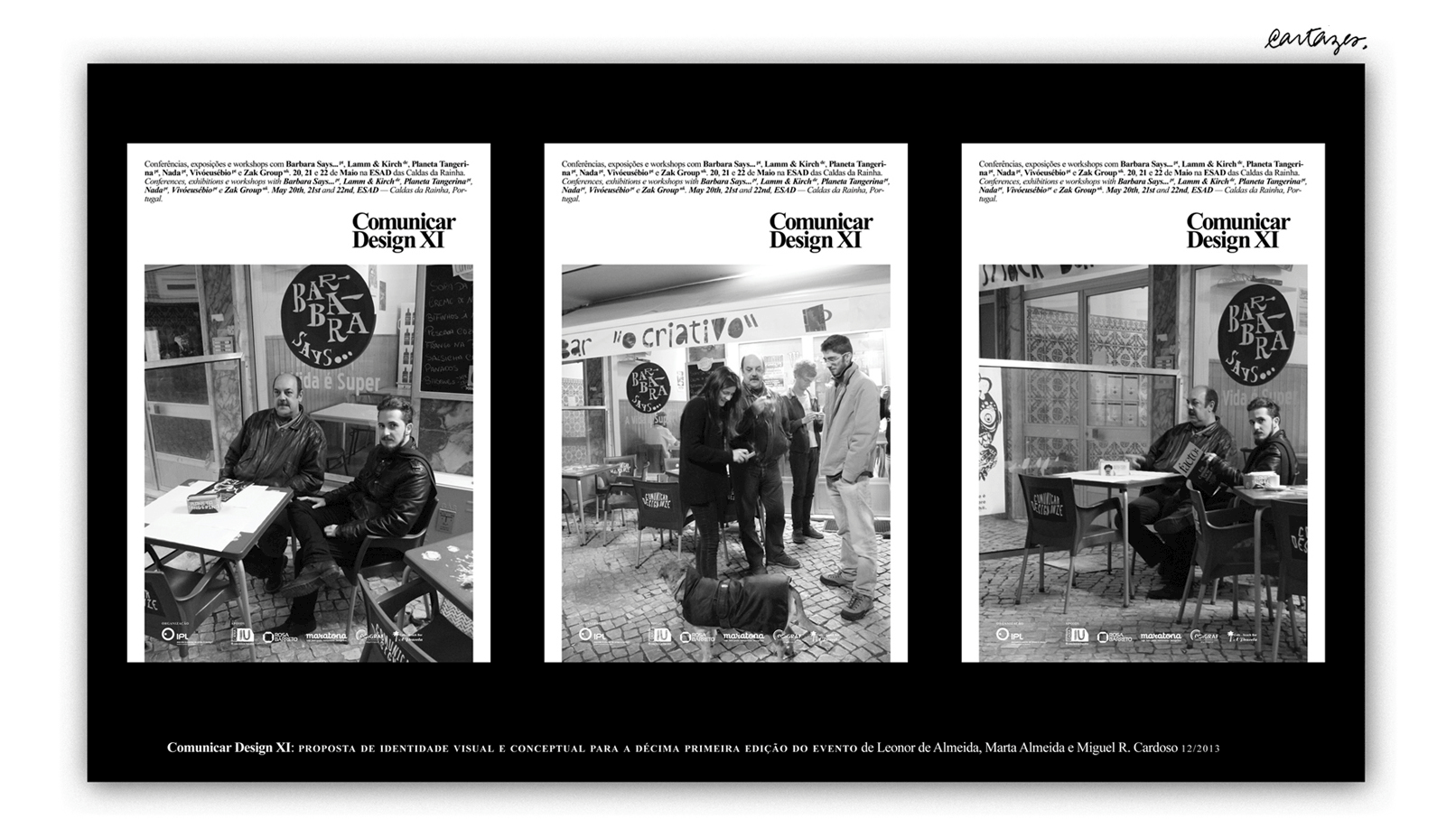
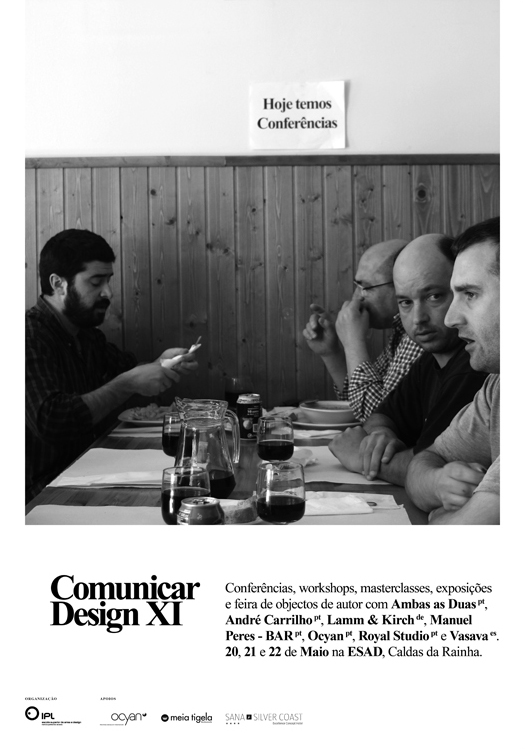
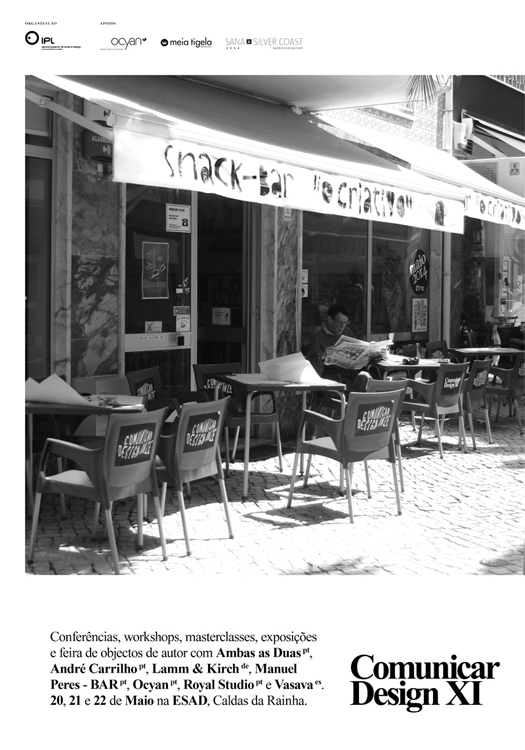
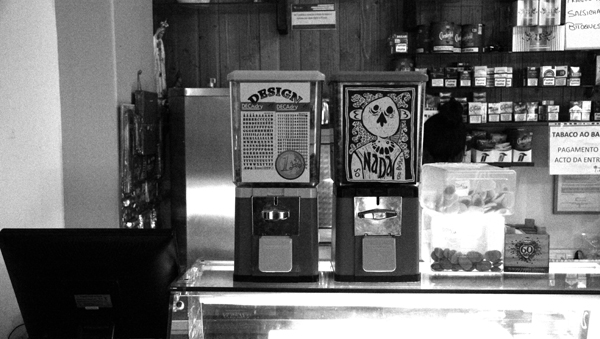
● What, after all, does communicating design mean? In a very literal interpretation of that expression, this year the event intends to strip itself of trends and stylistic currents — which are never consensual — in order to embrace what is common to all: the zero point, the blank page, the beginning of the process, brainstorming, debate... conversation! To reinforce this, we have drawn on the figure of a very Portuguese snack‑bar (because this contextual character is also relevant to us) as a space for creation. How many ideas, projects and decisions are not made in moments of relaxation and socialising? The remaining visual decisions consist mainly of the grey scale, and the forbidden Times New Roman. (Of course, this was written in 2014. In the second half of the decade, Times made a strong comeback in trends.)
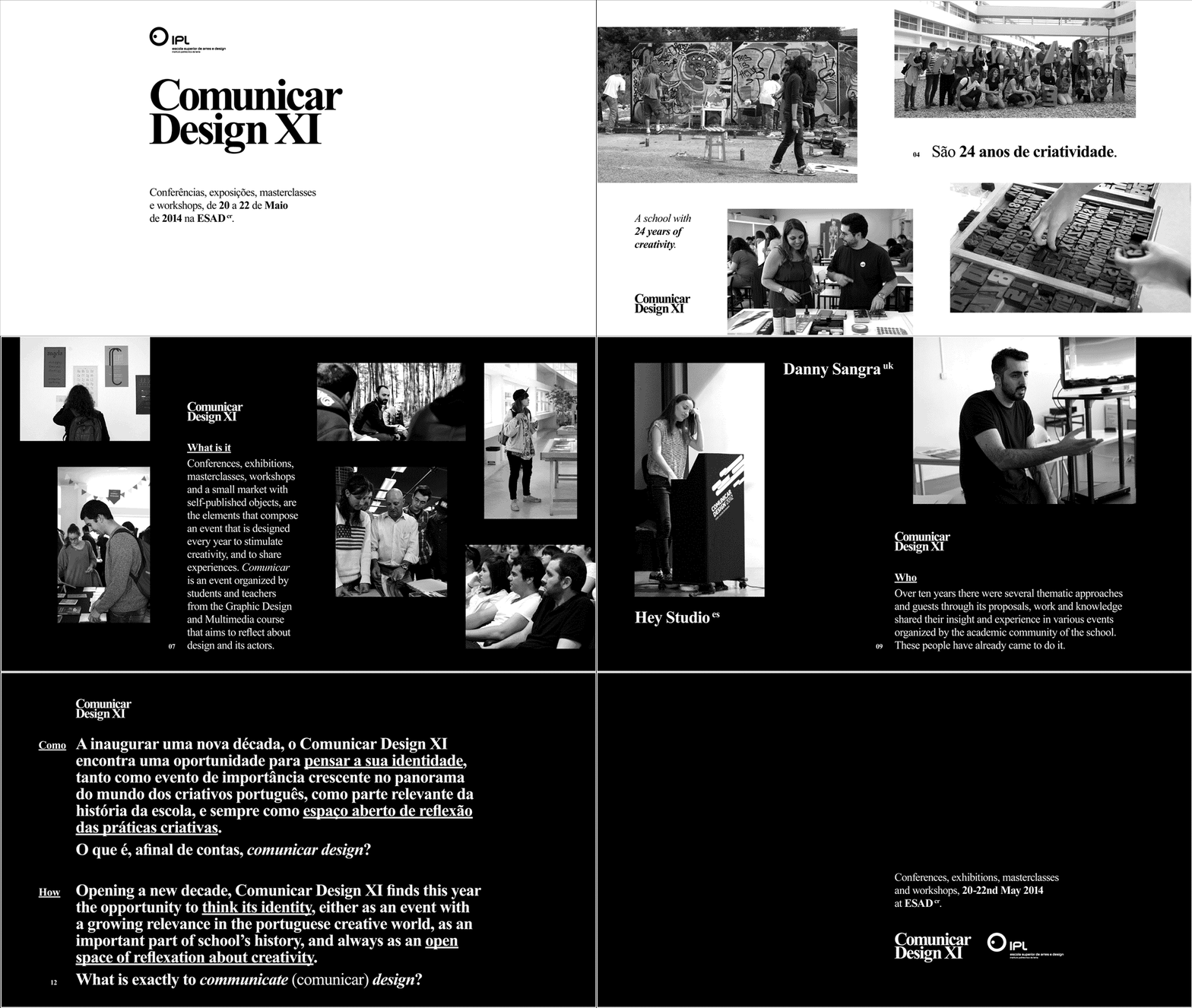
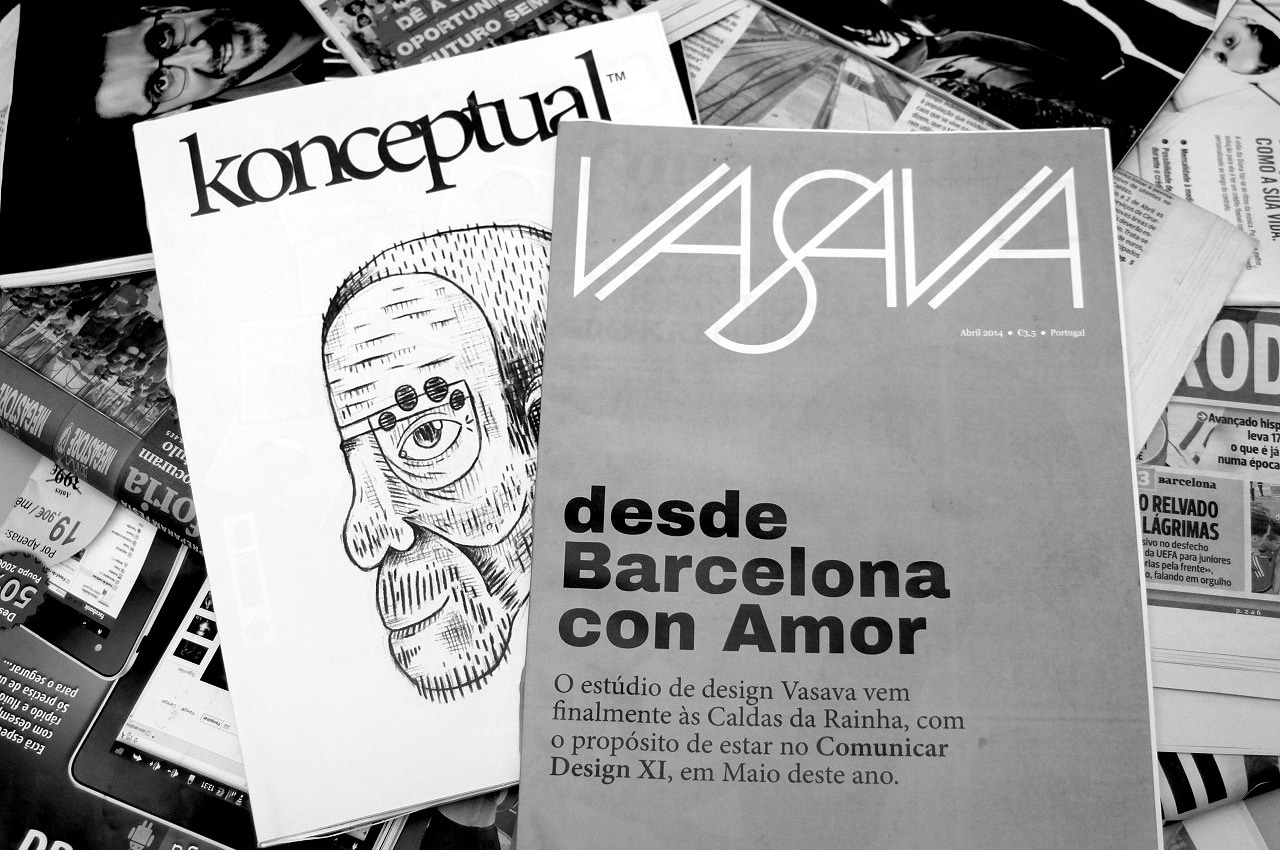
'Comunicar Design' presentation book sent to guests
Mike's Posthumous Reviews

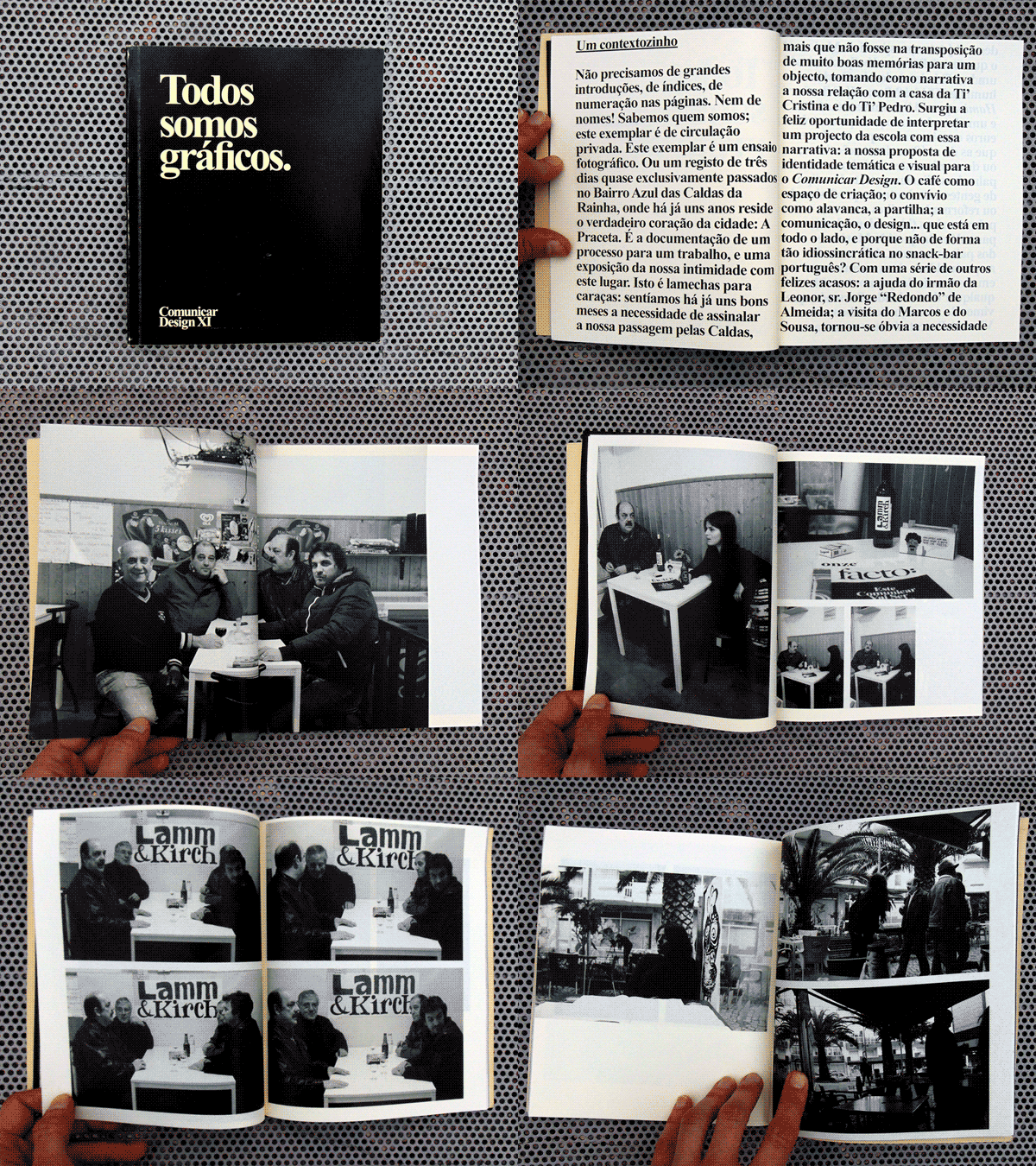
Photobook of the creative process, part of our proposal
Comunicar Design XI is a story about making communication design for an event about communication design at a school where, among other things, communication design is reflected upon and a large number of students study communication design.
Or rather: it was when we tried to make the communication design of a communication design event part of the event's own action, breaking with the tradition of merely assigning it a wrapping role. No matter how beautiful the image of this or that previous edition might have been, it always seemed reductive to us: it was defended by supporters of its graphic style, and rejected by its detractors... a conversation in which nothing was learned.
From the very first graphic design classes at ESAD.CR — perhaps due to a lack of specific vocation for that area, or perhaps because of an excess of it — I have been interested in playing the more or less silly game of the discipline's border issues. Which is the same as asking, from the height of puberty or because it is so often the elephant in the room: what is the relationship between communication design and art, individual expression and authorship? As everyone knows, we are simply talking about geopolitics.
In the end, these ambiguities (and the debate surrounding them) became quite explicit — otherwise, we would not, in practice, have simply taken our places, habits and persons as the image of an annual graphic design event.


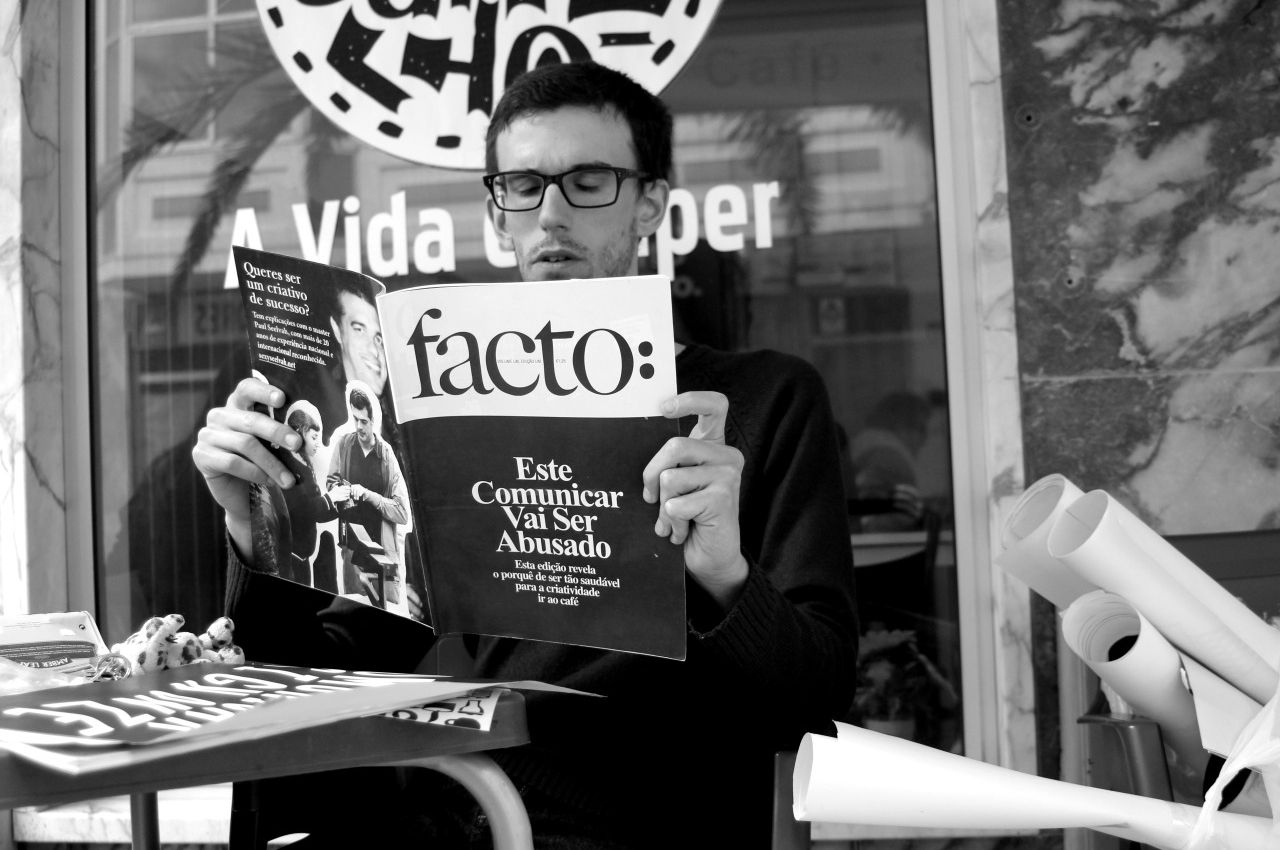
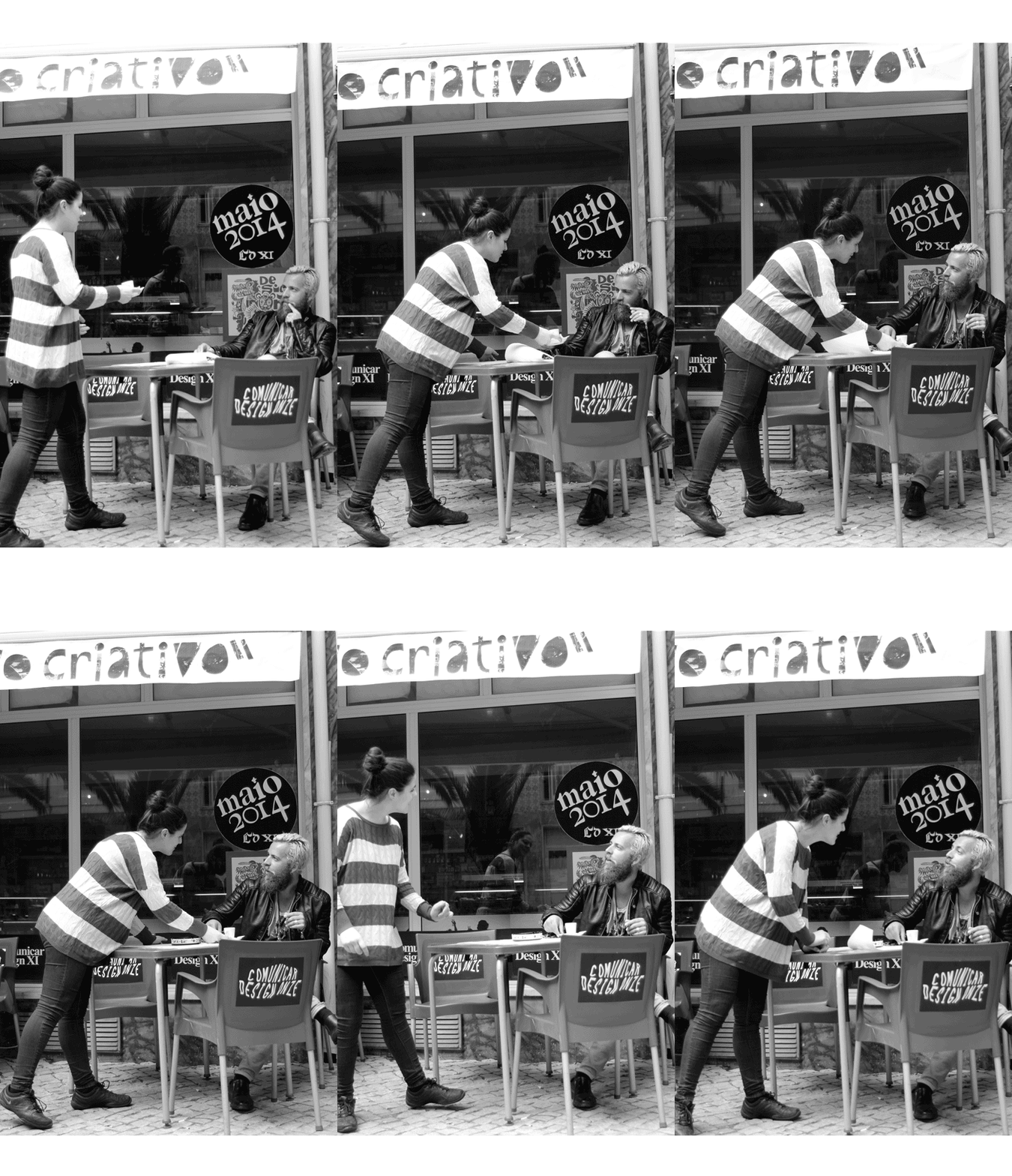
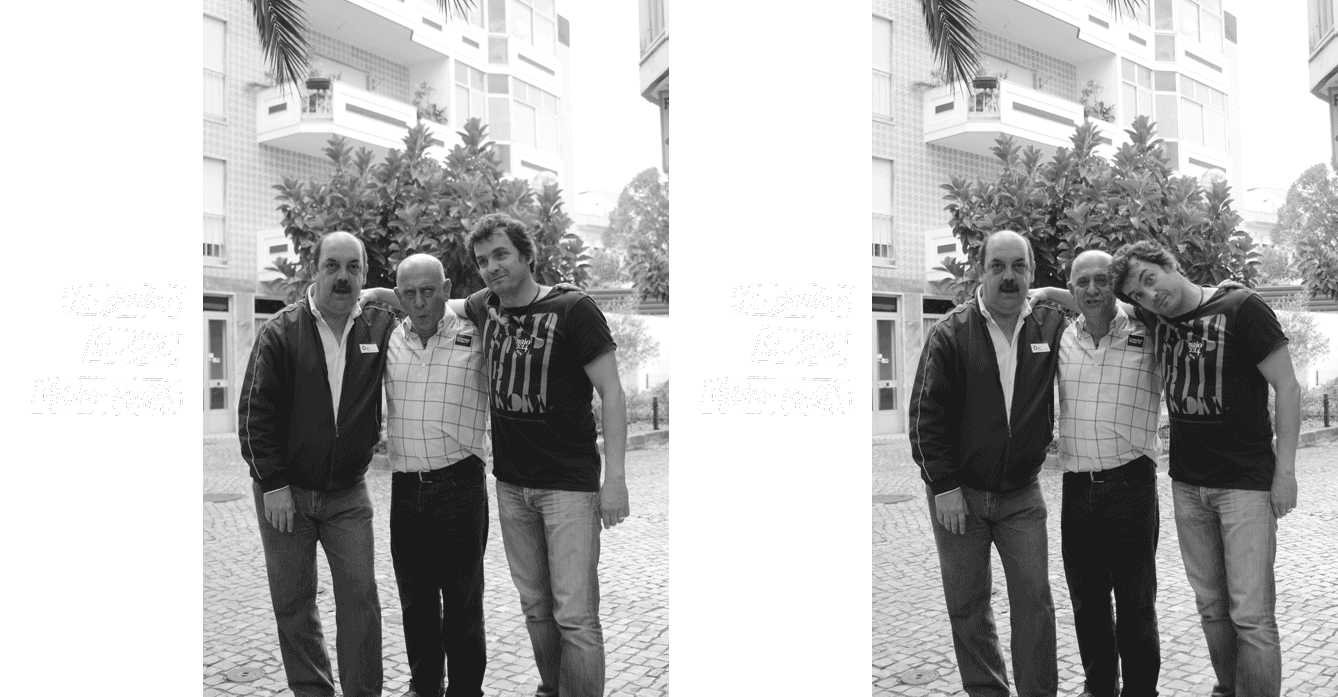
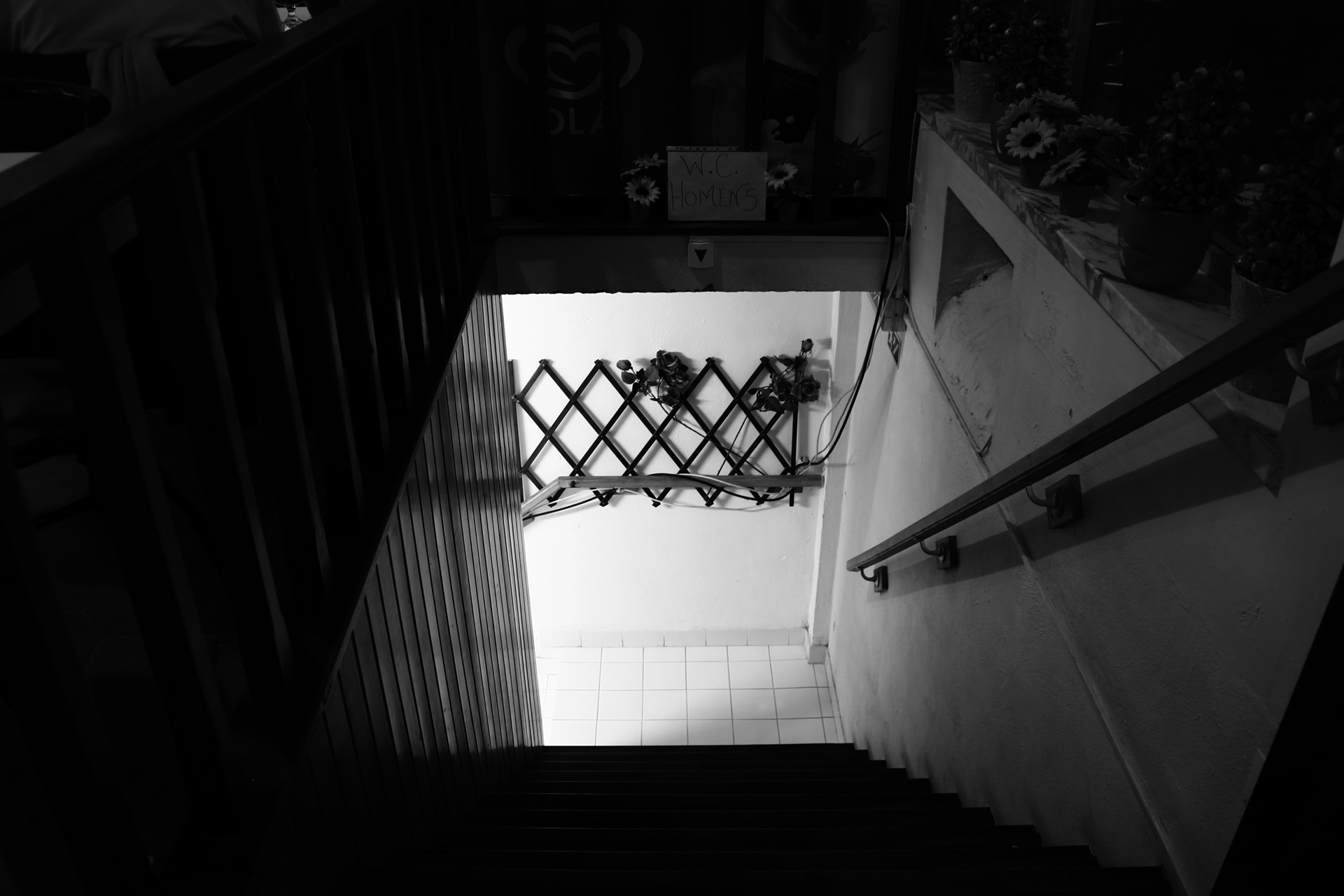
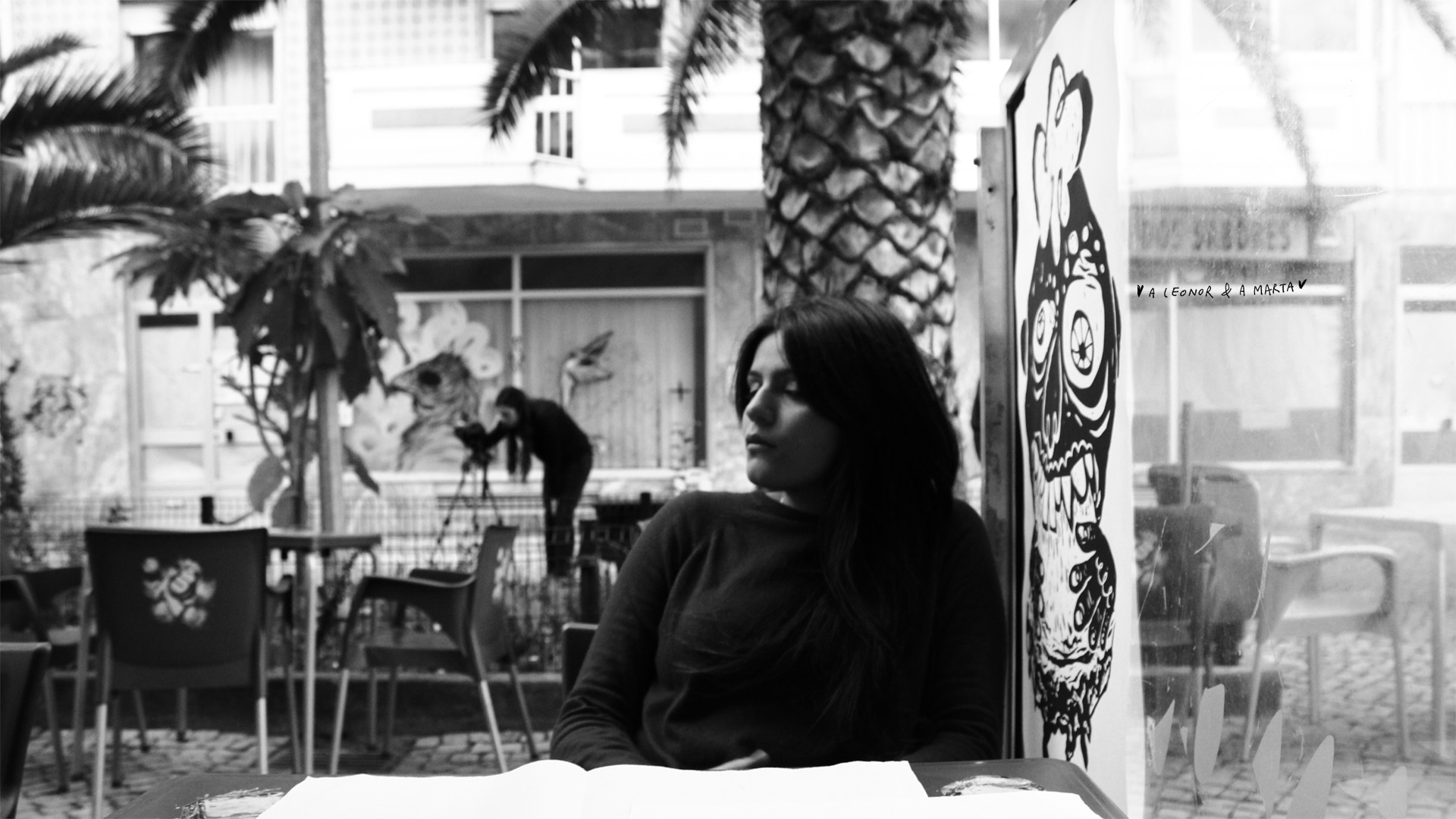
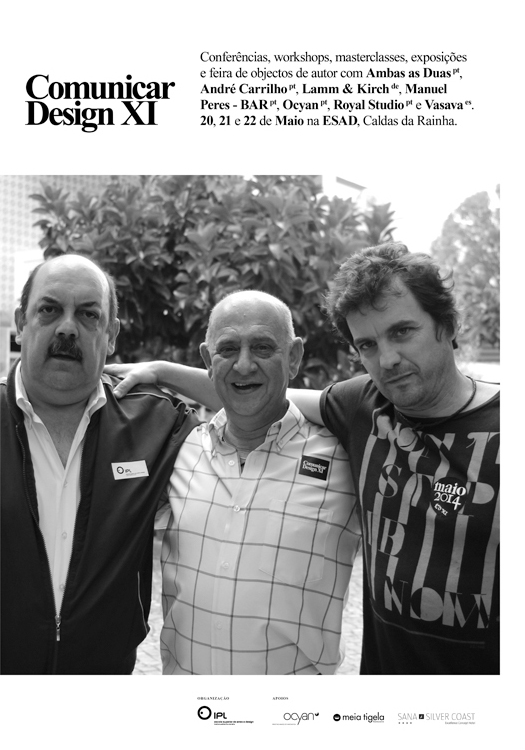
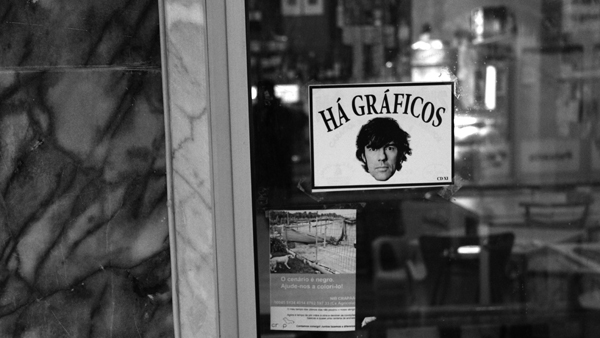
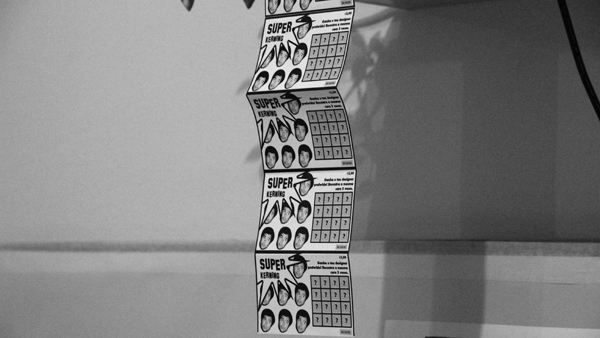
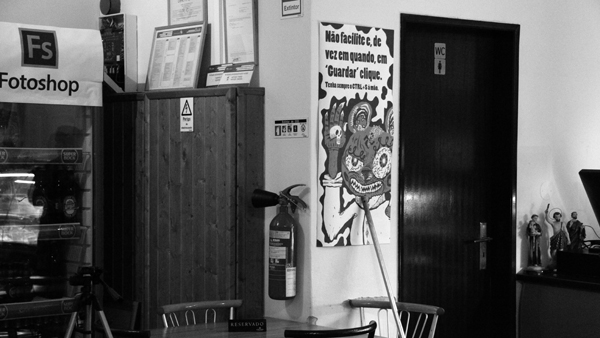
Visual imaginary of our proposal: creatives at the café
Concept
Introduction
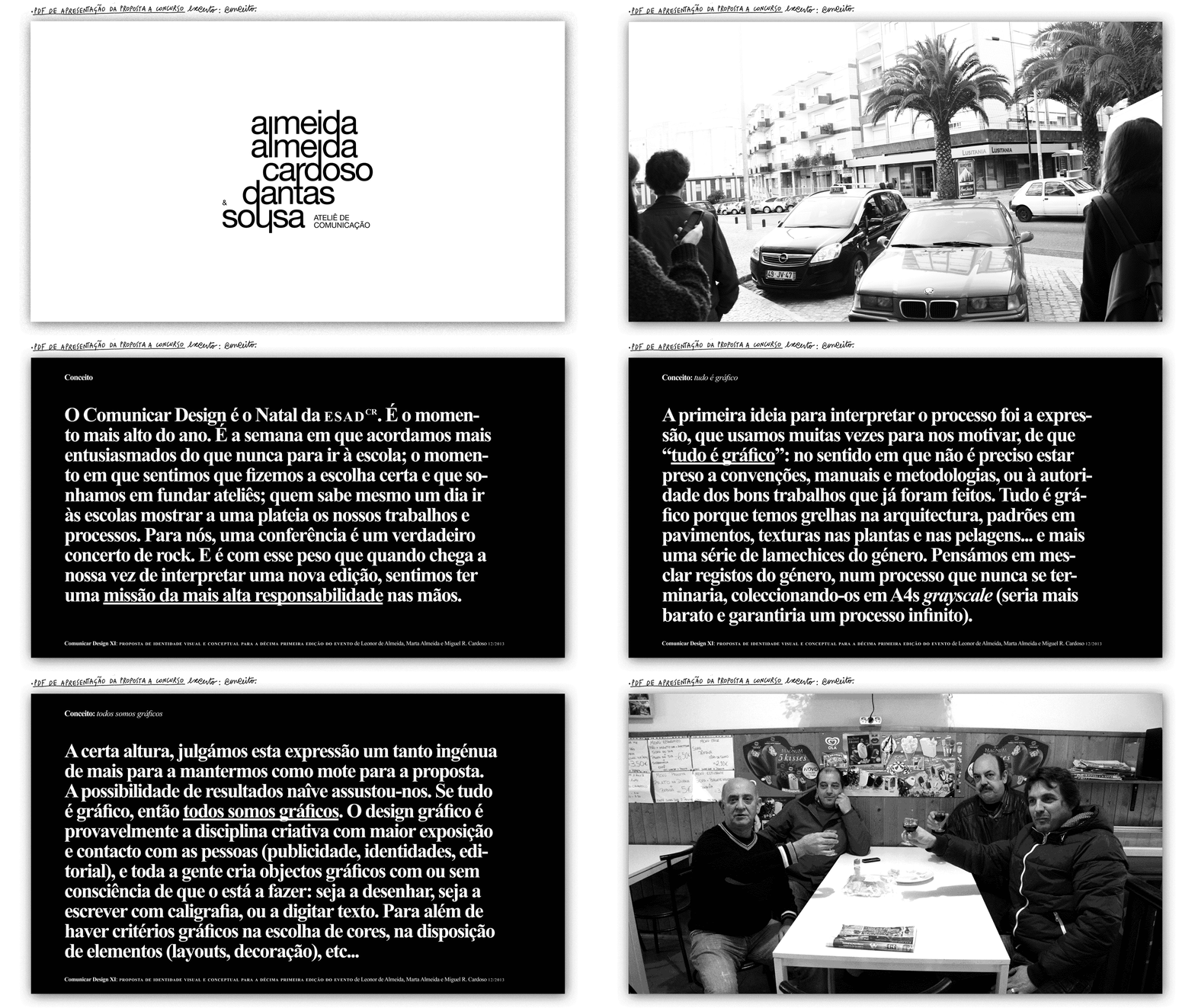
Comunicar Design is the Christmas of ESAD.CR. It is the highest moment of the year. It is the week when we wake up more excited than ever to go to school; the moment when we feel we have made the right choice and dream of founding studios — who knows, maybe one day even go to schools to show our work and processes to an audience. For us, a conference is a true rock concert. And it is with that weight that when it is our turn to interpret a new edition, we feel we have a mission of the highest responsibility in our hands.
Slideshow: our proposal, sketches and details
A) Process as concept
And what seems to us to be the core of the event is the debate about process: the paths, the unforeseen events, the stories behind the final, pretty objects. Clients are interested in seeing results; creators are interested in the humanity of other creators. For this reason, the first decision was the certainty of exploring through our objects a question inherent to the process, or even a redefinition of the term itself.
B) Everything is graphic
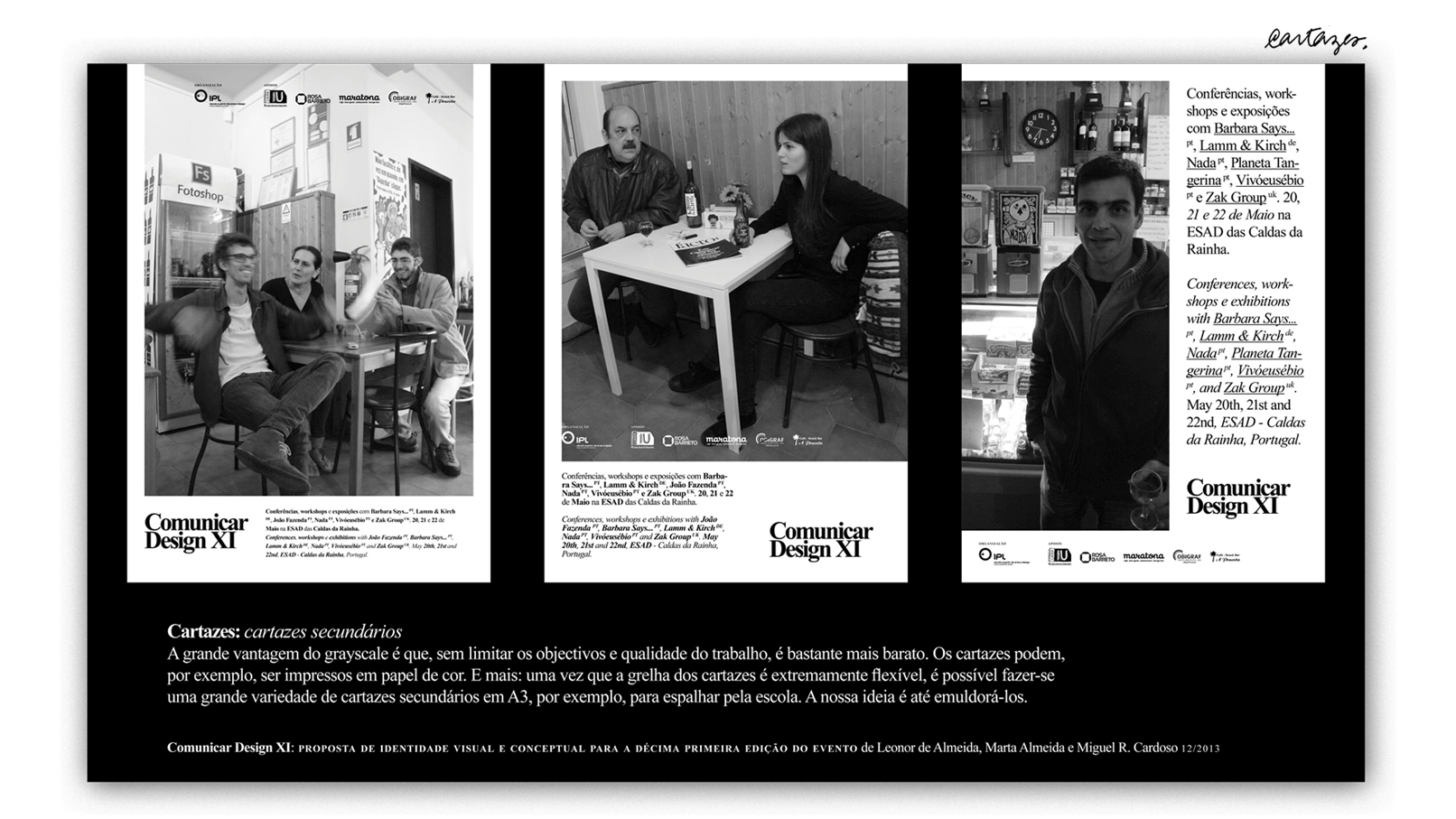
The first idea for interpreting the process was the expression we often use to motivate ourselves: "everything is graphic" — in the sense that we don't have to be tied to conventions, manuals and methodologies, or to the authority of good work already done. Everything is graphic because we have grids in architecture, patterns in flooring, textures in plants and fur... and a whole host of such schmaltz. We thought about blending these kinds of registers, in a process that would never end, collecting them on grayscale A4s (it would be cheaper and guarantee an infinite process).
C) Everyone is graphic
At a certain point, we judged this expression too naive to keep as the motto of our proposal. The possibility of naïve outcomes frightened us. If everything is graphic, then everyone is graphic. Graphic design is probably the creative discipline with the greatest exposure and contact with people (advertising, identities, publishing), and everyone creates graphic objects whether or not they are aware of doing so: whether drawing or writing by hand, or typing text. In addition, there are graphic criteria in colour choices, the arrangement of elements (layouts, decoration), etc...
D) A little coffee
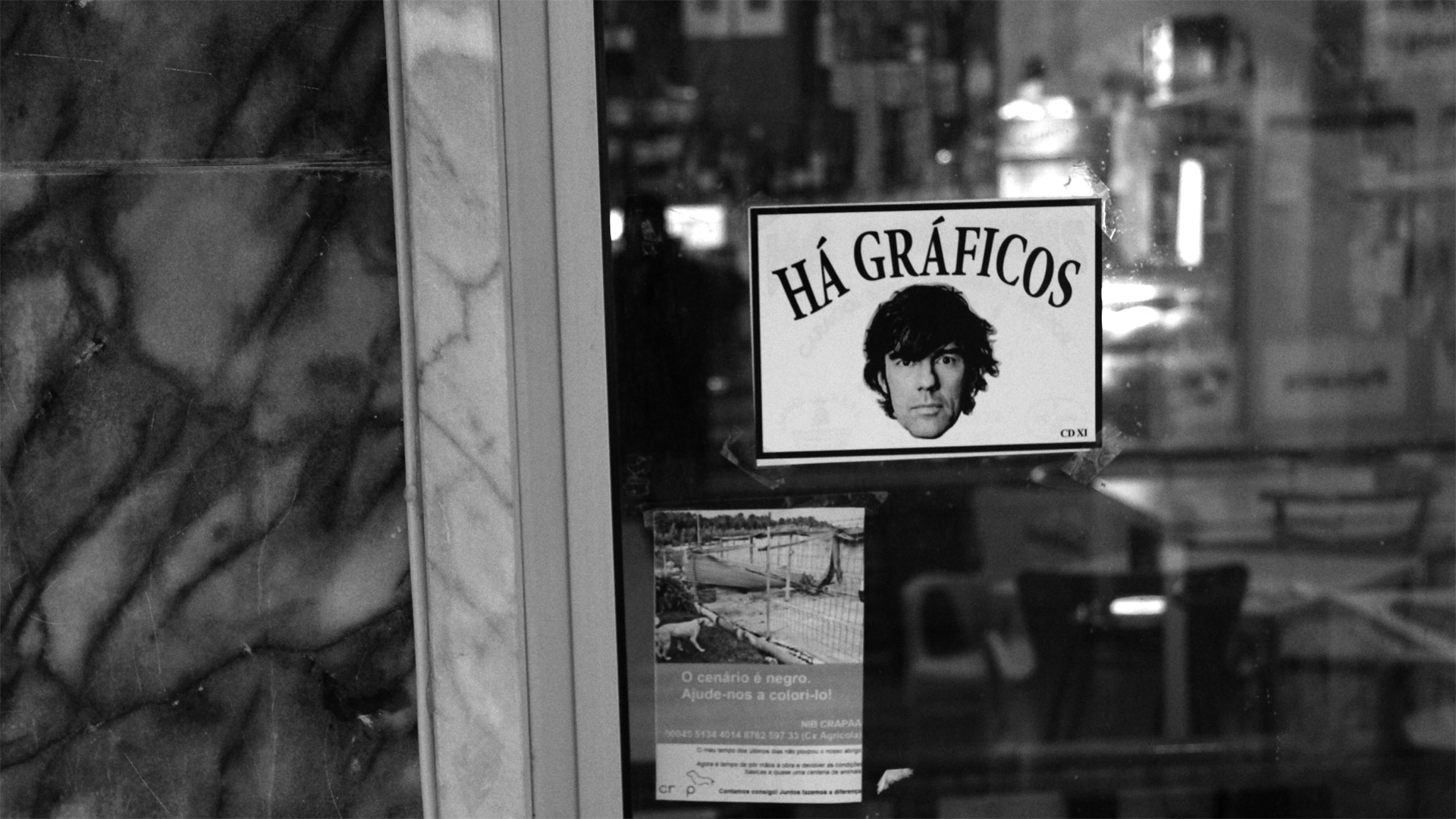
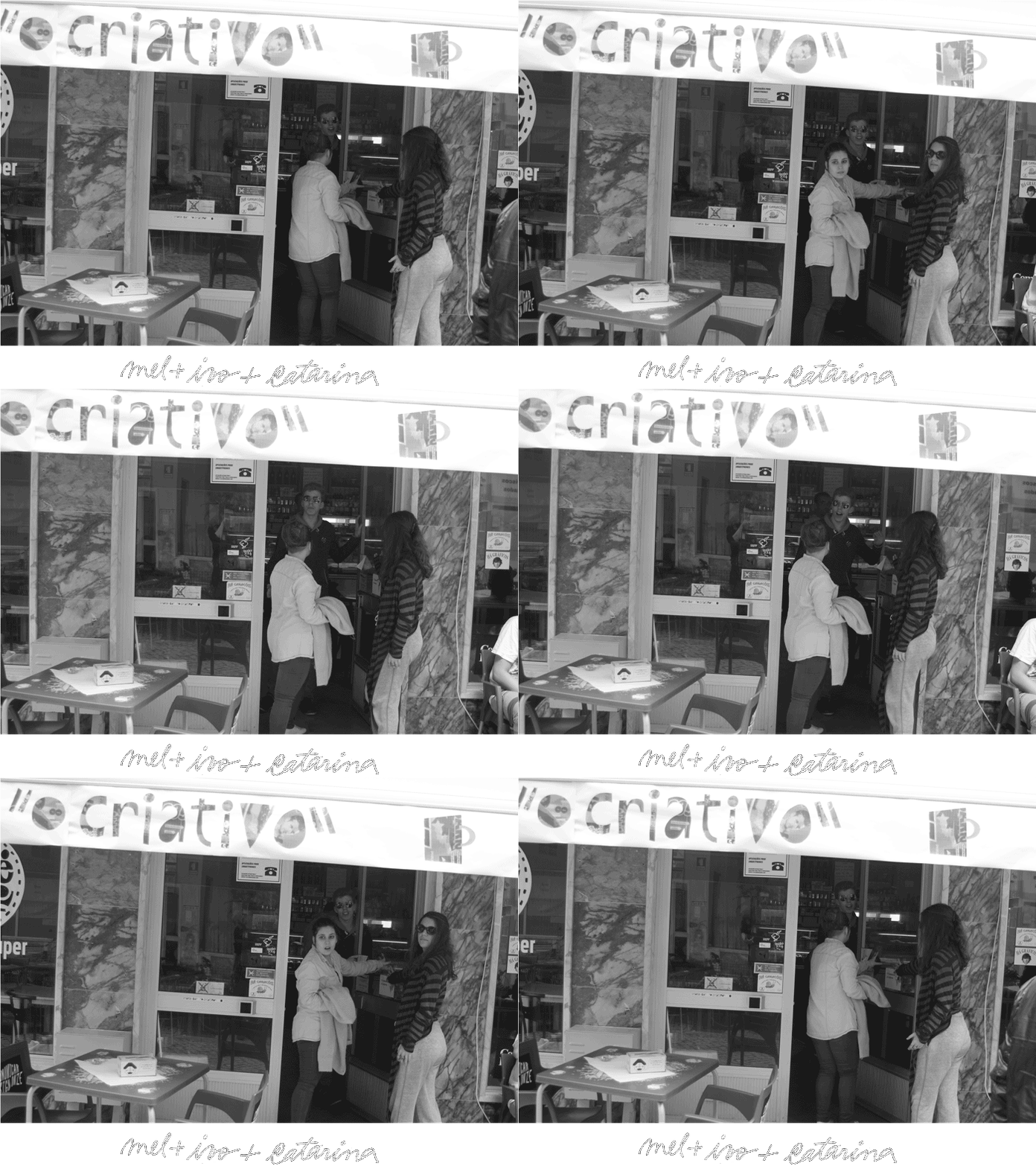
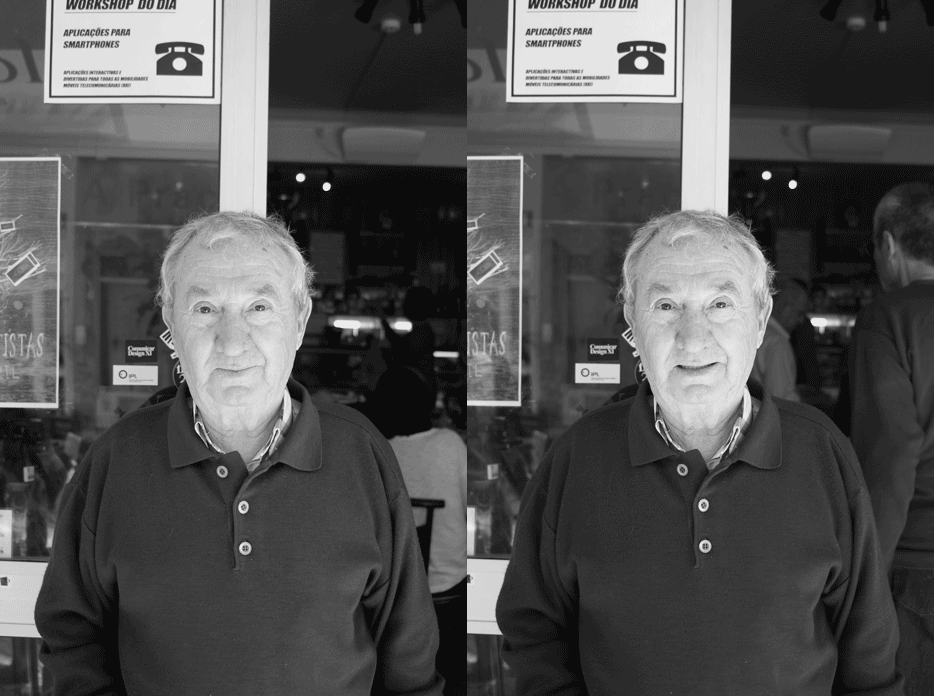
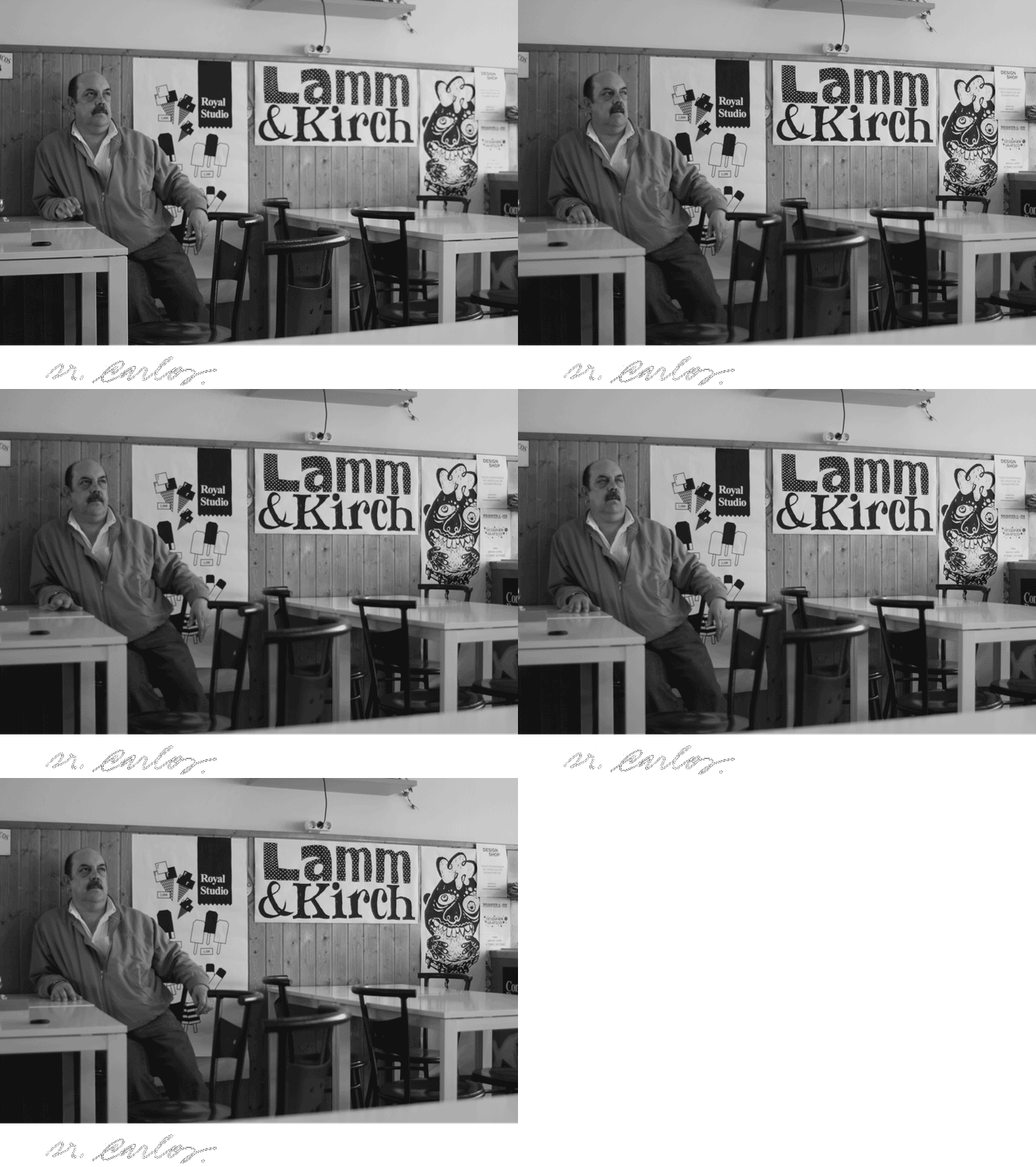
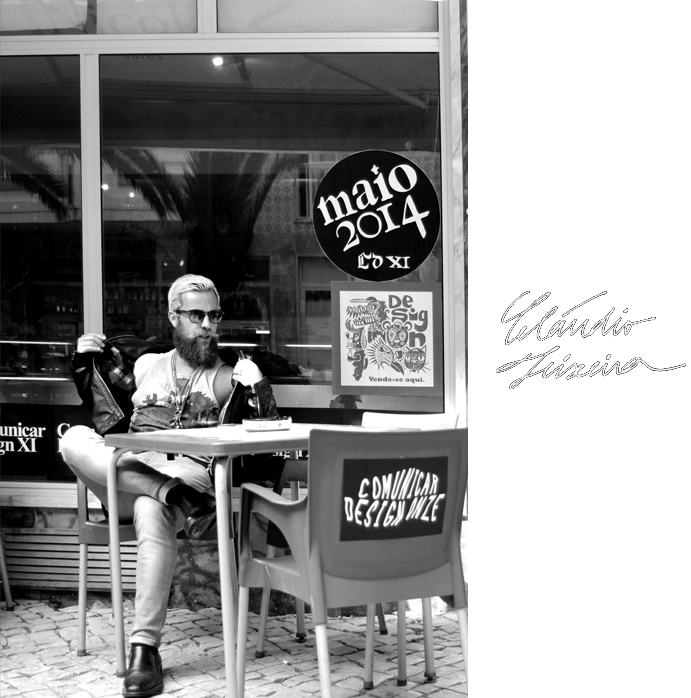
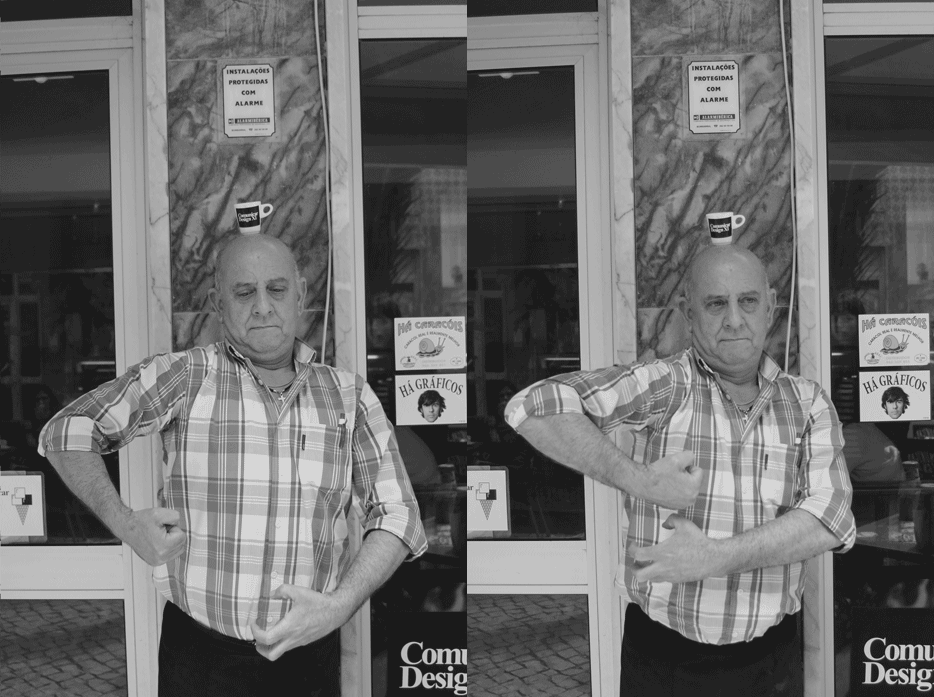
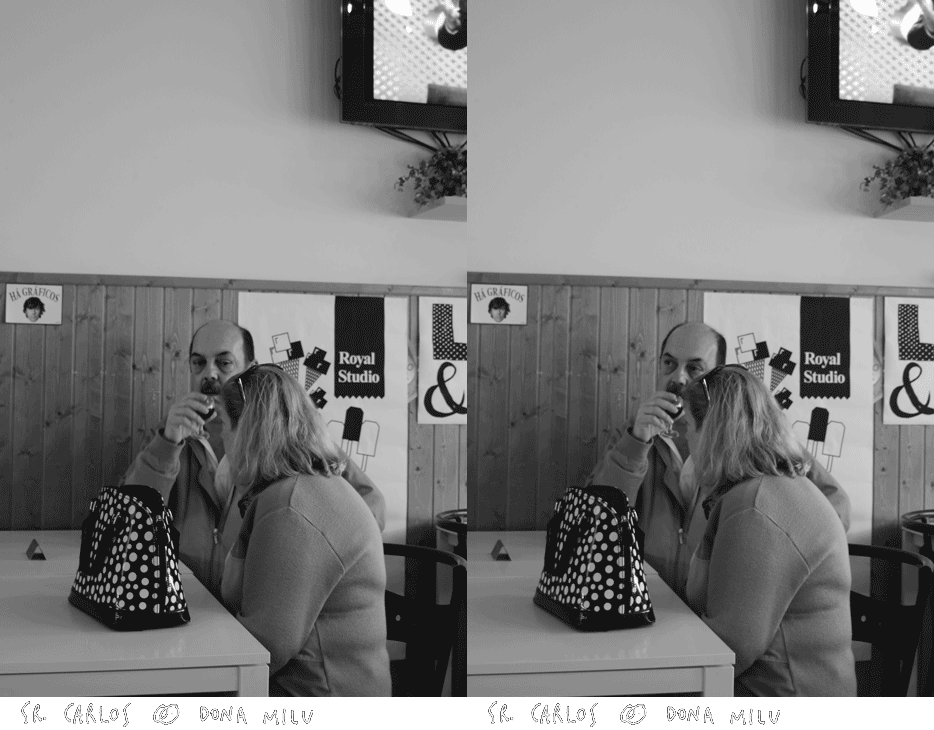
Everyone is graphic, then — now we just need to cross that with the question of process. Our approach became spatial: where do lay creatives (we hate that word, but anyway) gather to give free rein to the methodologies of their everyday creative projects? We immediately thought of the Portuguese snack‑bar: the greatest variety of people meet, engage in conversations, between coffee and the newspaper, exchanging ideas and solutions for the rest of the day and for life. Capturing those moments would also be a vehicle to reinforce the idea of humanity in creatives: how many projects are not born from the socialising?


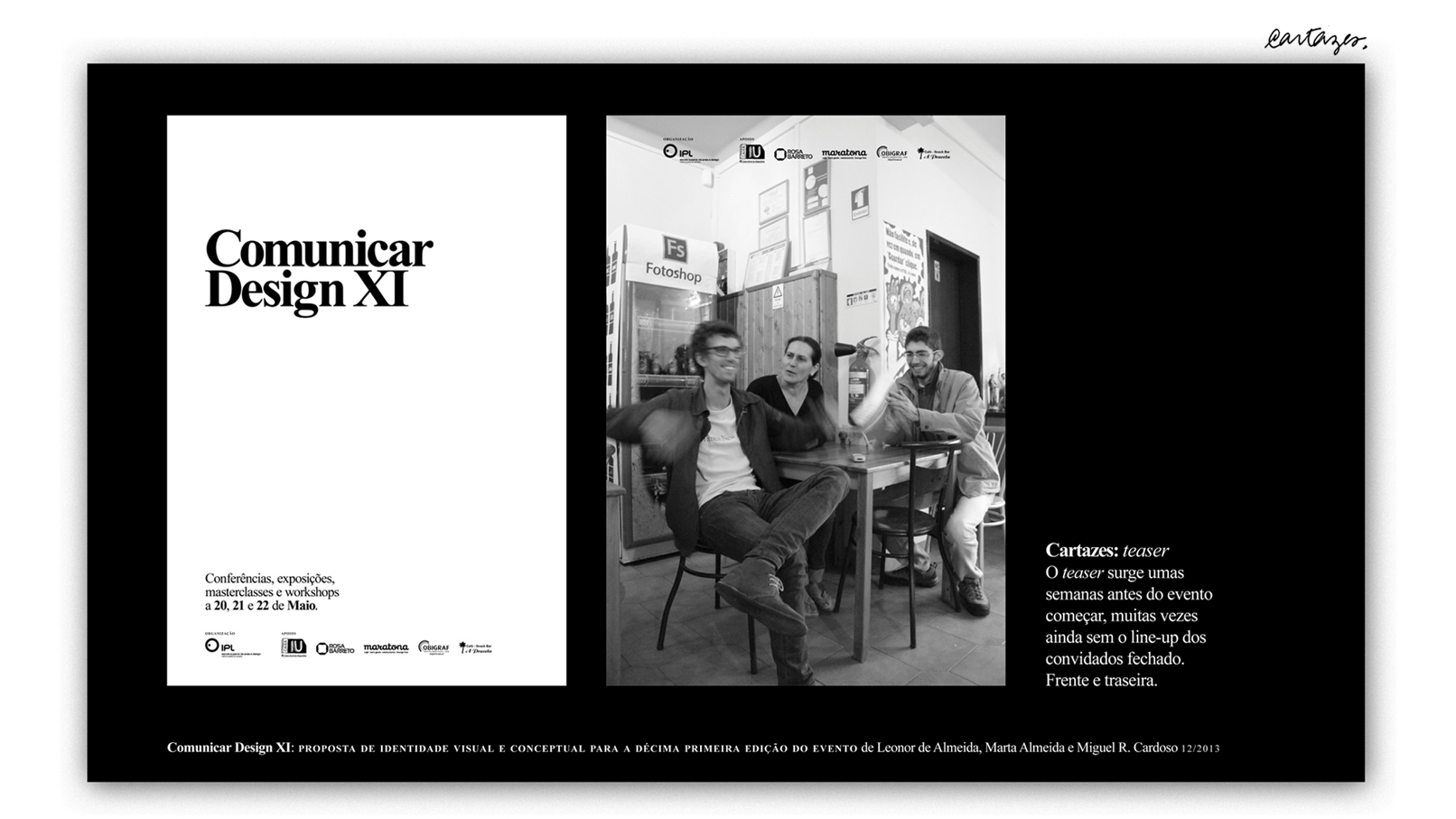
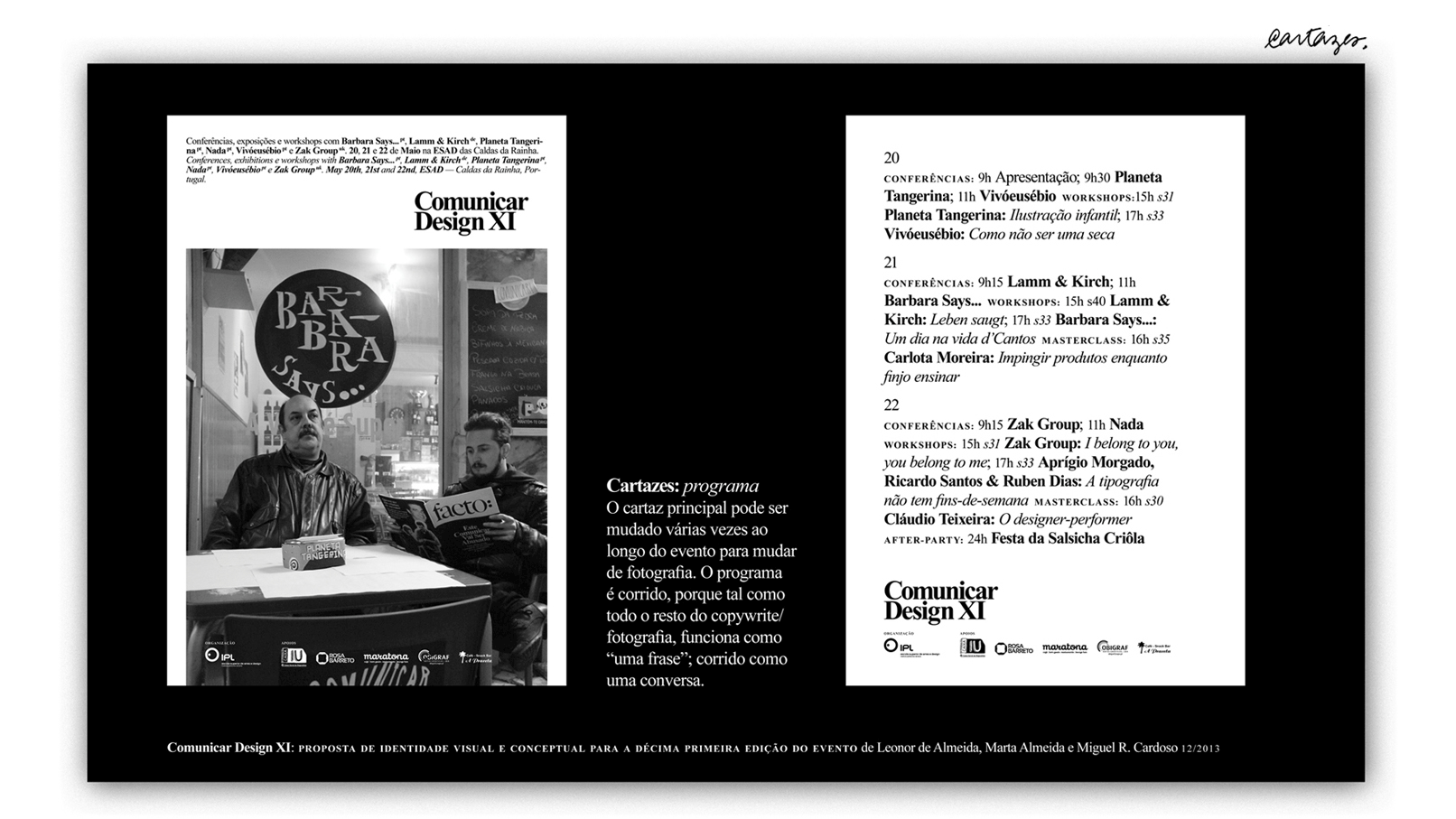
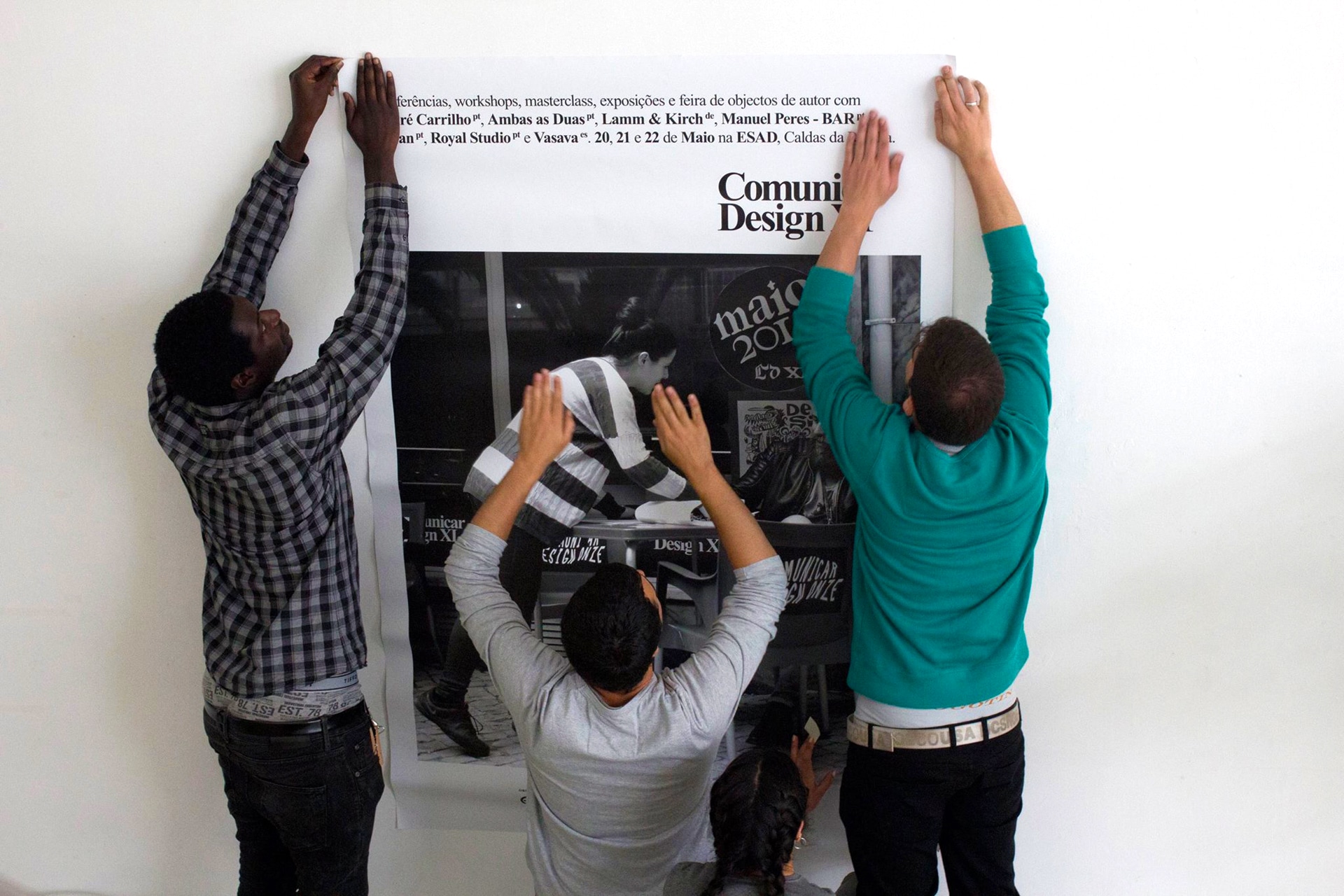
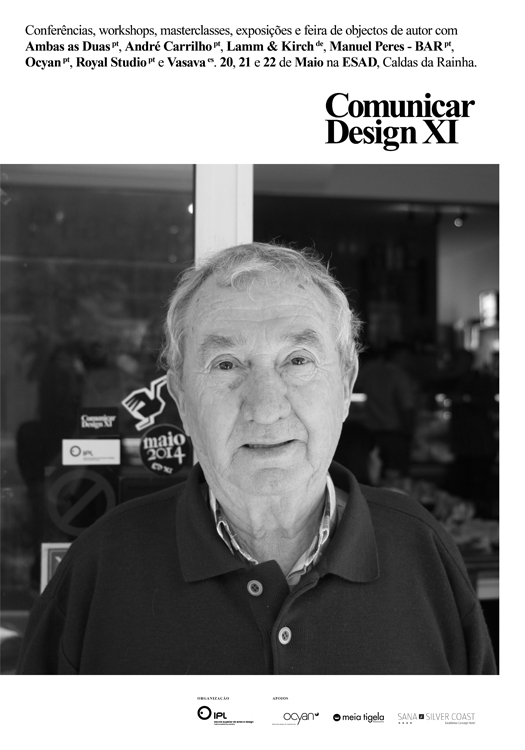
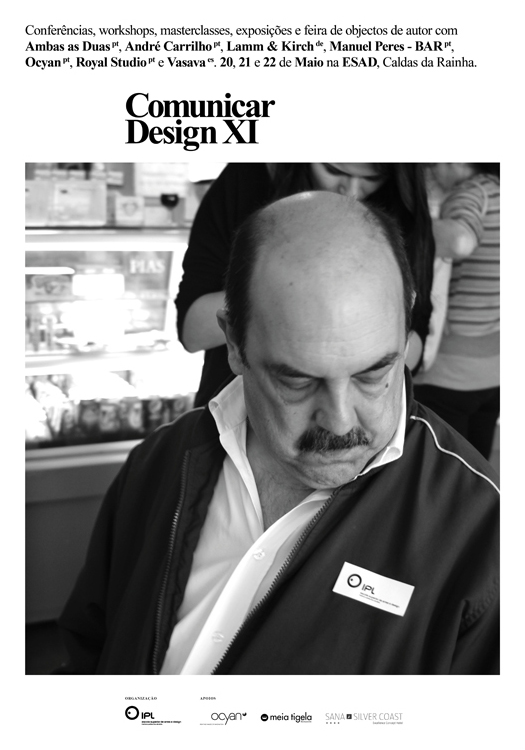
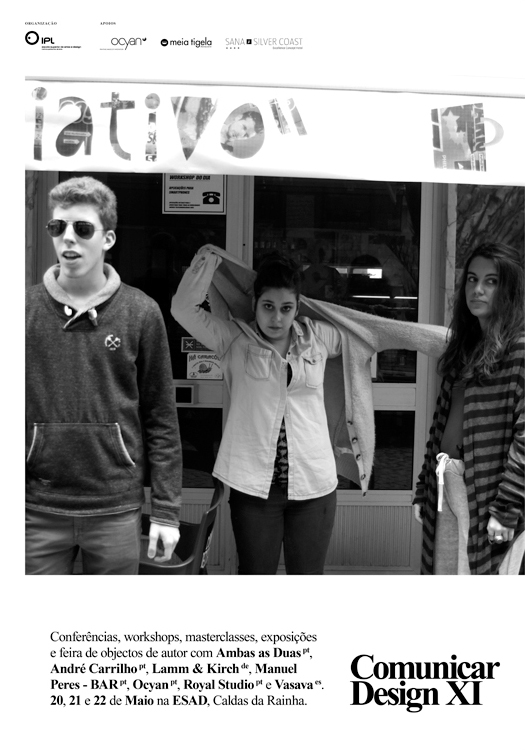
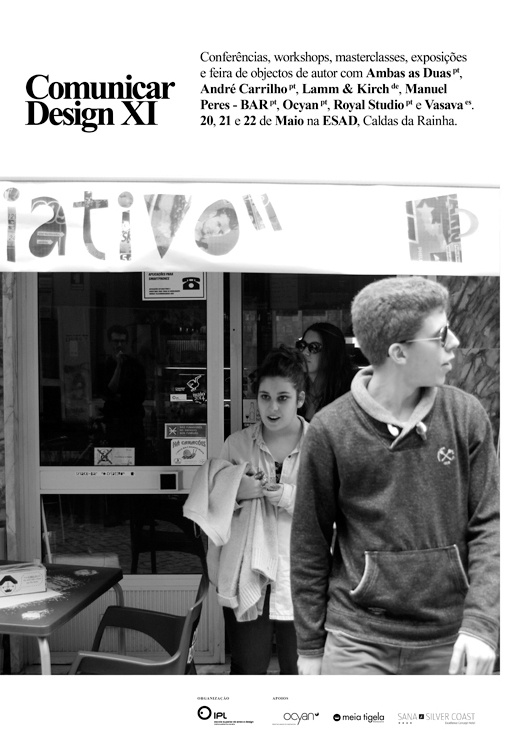
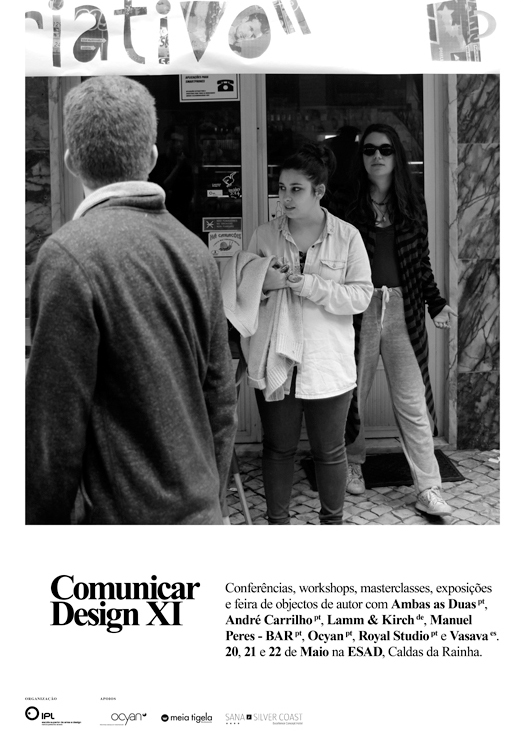
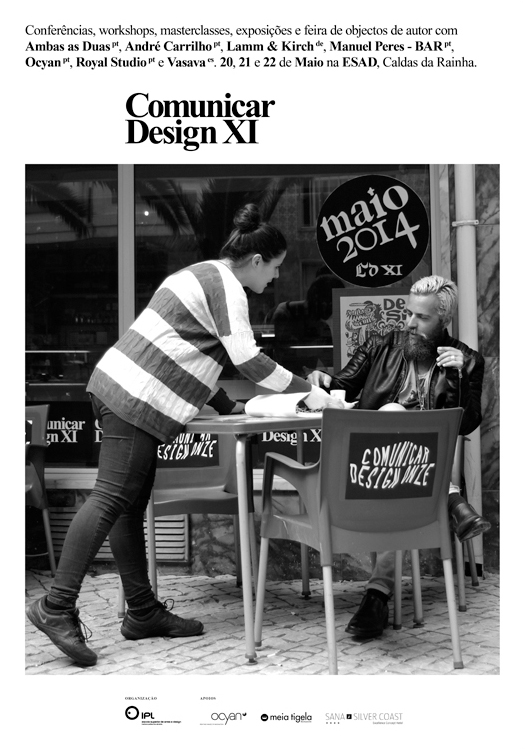
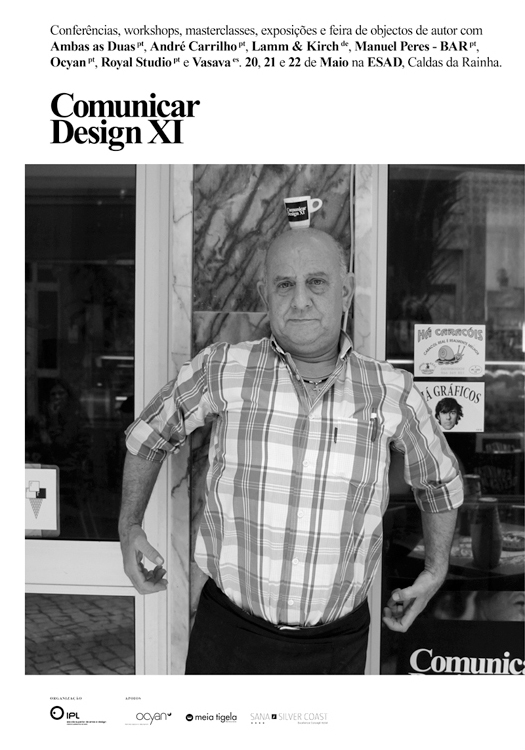
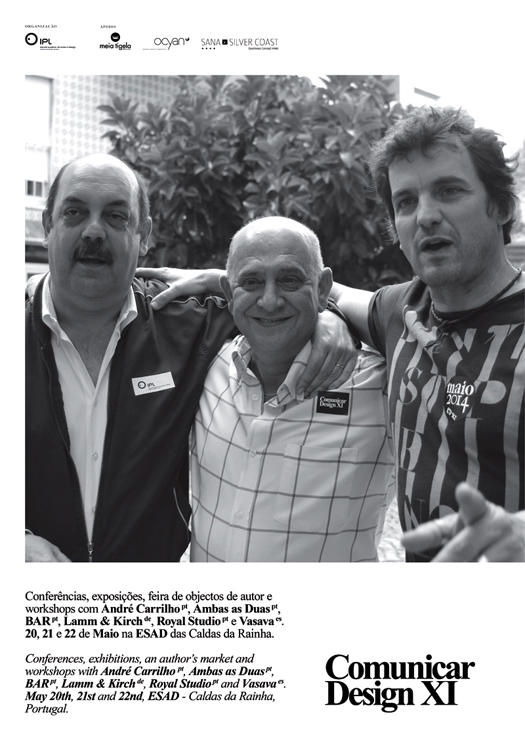
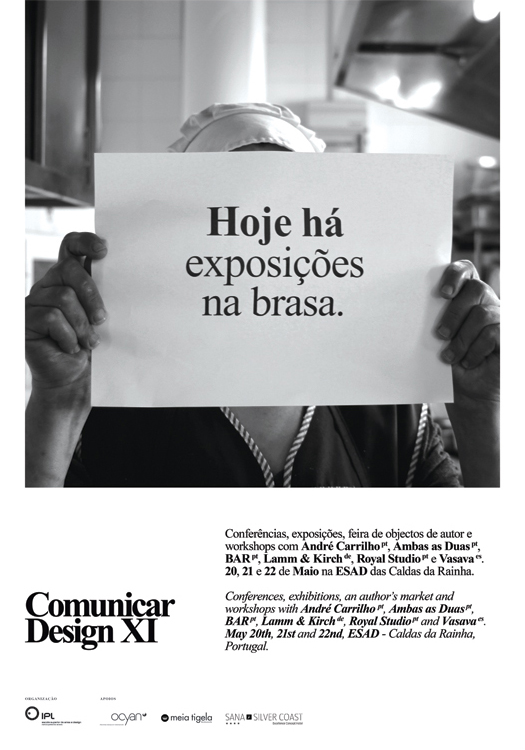
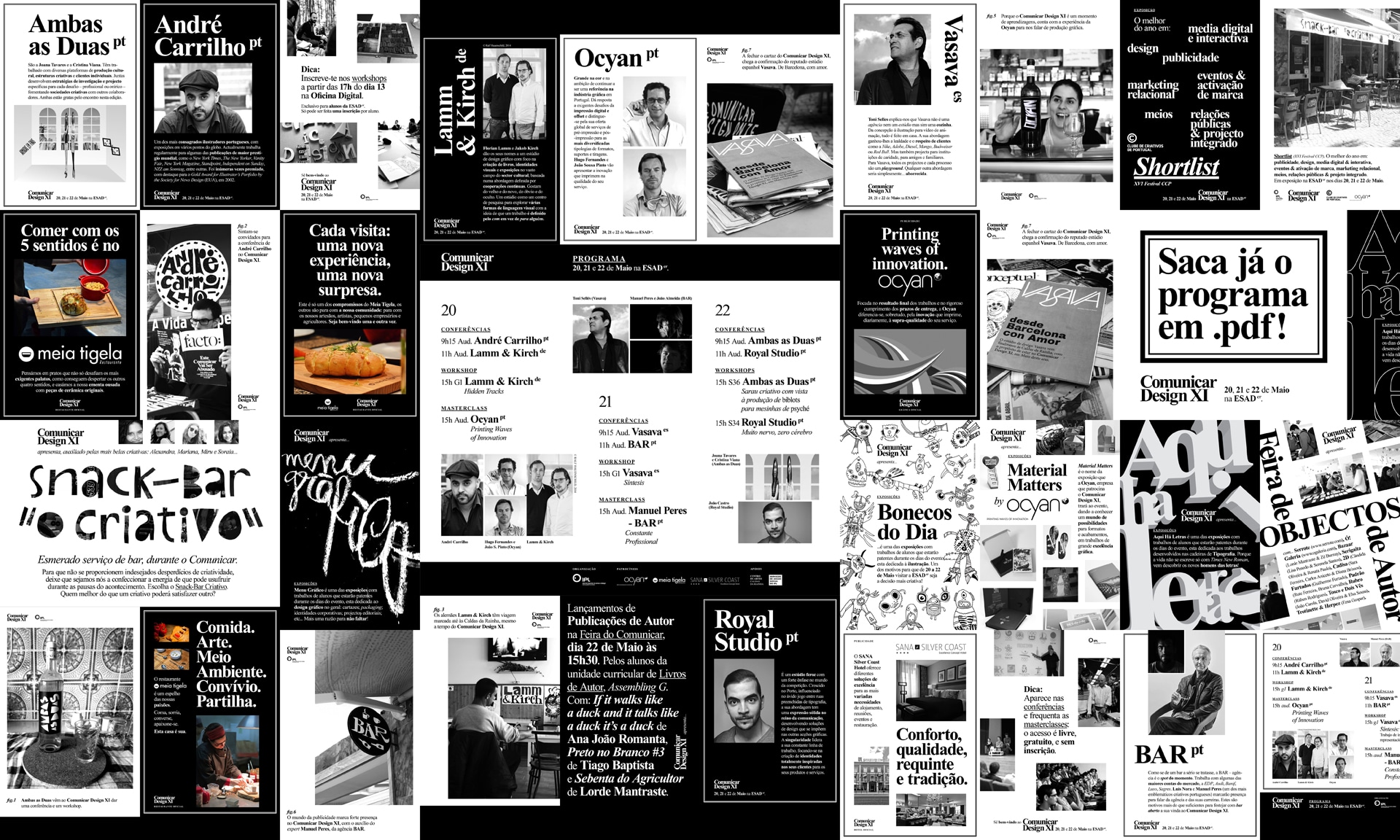
Poster variants


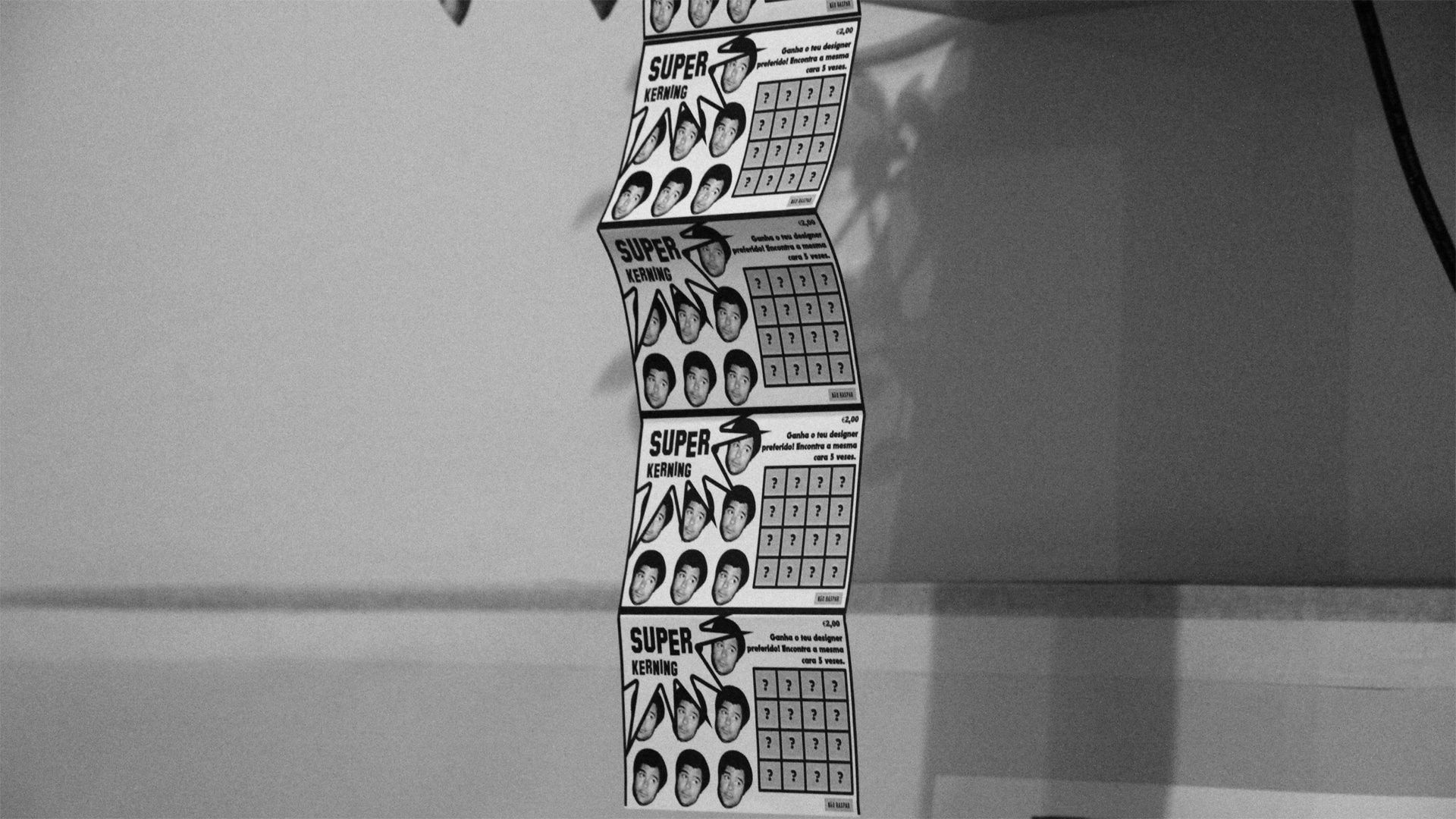
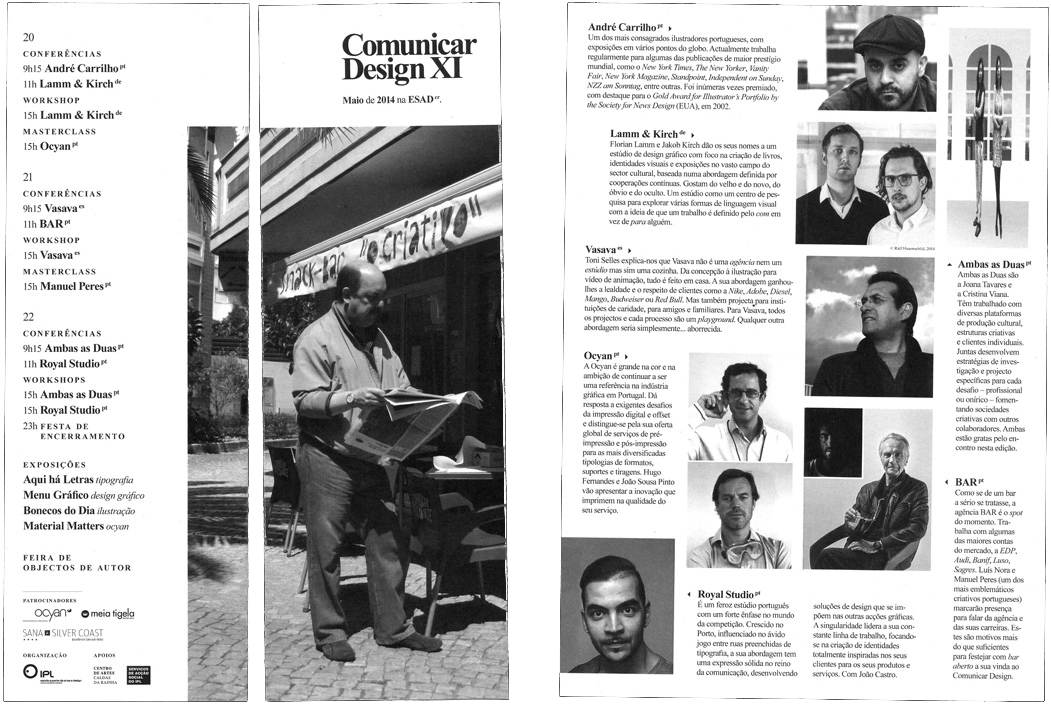
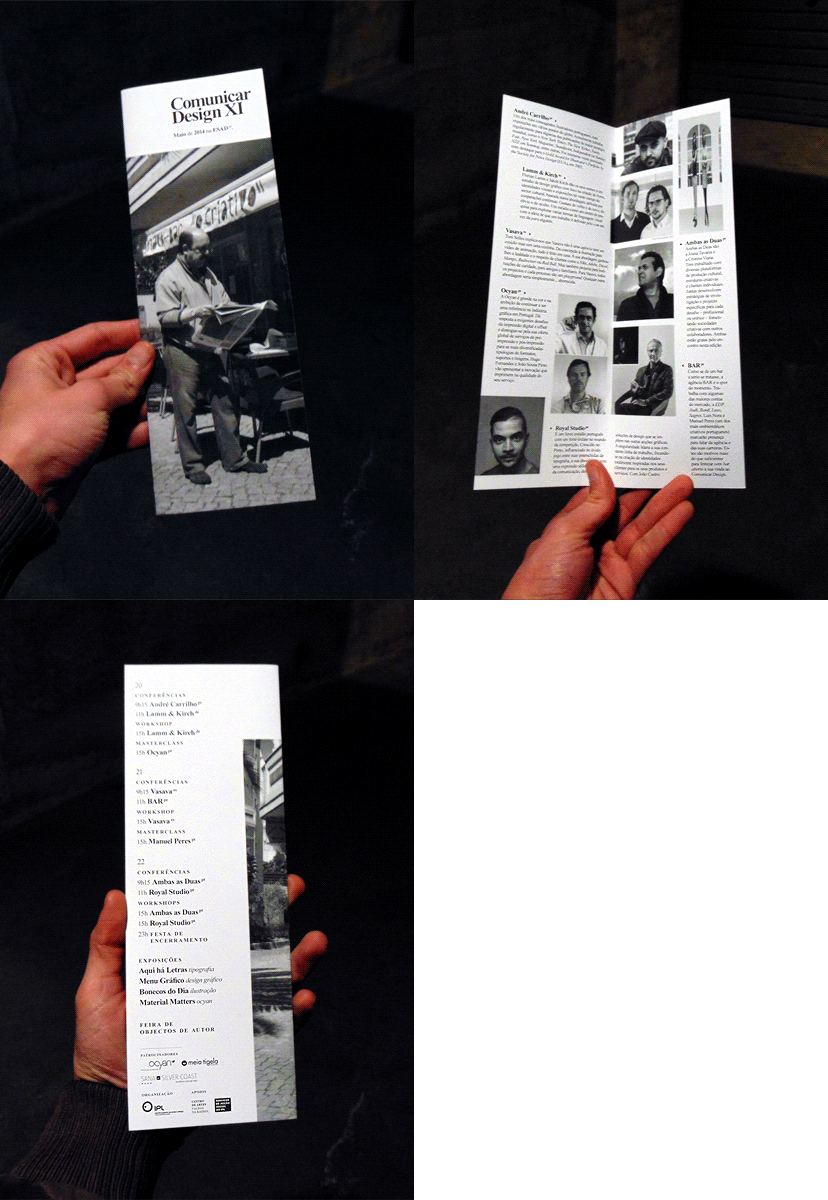
Programme/folded leaflet/menu


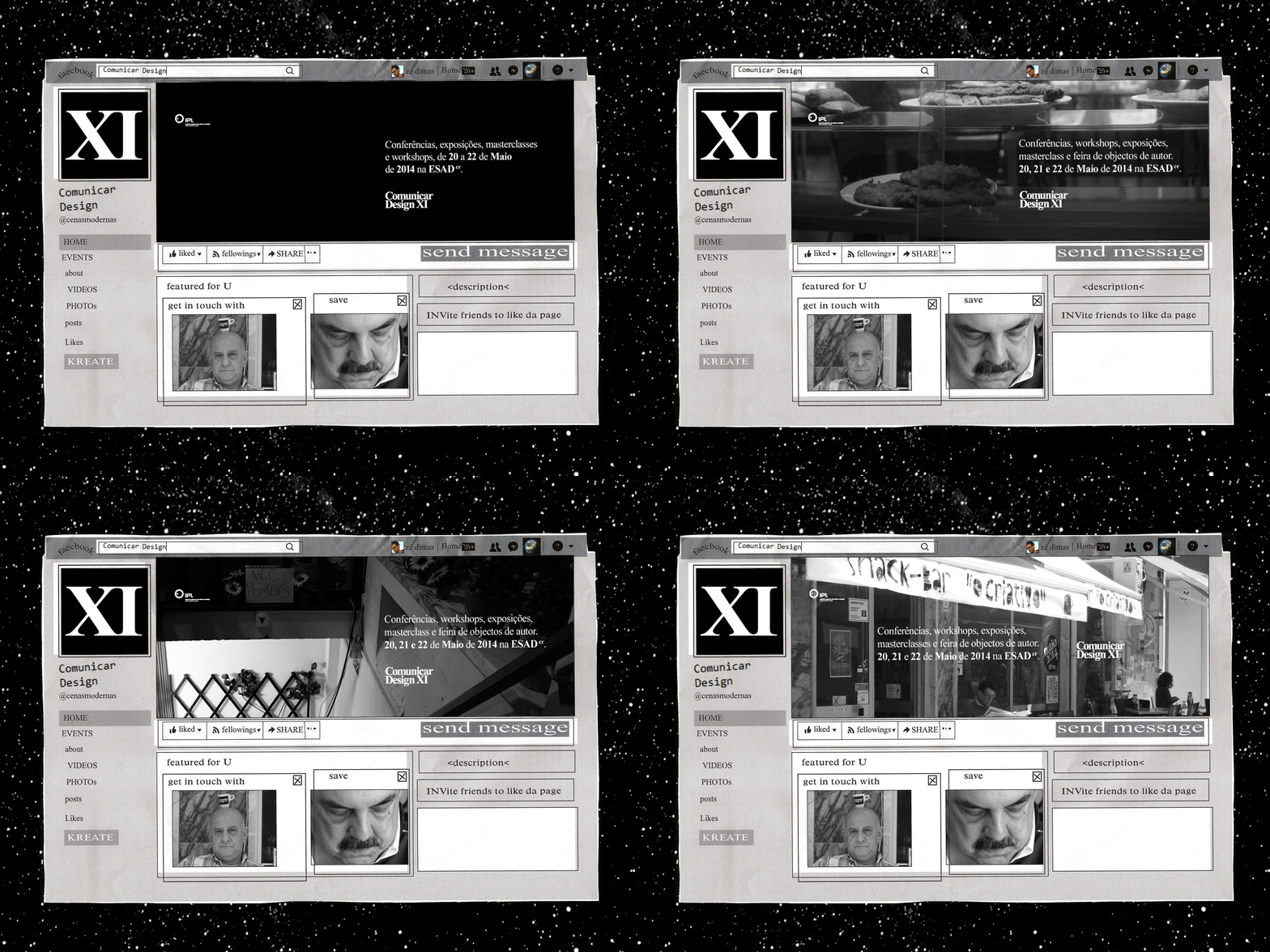
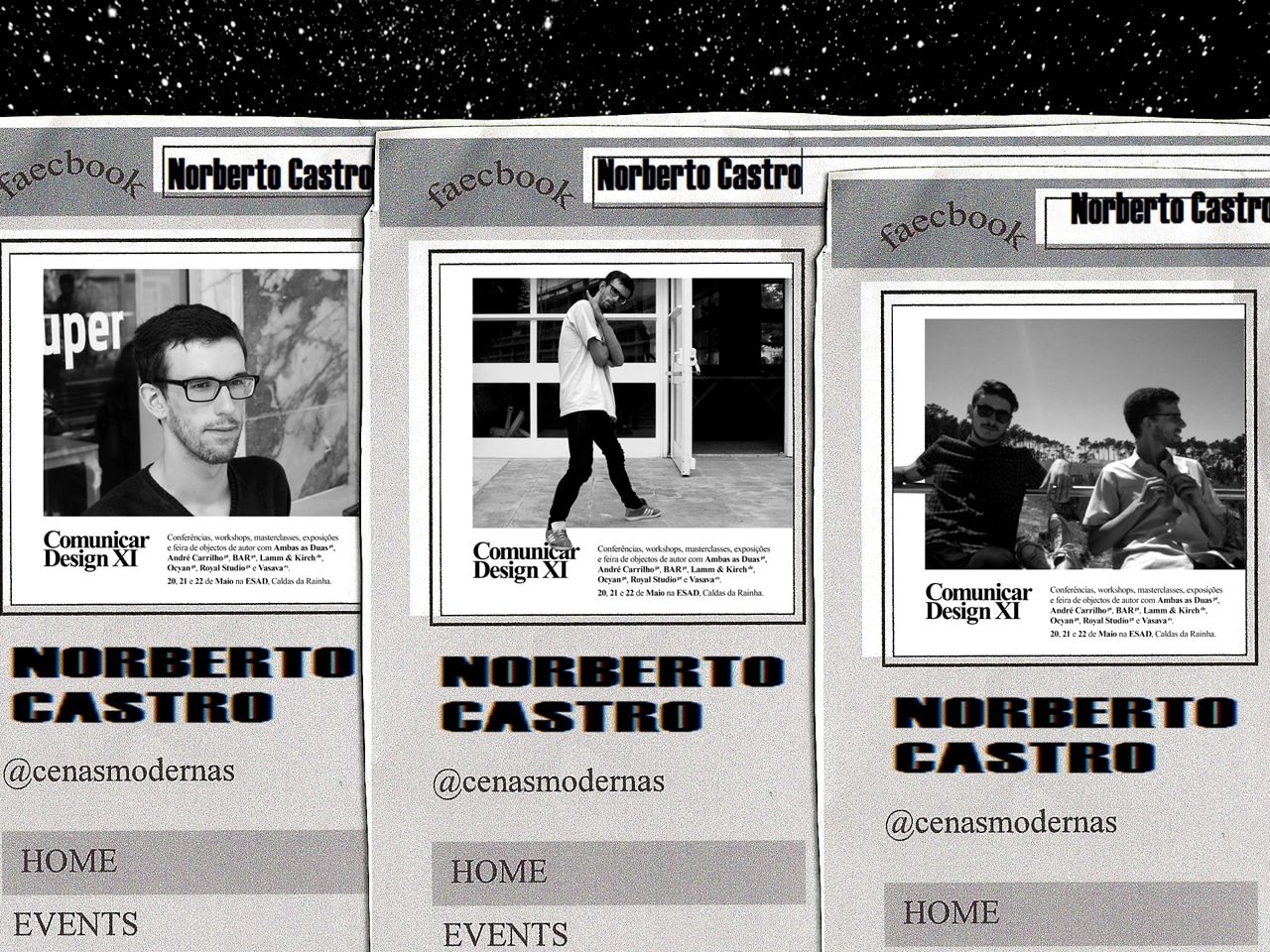
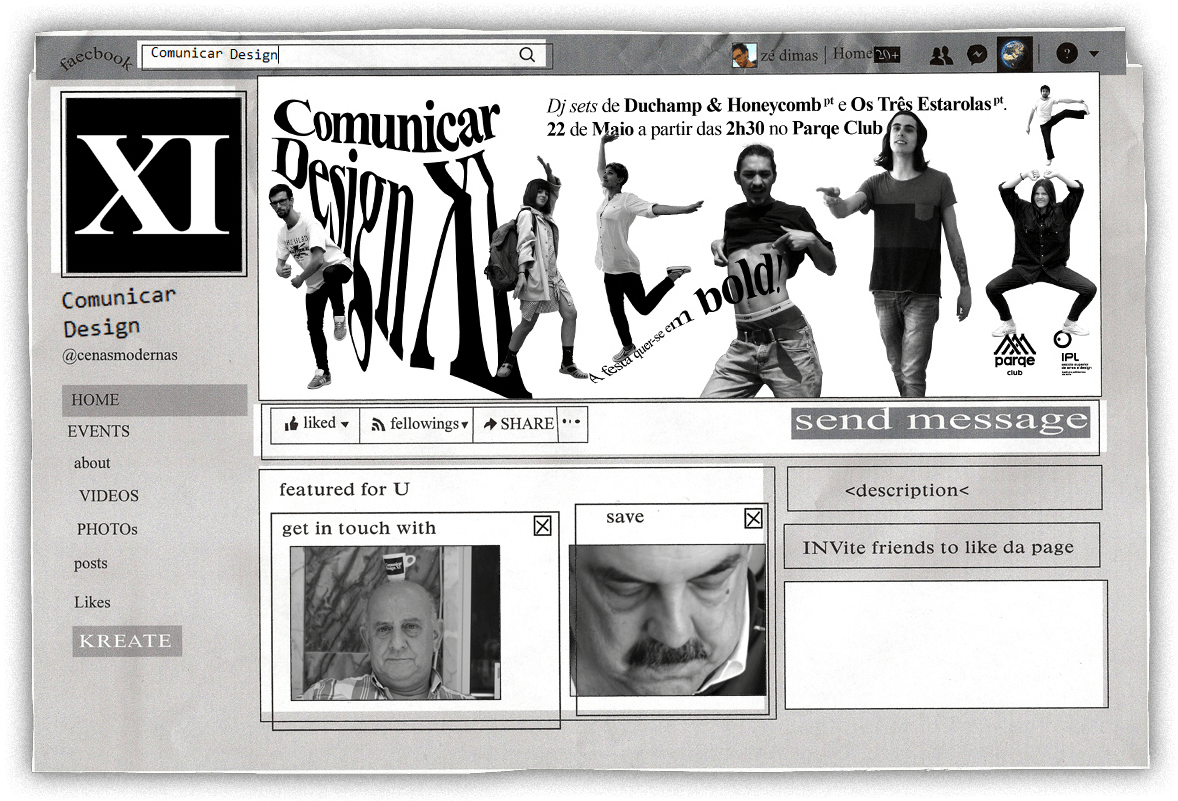
Social media decoration (profile picture template)
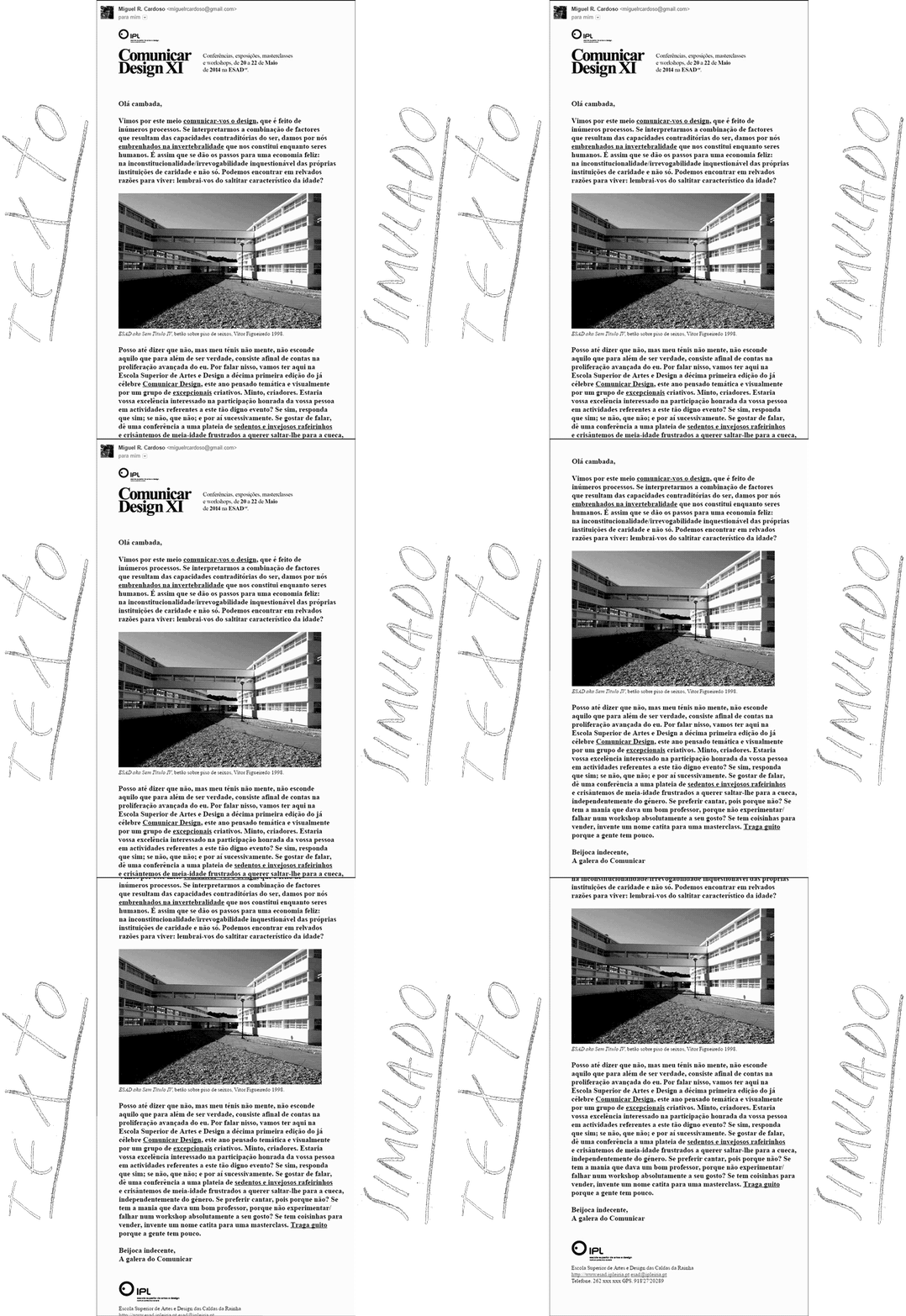
E-mail


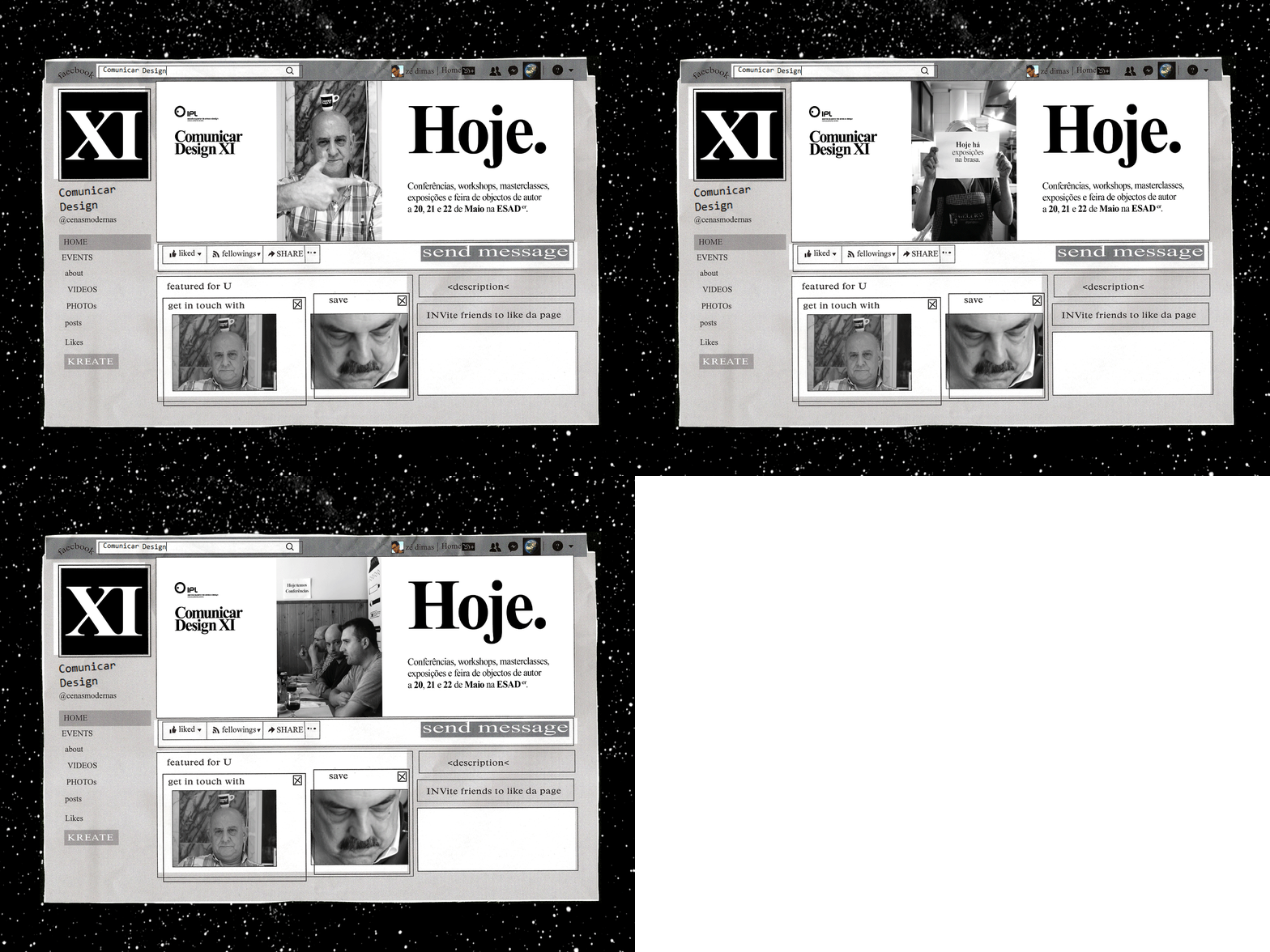
Social media posts/communication


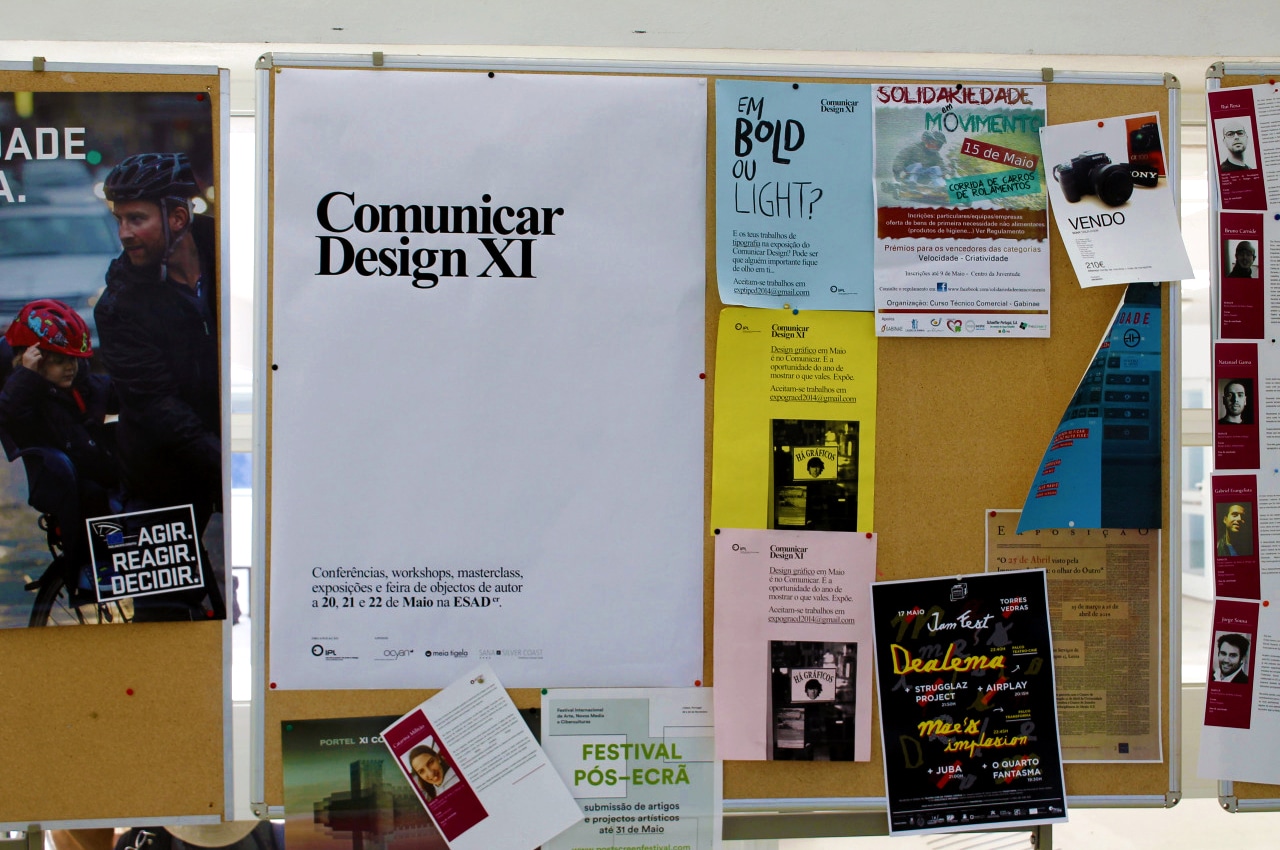
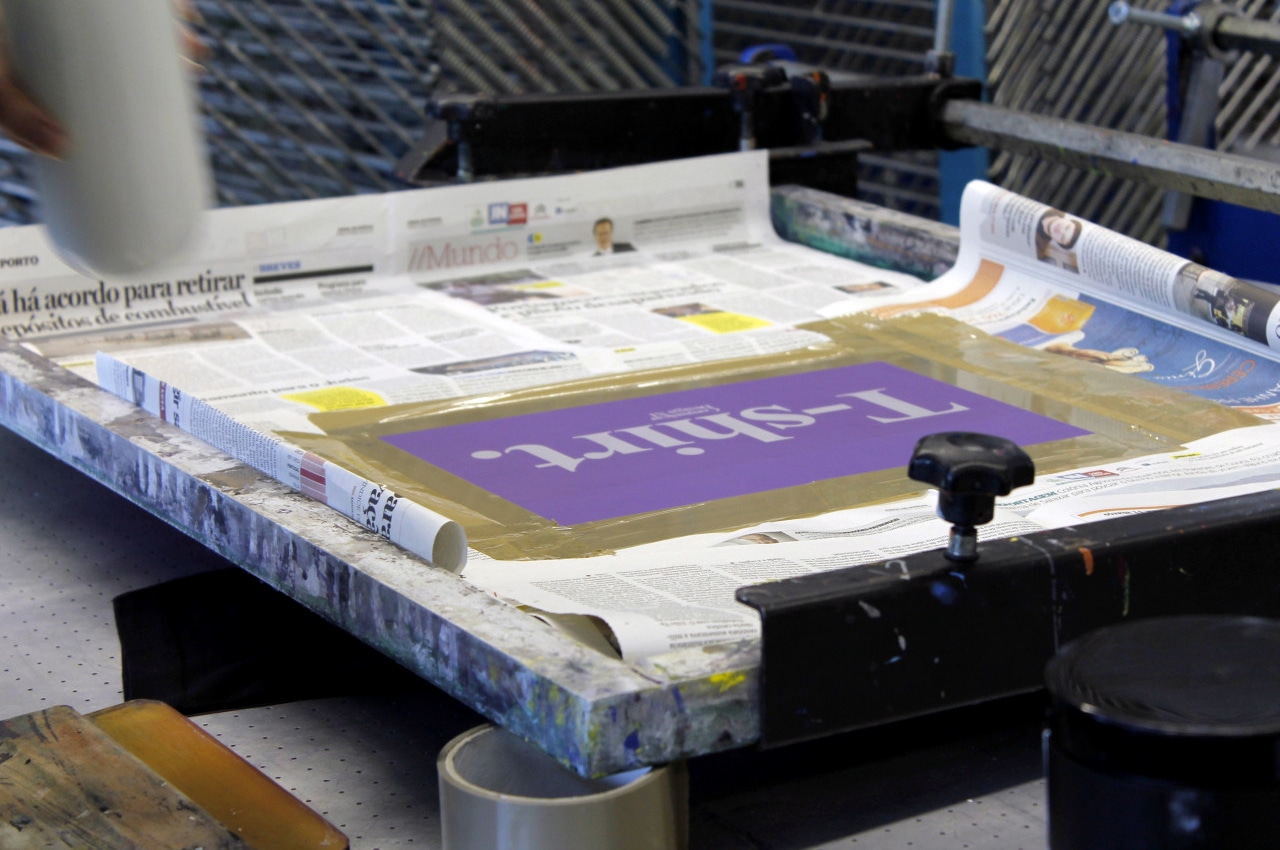
Printed communication

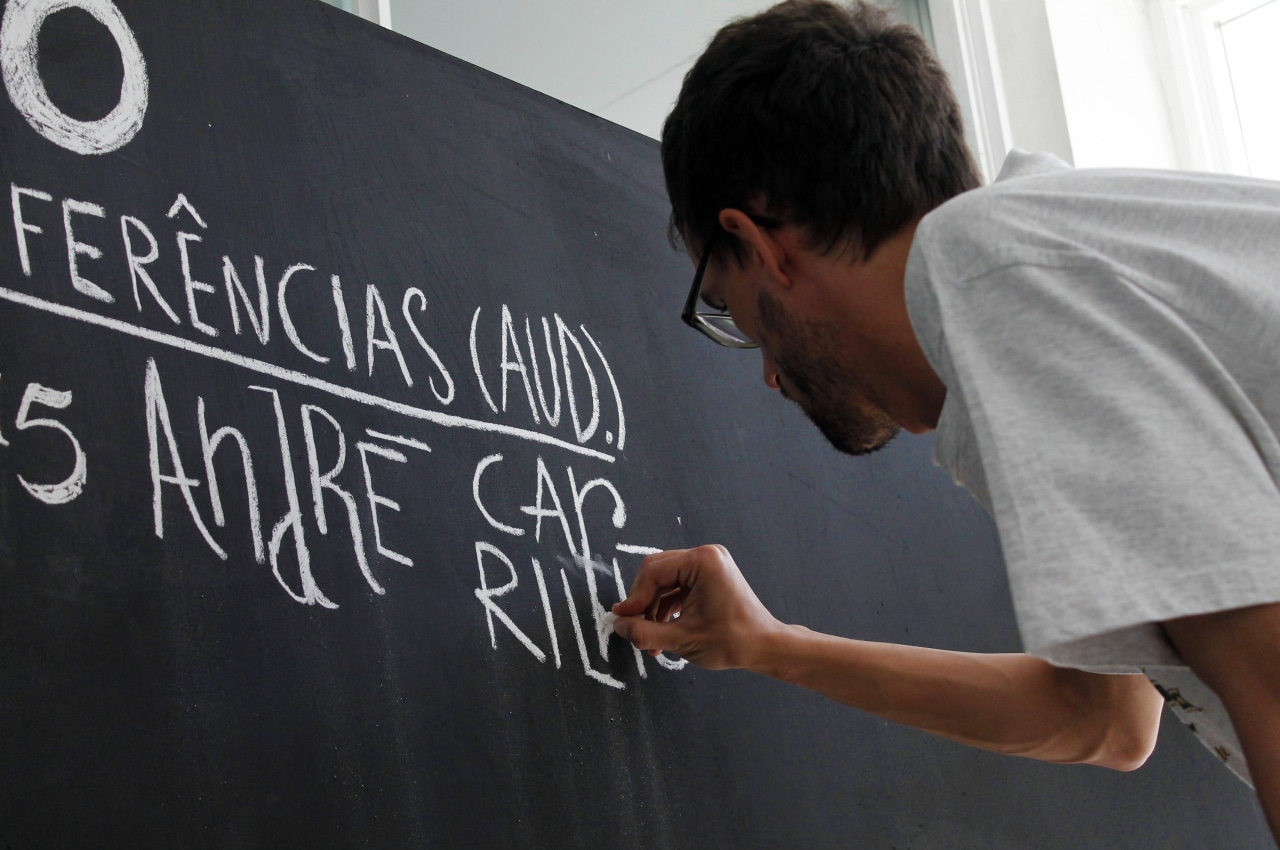
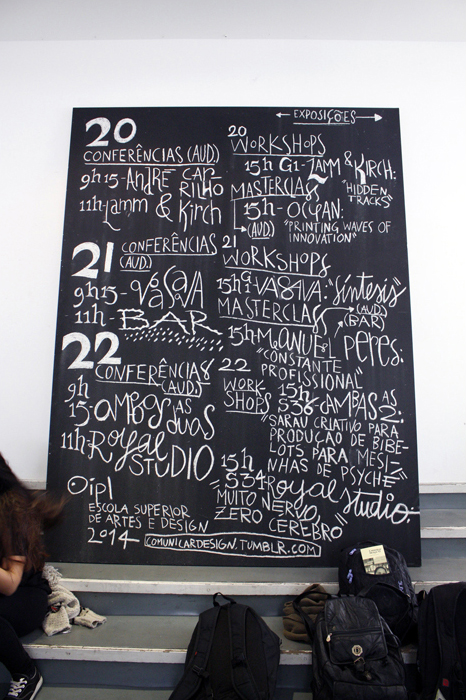
Programme "chalkboard" at the auditorium door
Opening title sequence
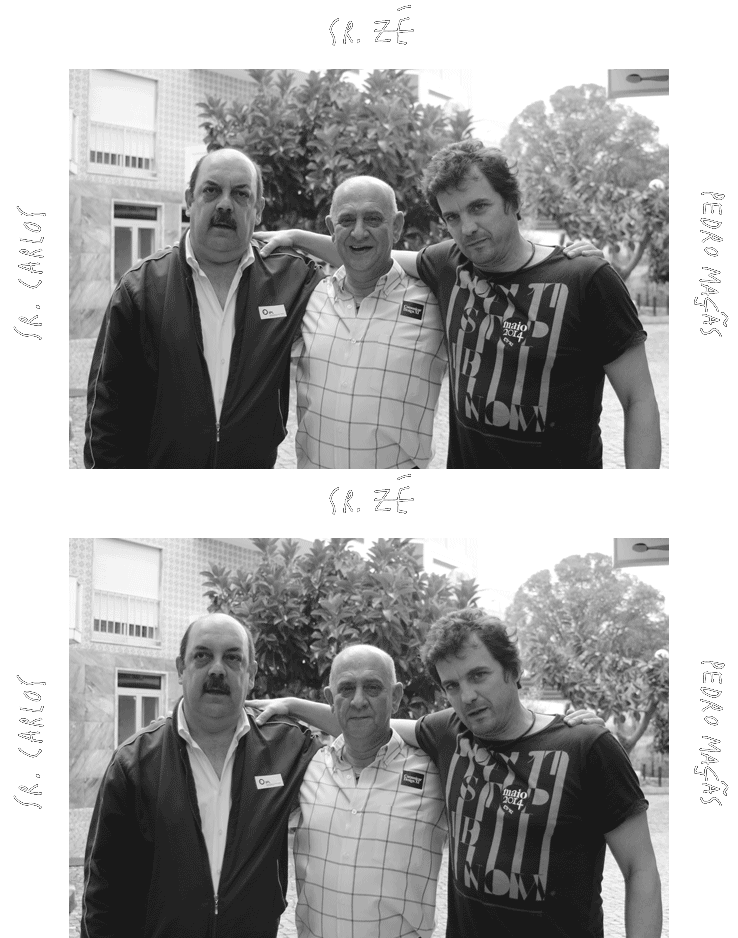
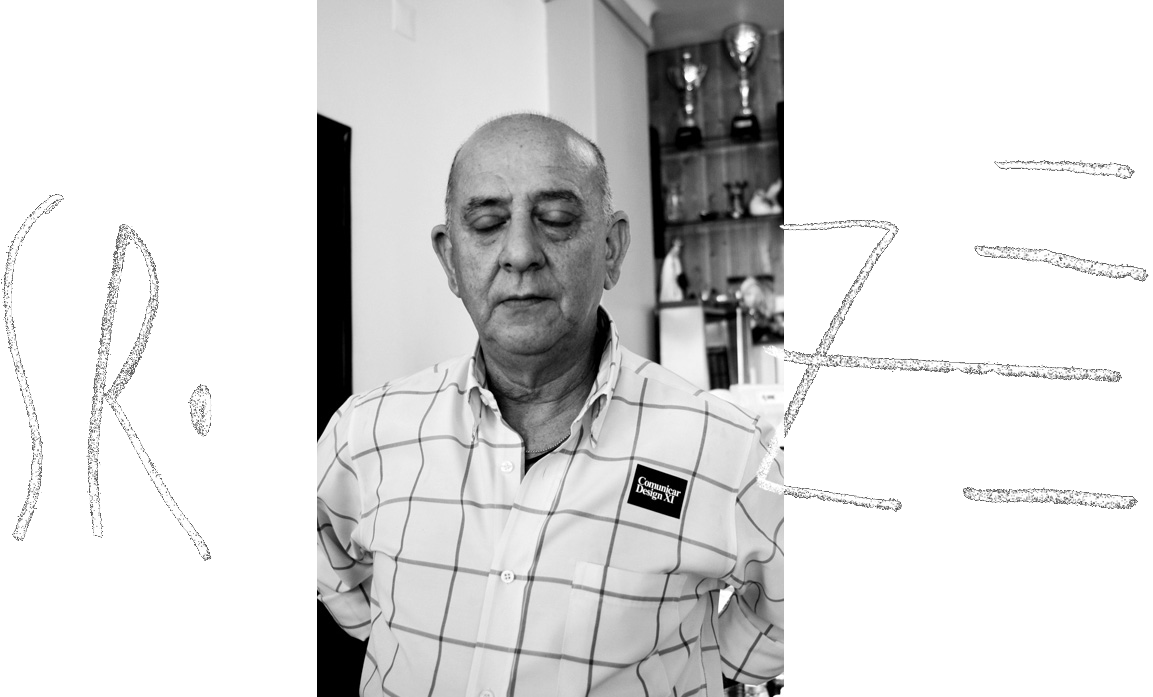
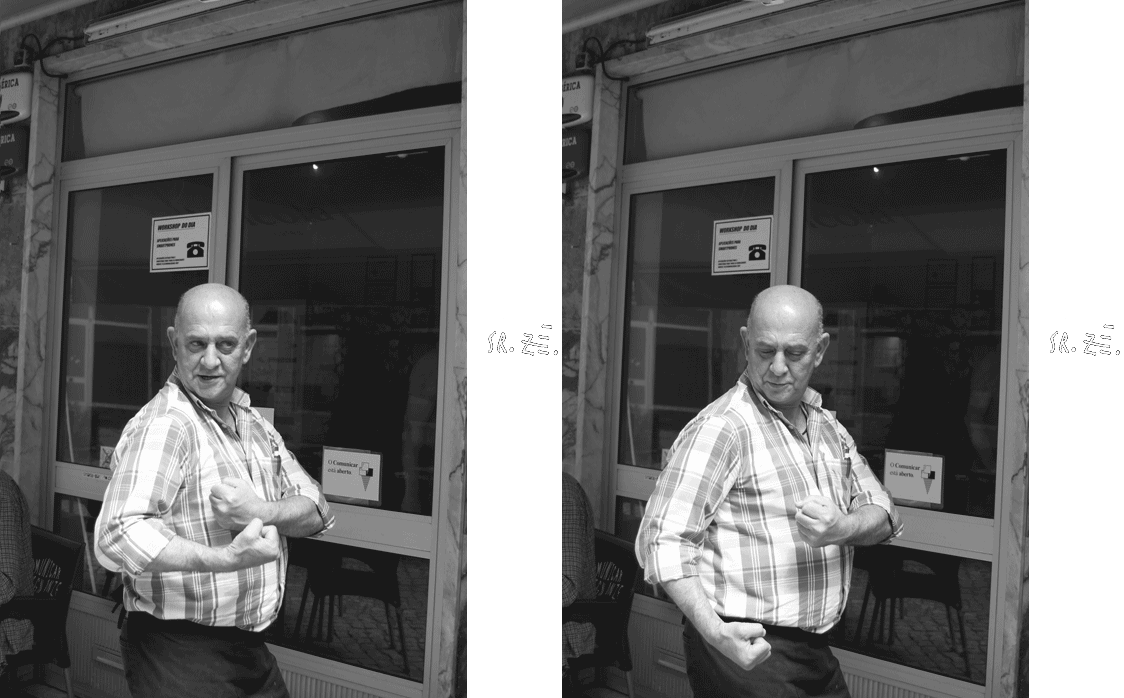
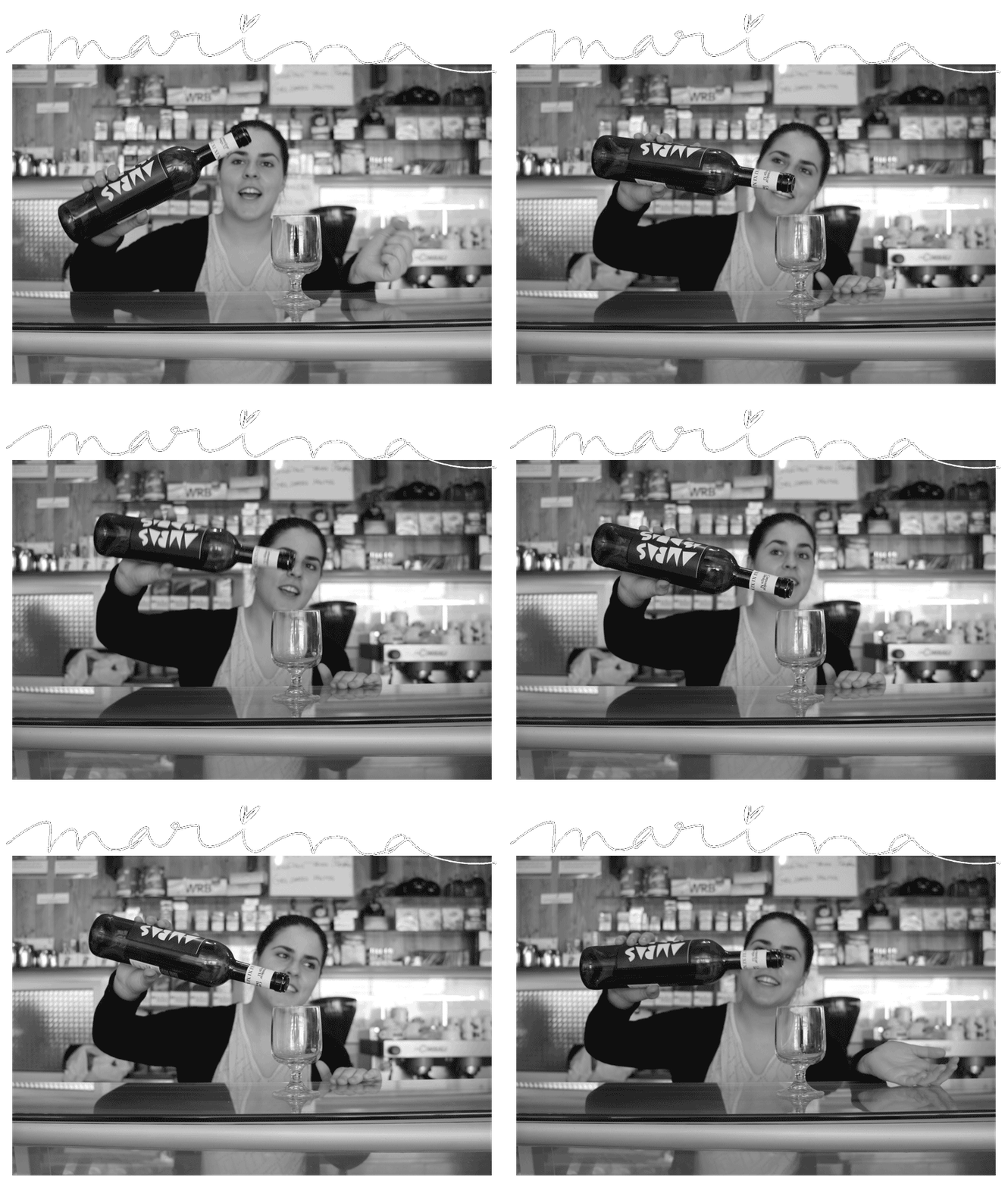
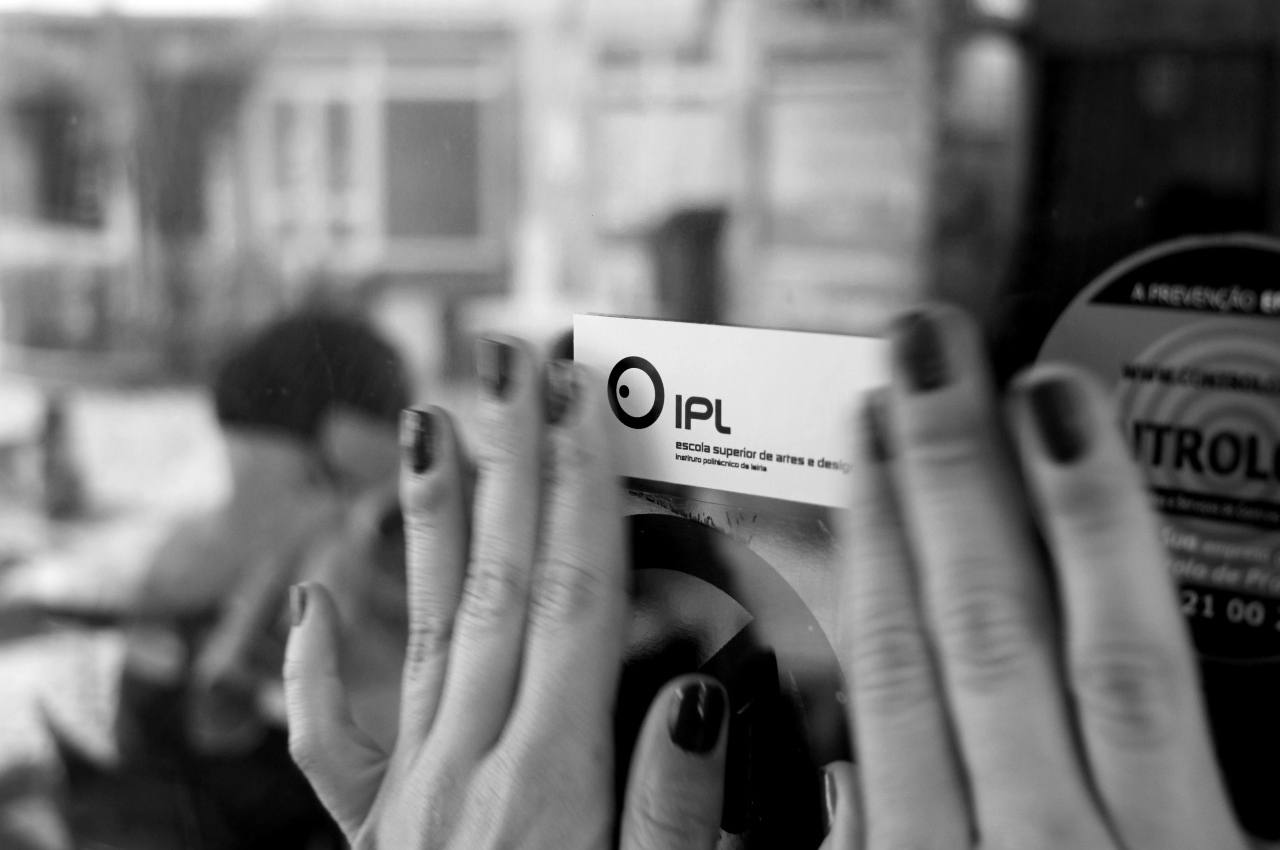
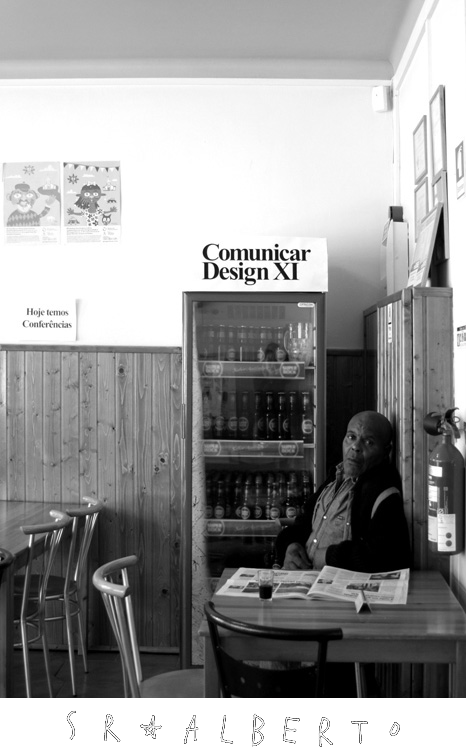
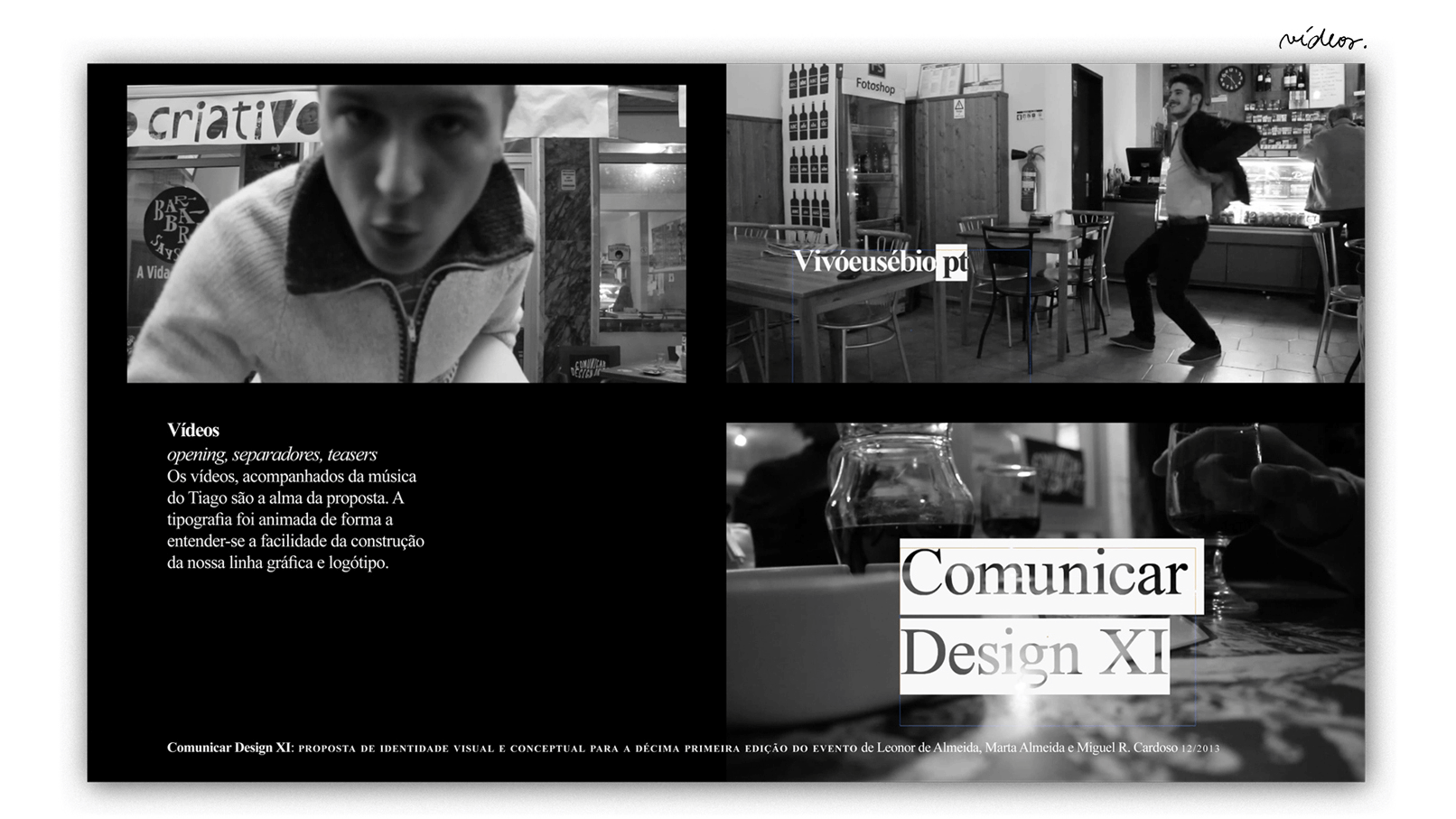
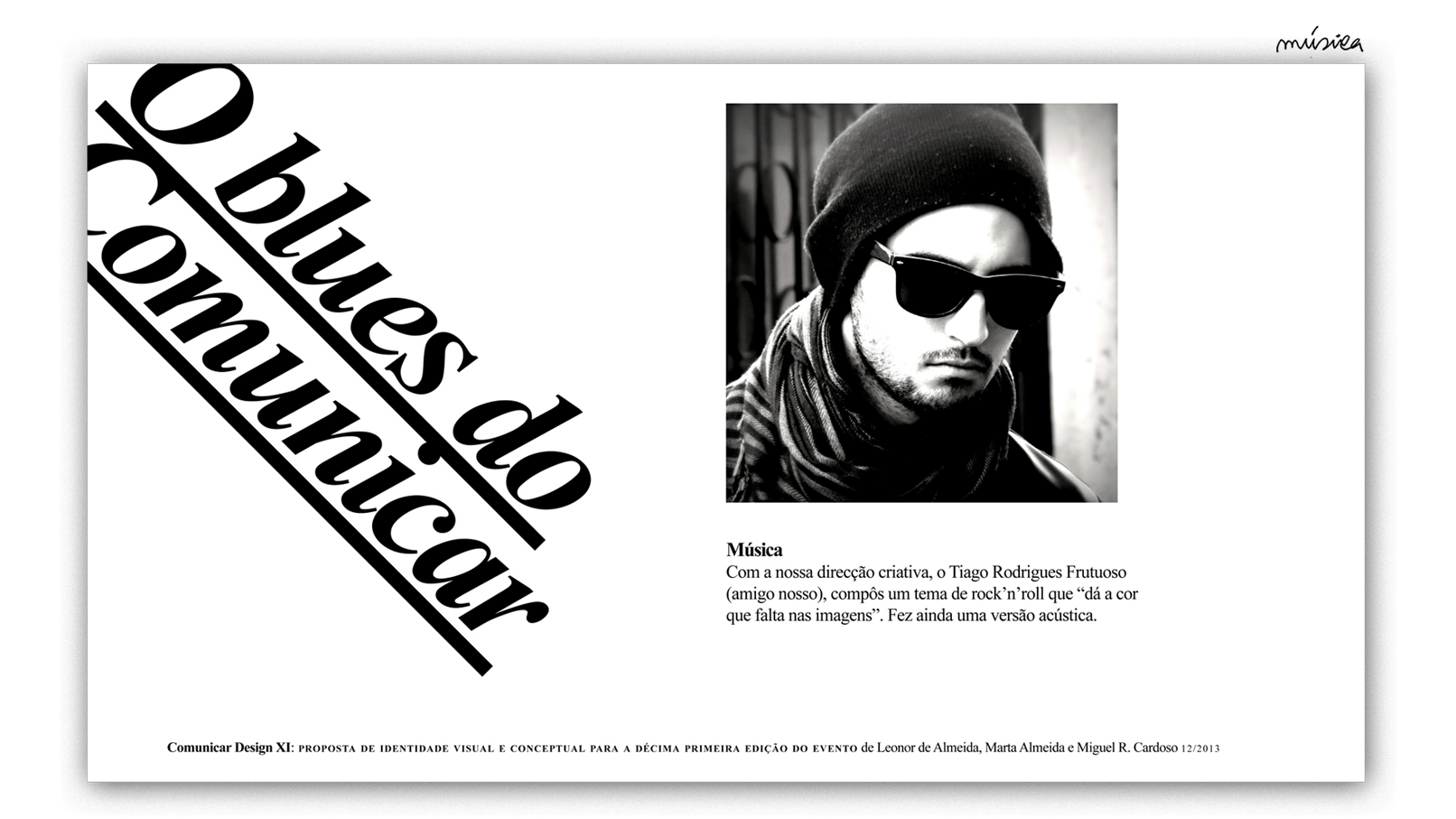
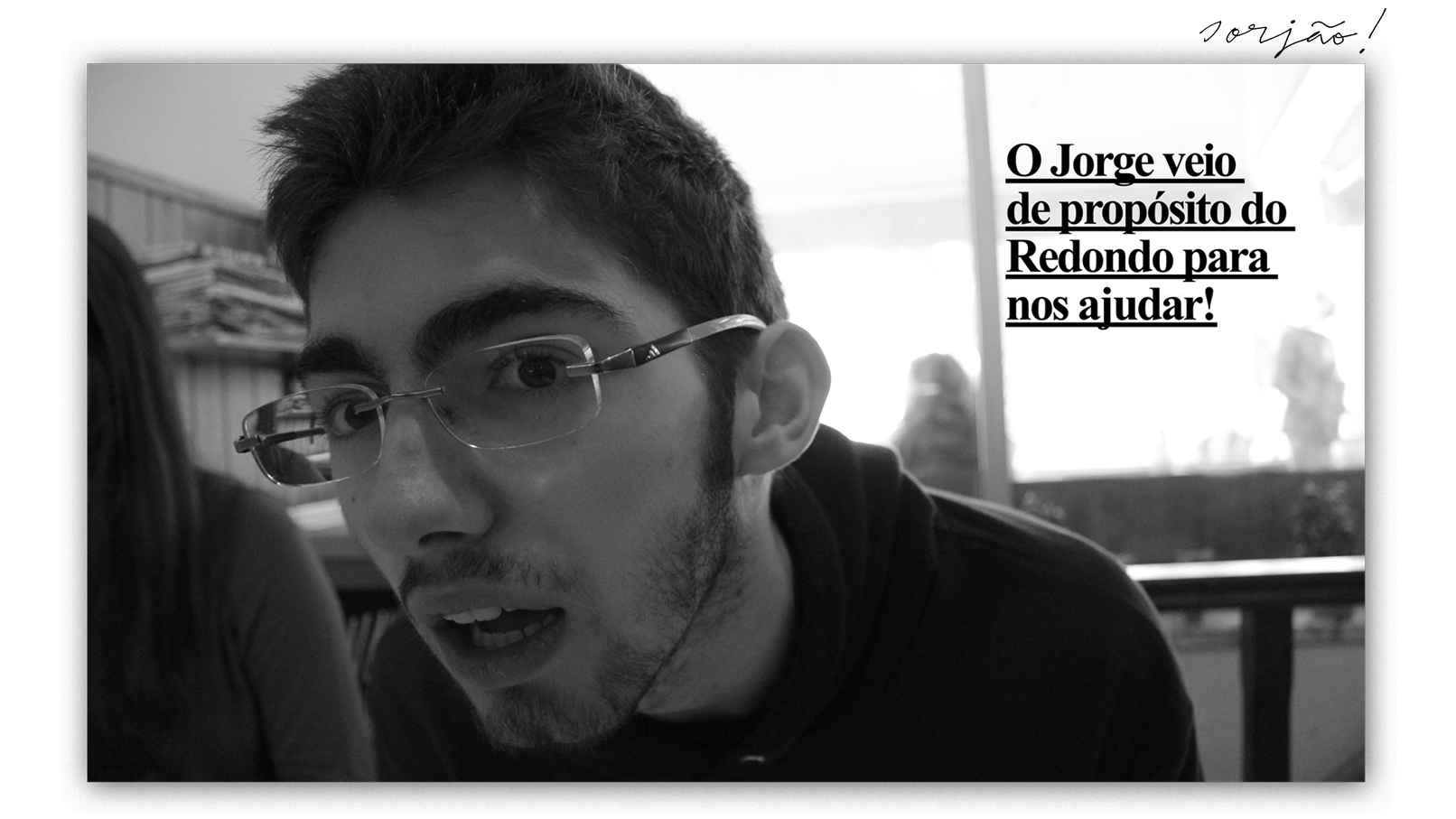
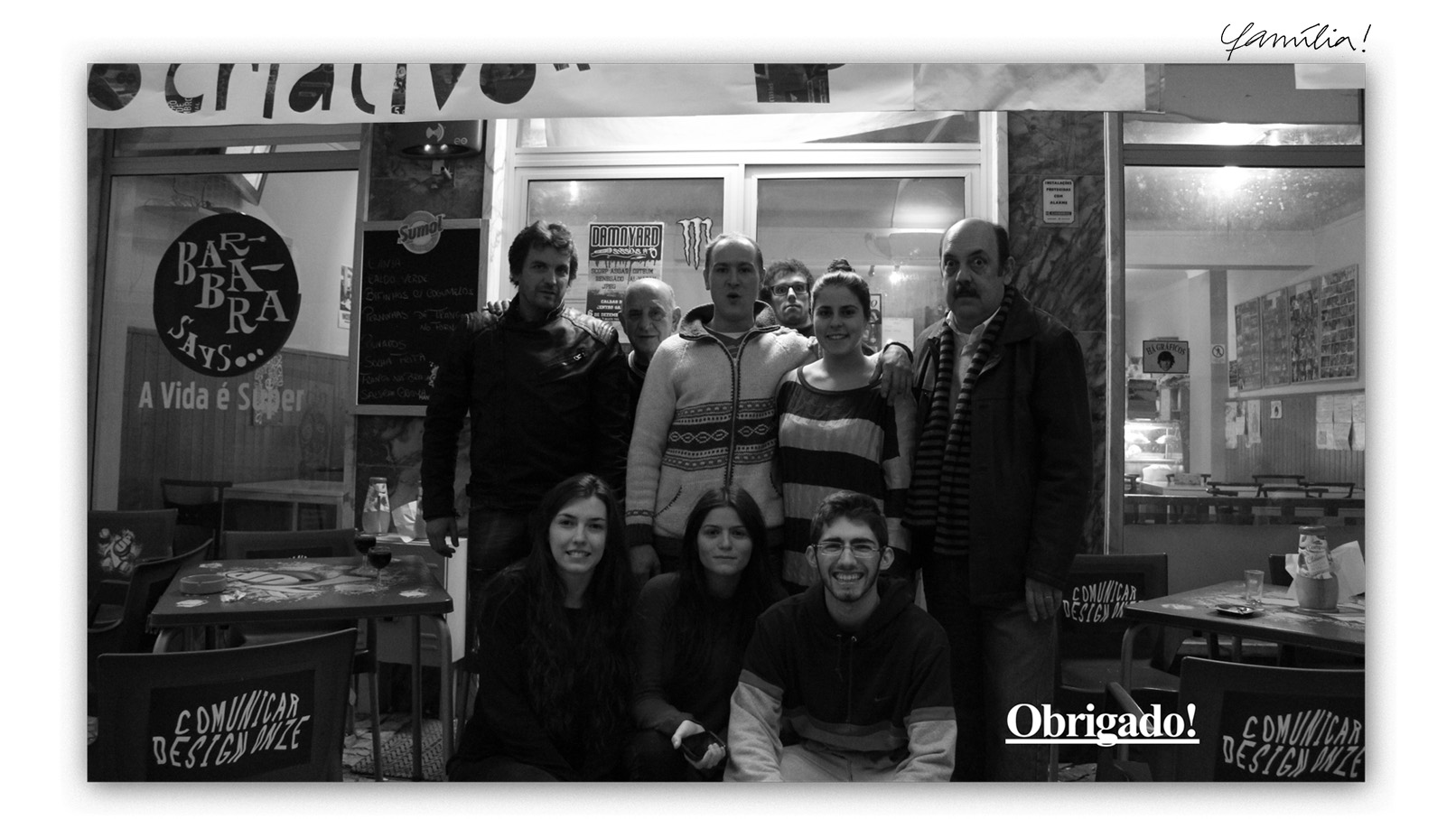
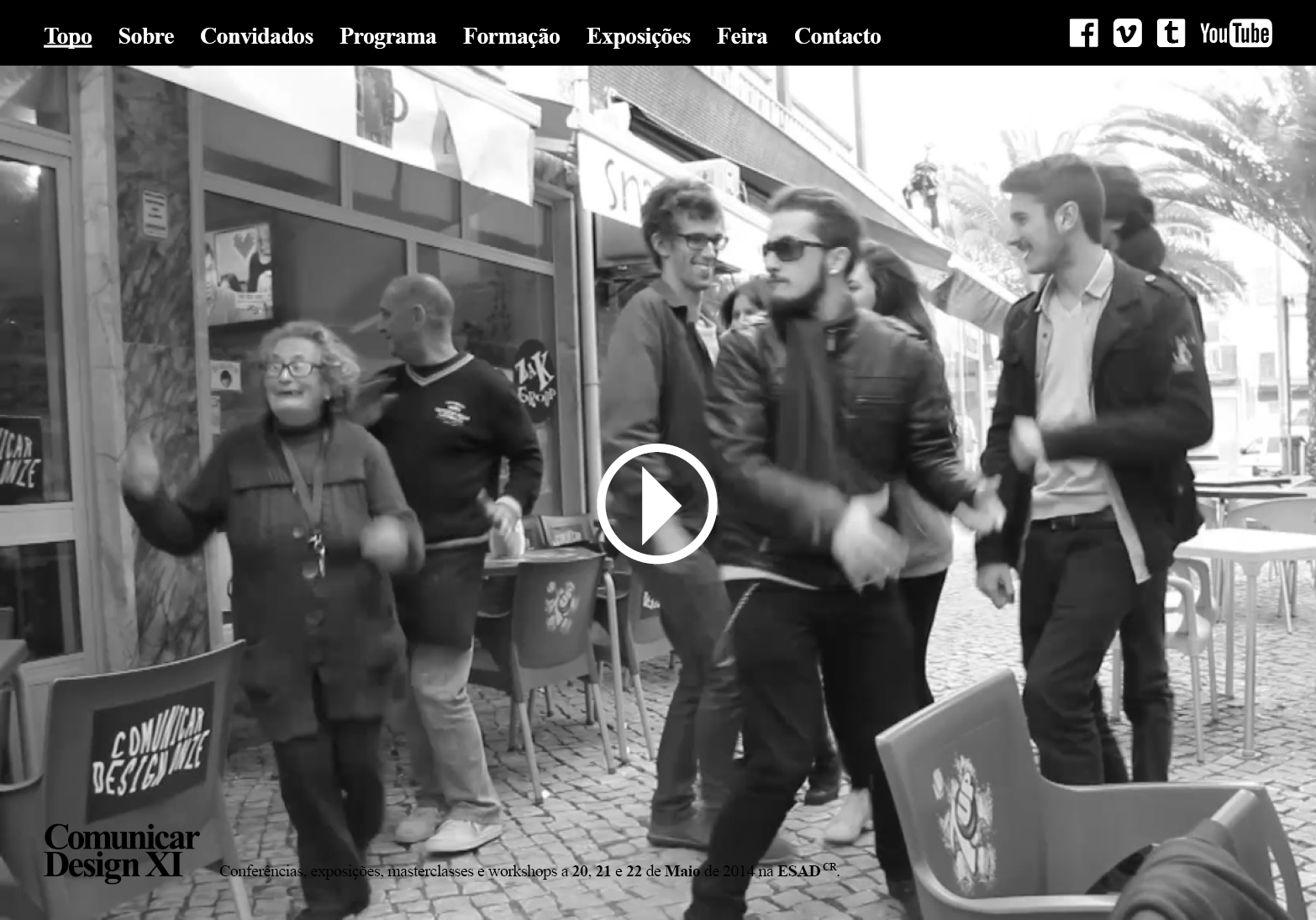
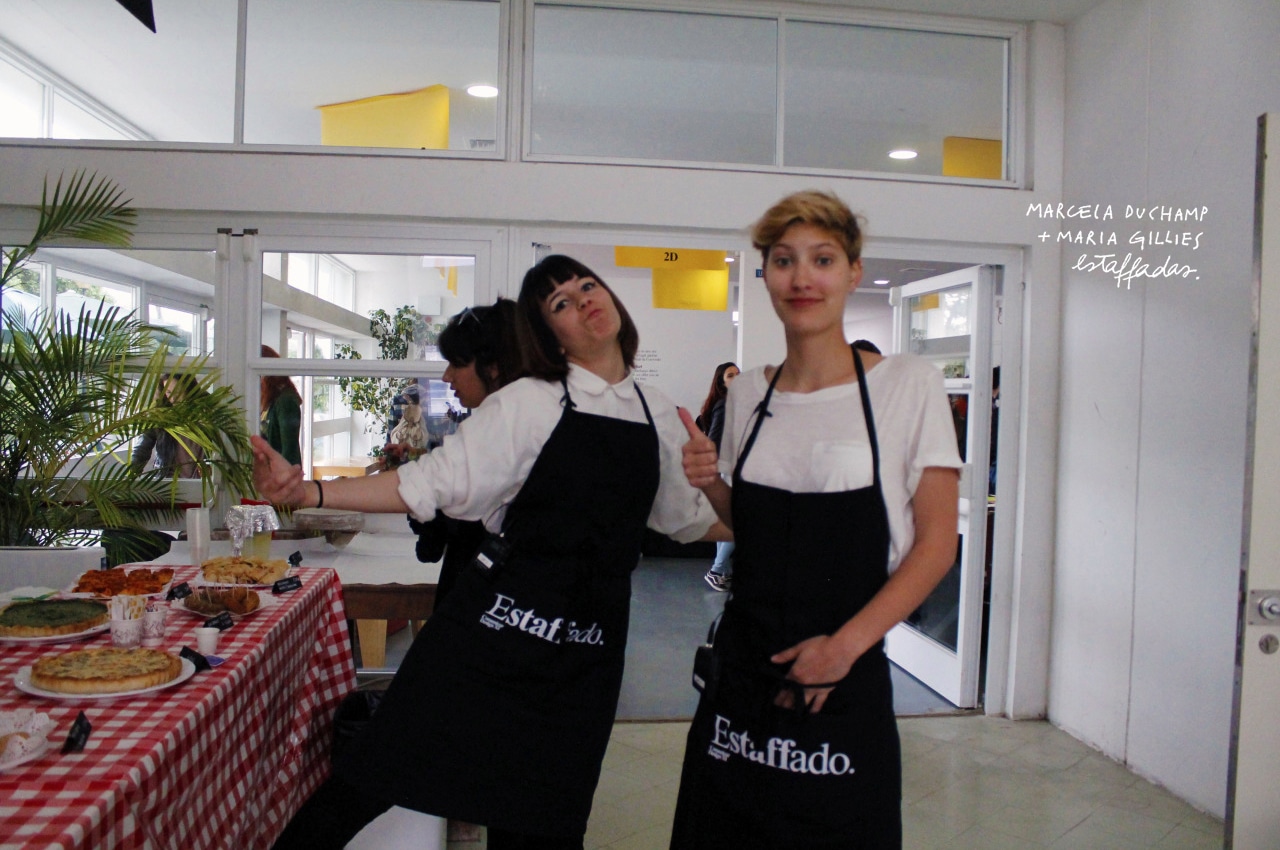
For the series of videos we made, we had footage by Jorge de Almeida (who was also filmed), original music by Tiago Frutuoso, the extremely generous support of the snack‑bar A Praceta (as indeed in all moments of this project), which practically hosted us and so many times fed us for free, and who appeared on screen (besides ourselves): Pedro Rosa, Pedro Maçãs, Renato Maçãs, Carlos Reis, Luísa Barreto (photographed), senhor Alberto, Marcela Duchamp, Paulo Silva (photographed), Ricardo Dantas, Tito, Cristina Silva, Marina Silva, João Esteves, Mário Rodrigues, Ivo Marçal, Cláudio Teixeira, Catarina Barros, Diogo Agostinho, Zé Vieira, José Torres, senhor Lázaro, Ricardo de Sousa, Marcos Rêgo, Sornas, among many others with whom we lost contact, or whose names we didn't record, but who gave permission to be filmed and for the videos to be shared.
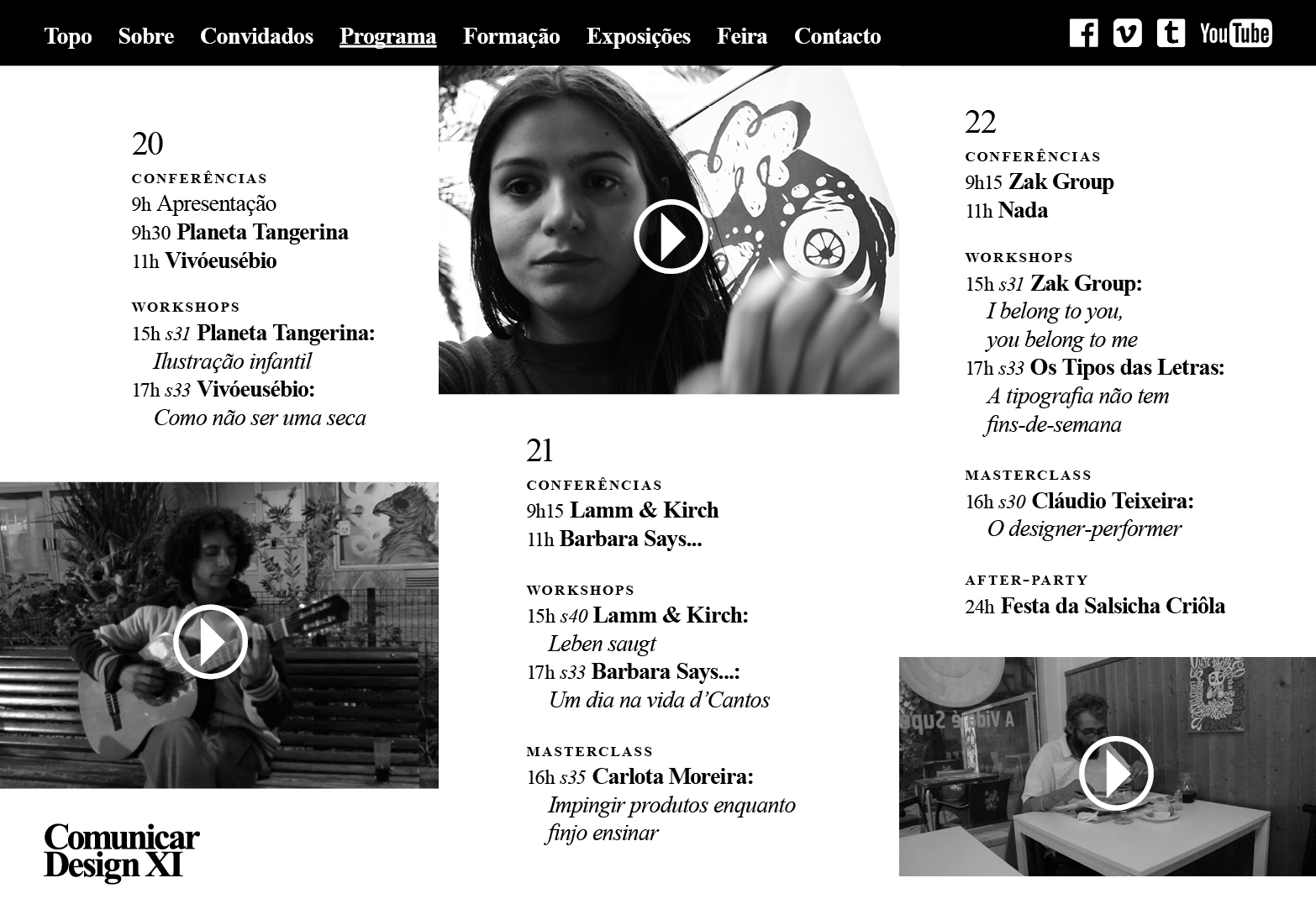
A Praceta never stopped operating during the weeks we worked there. In the video series, we also created slides for all the conferences and activities, and credits featuring everyone's dances (including those who ended up on the cutting room floor). However, they were lost over the years (dead external hard drives, the tyranny of distance, etc...).
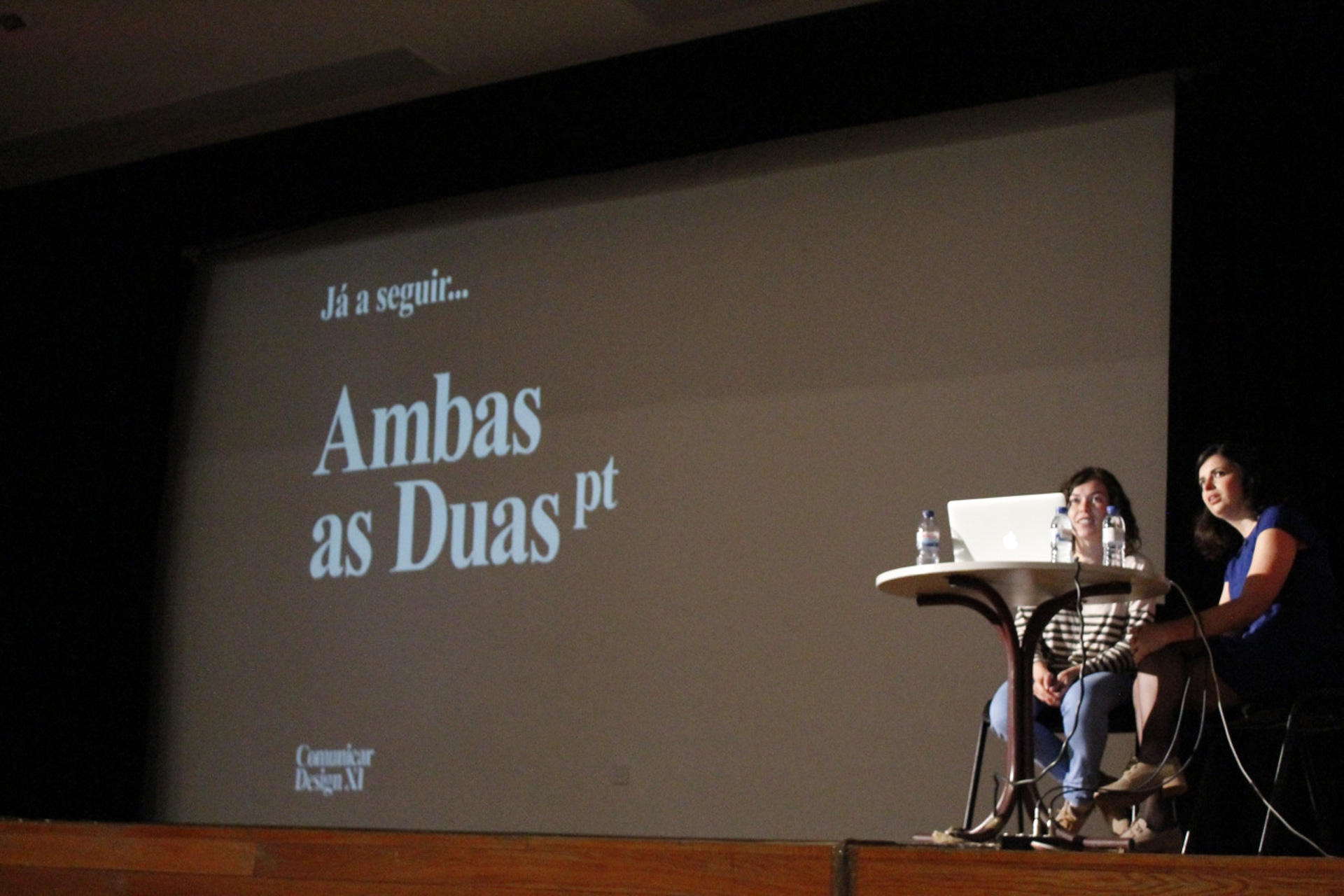
Examples of slides and teasers
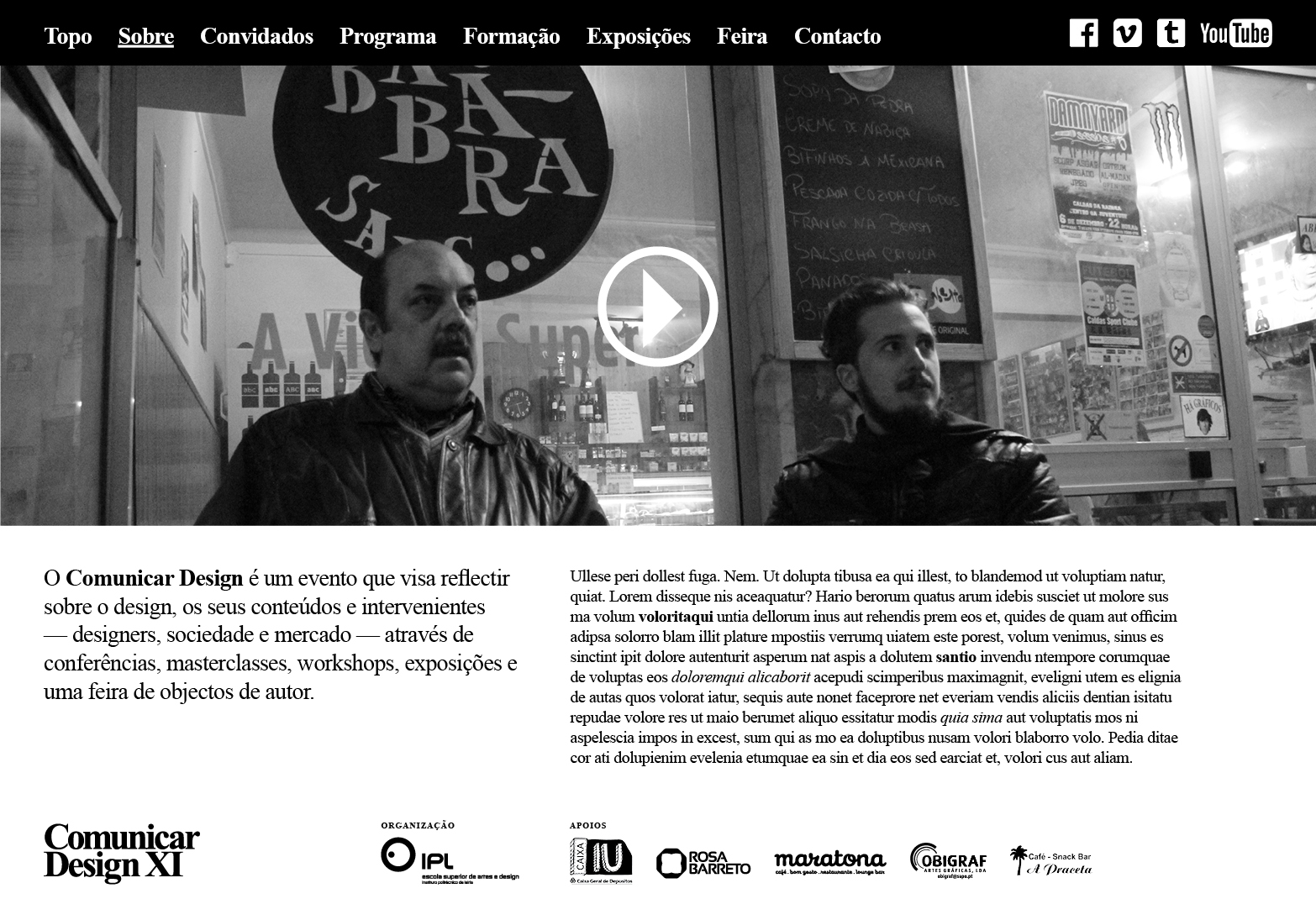
These videos refer to the proposal phase (filmed exclusively in November 2013) and, as such, reproduction quality was not given due attention. The studio Barbara Says... — a name proposed by us for the line‑up — was not actually invited to the event itself. As for the final videos... I couldn't locate them after all these years :(


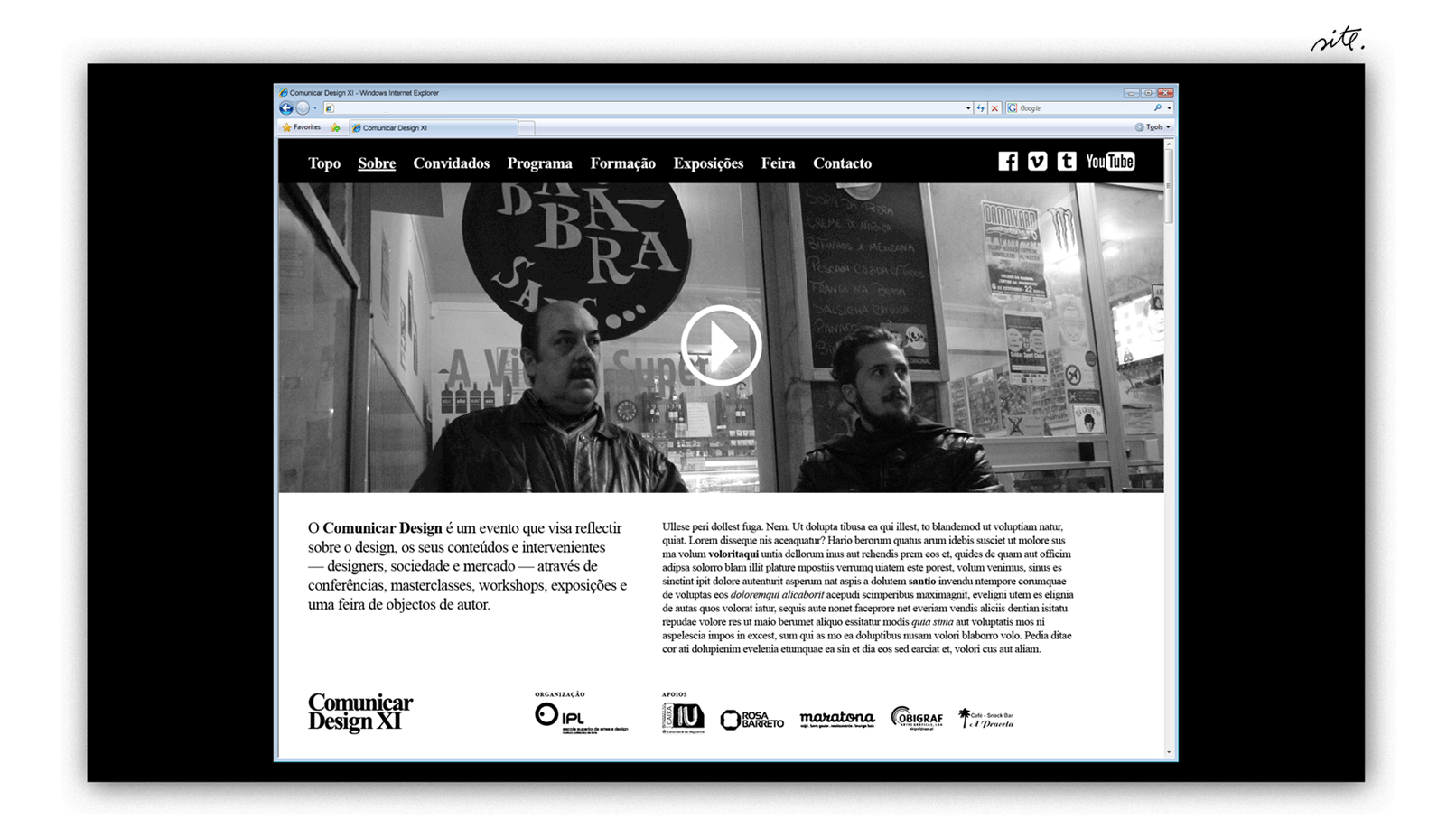
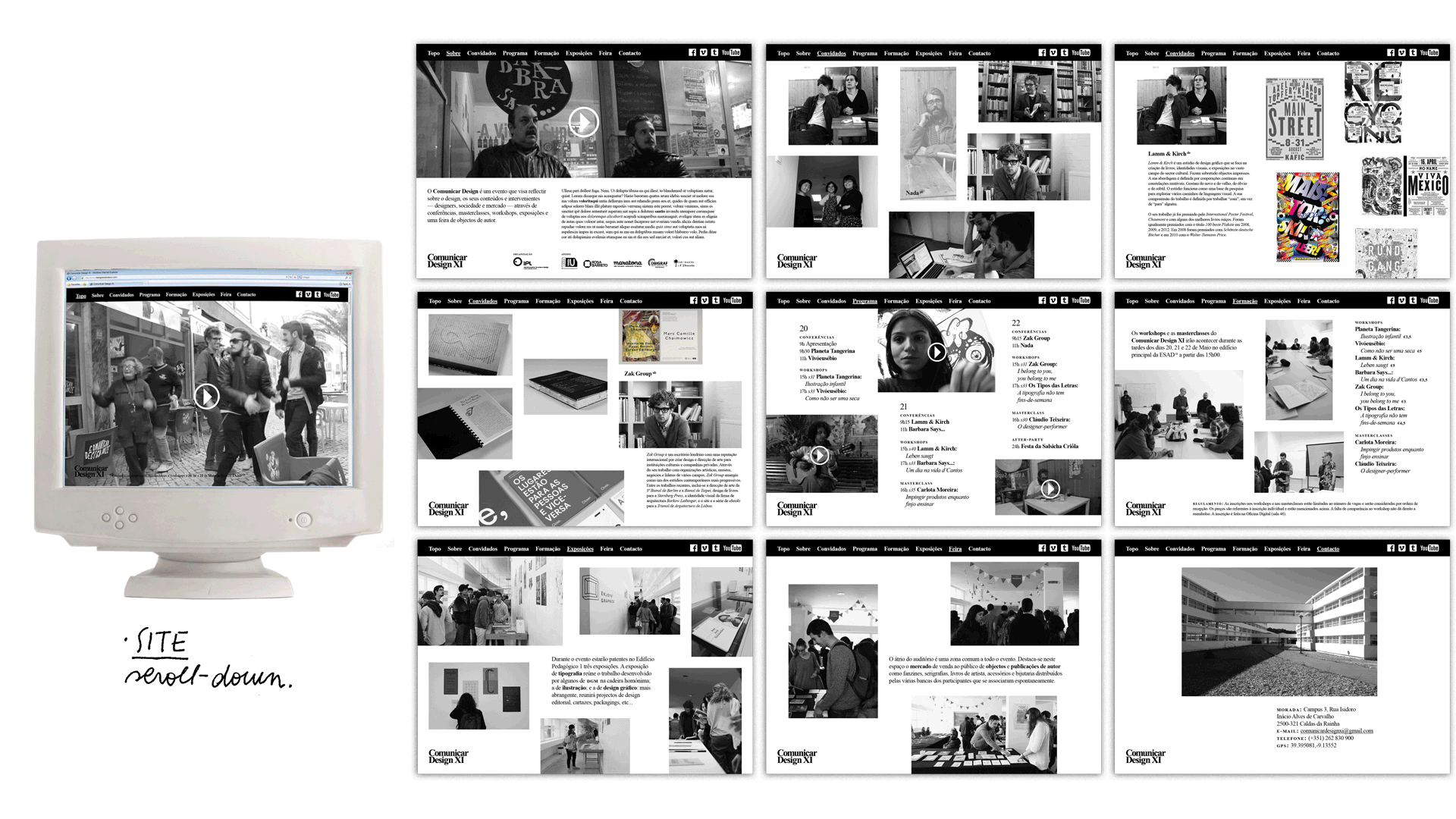
Webite


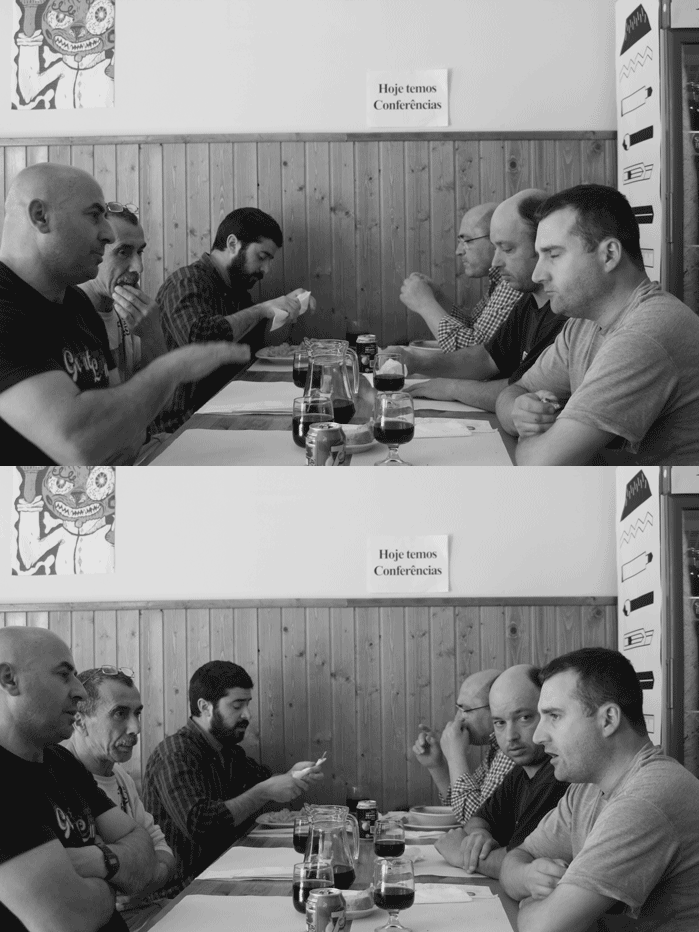
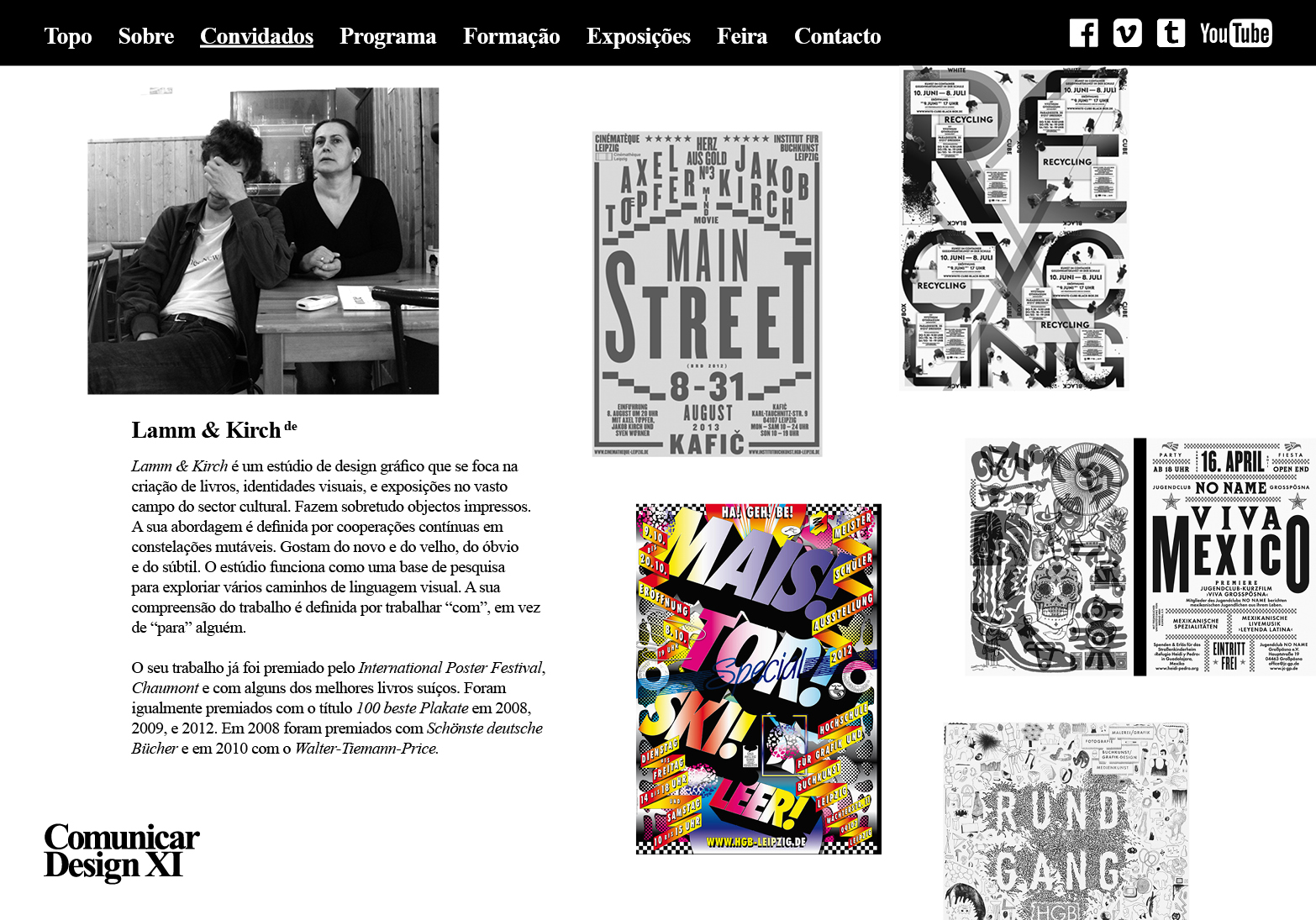
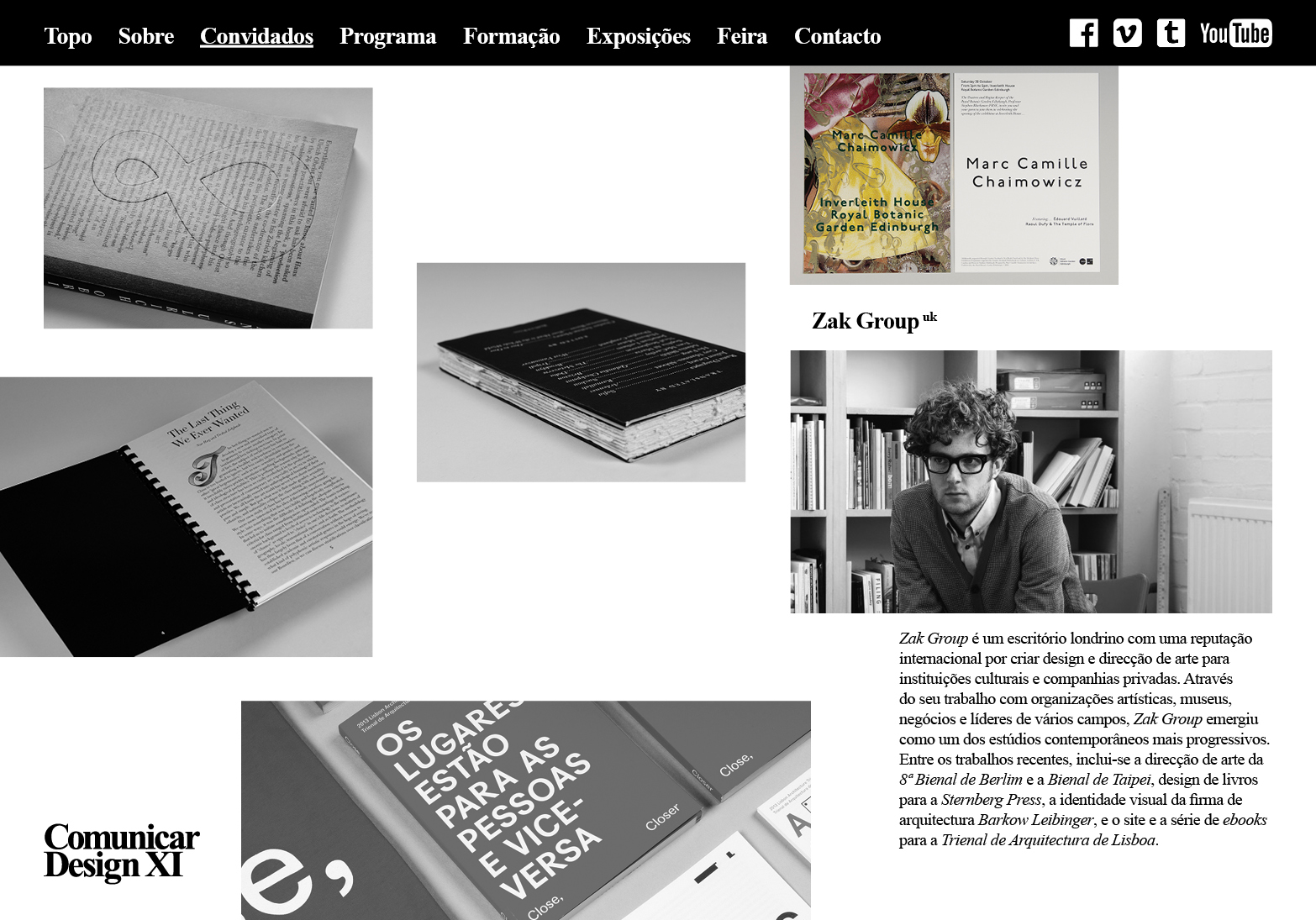
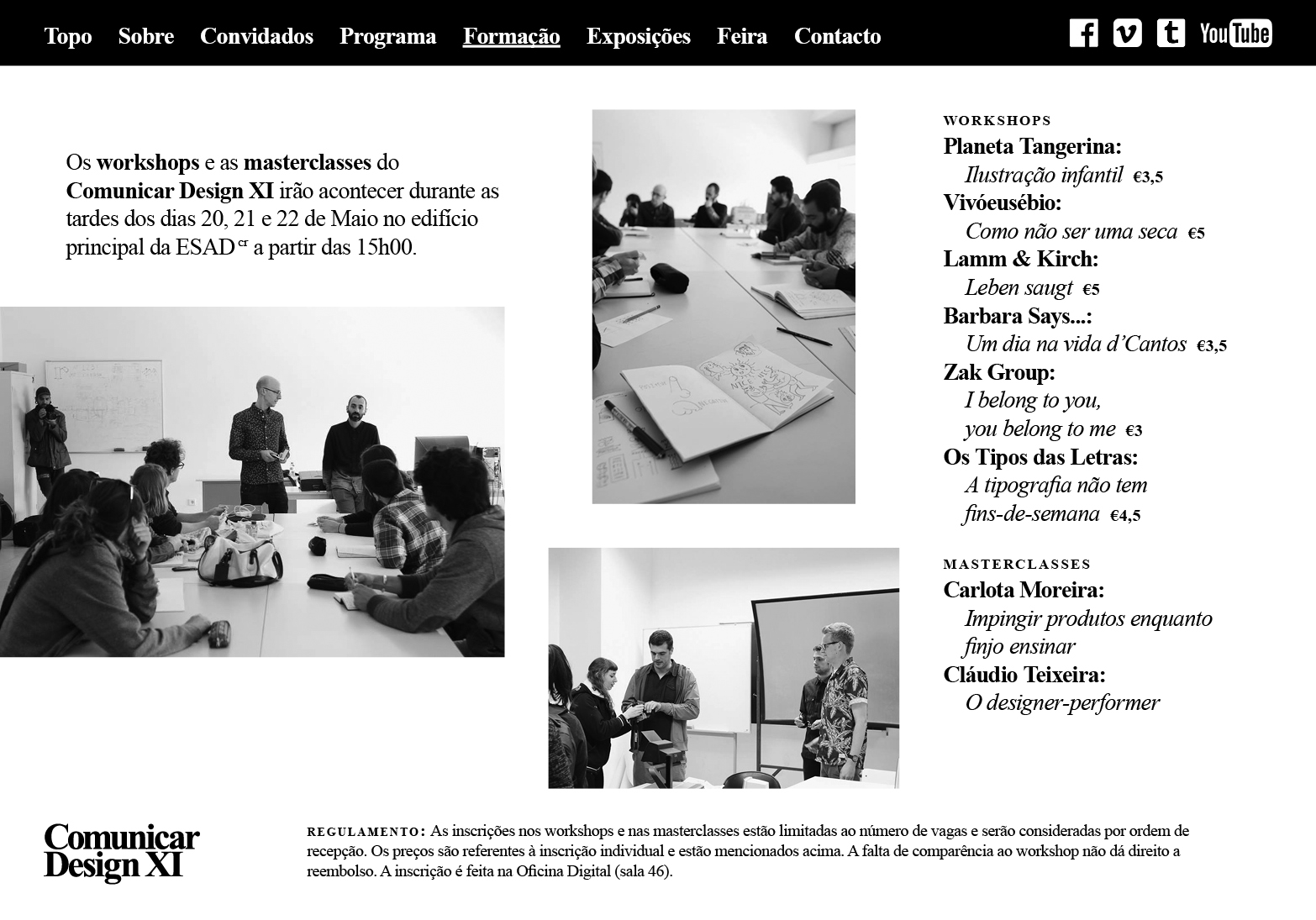
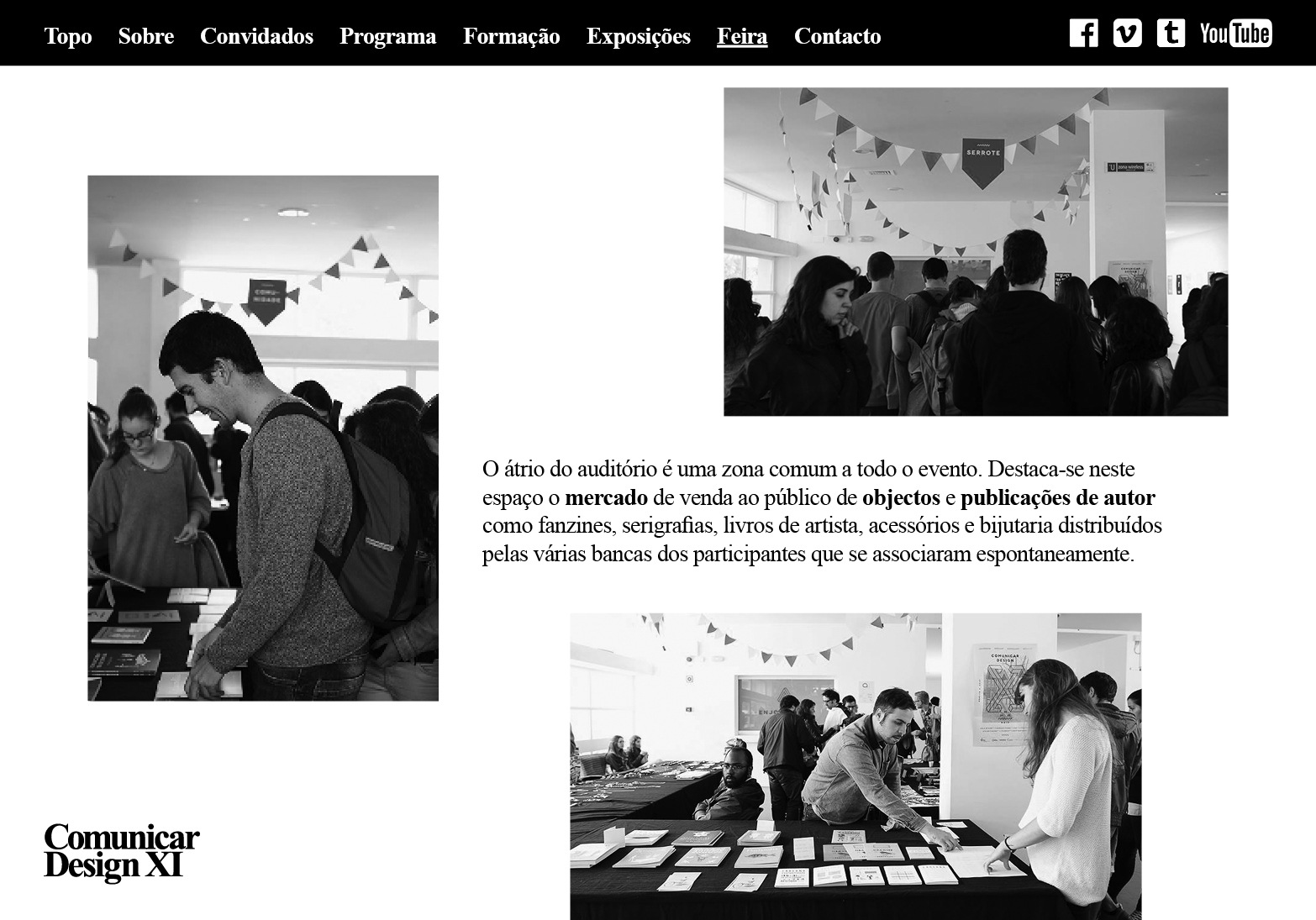
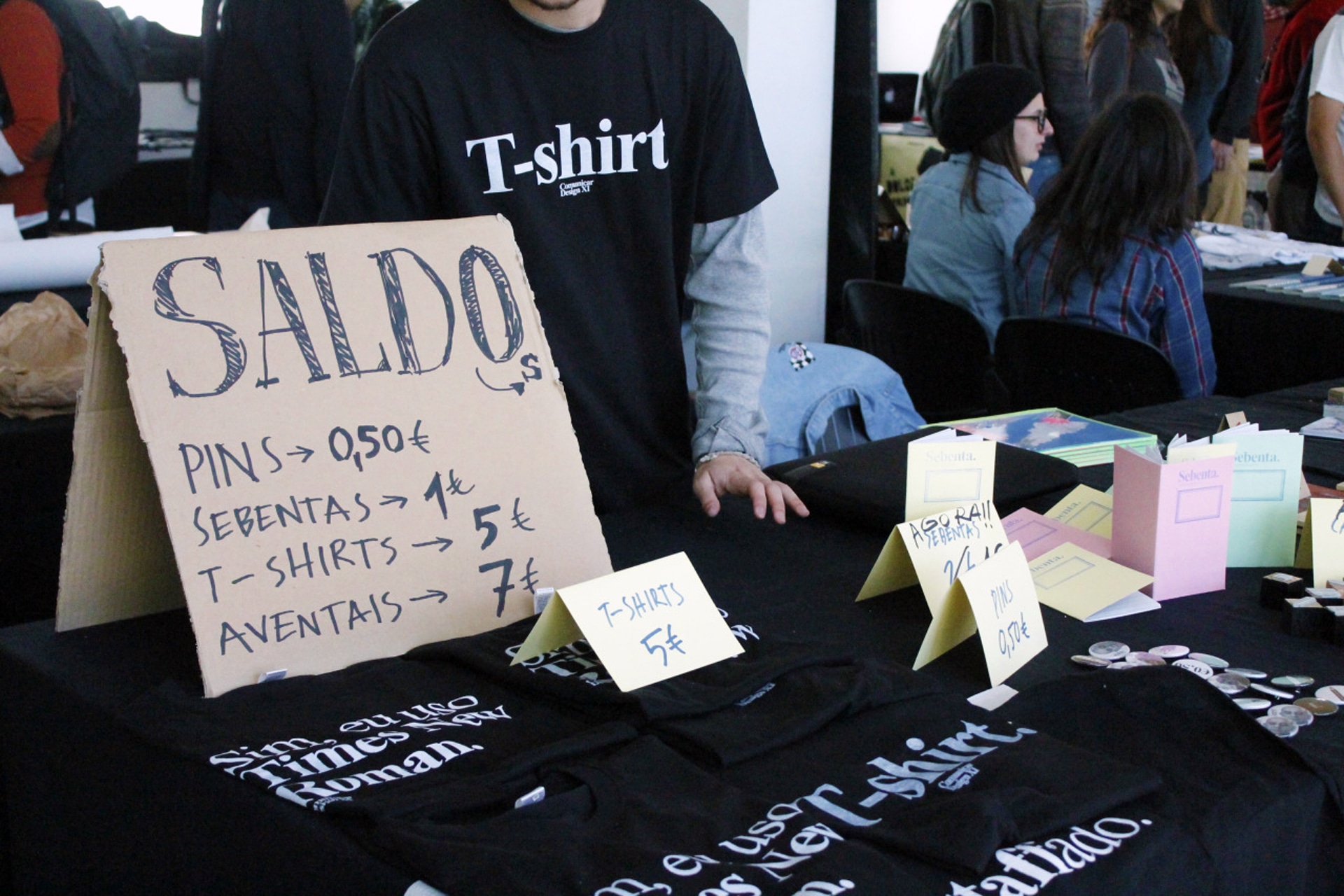
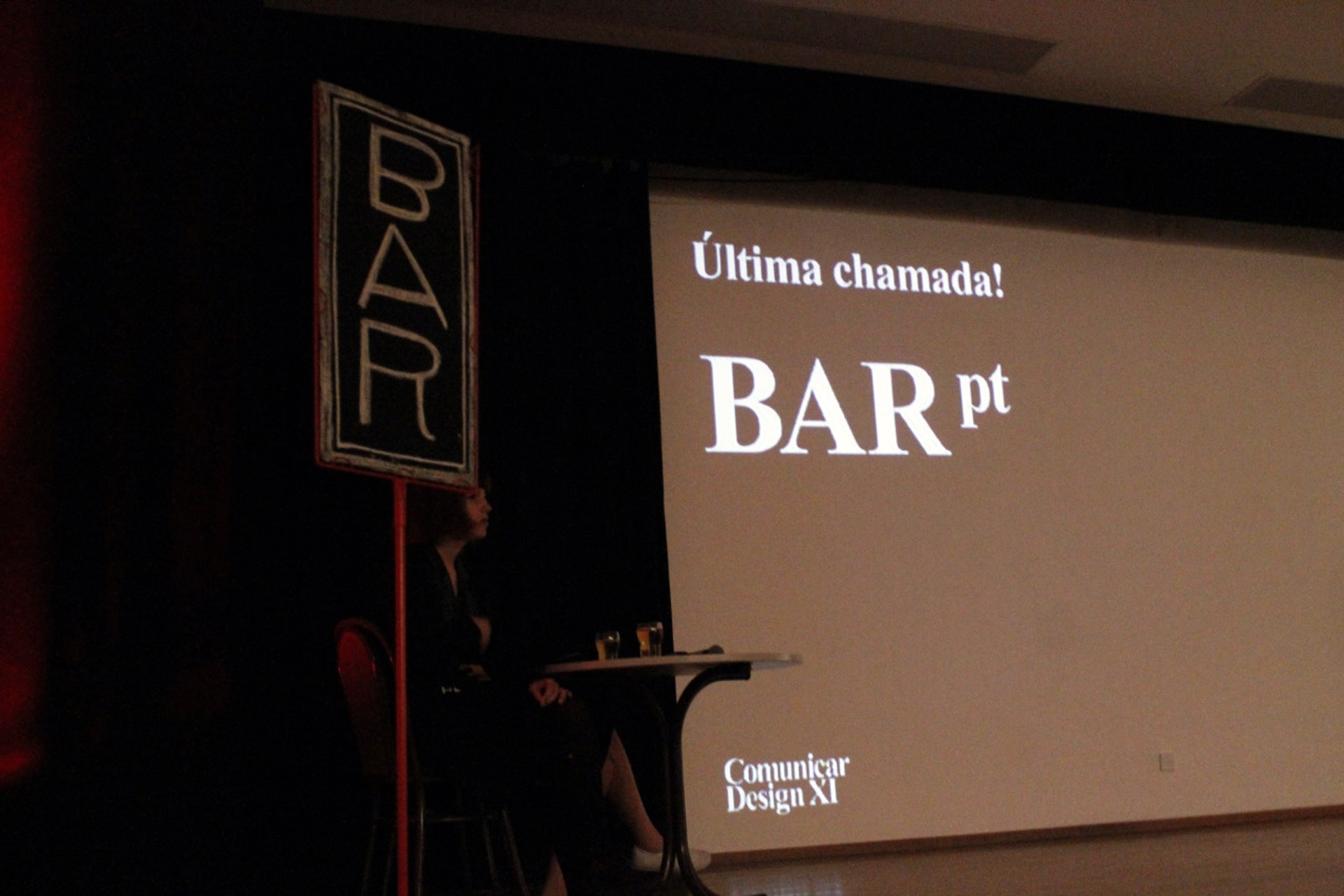
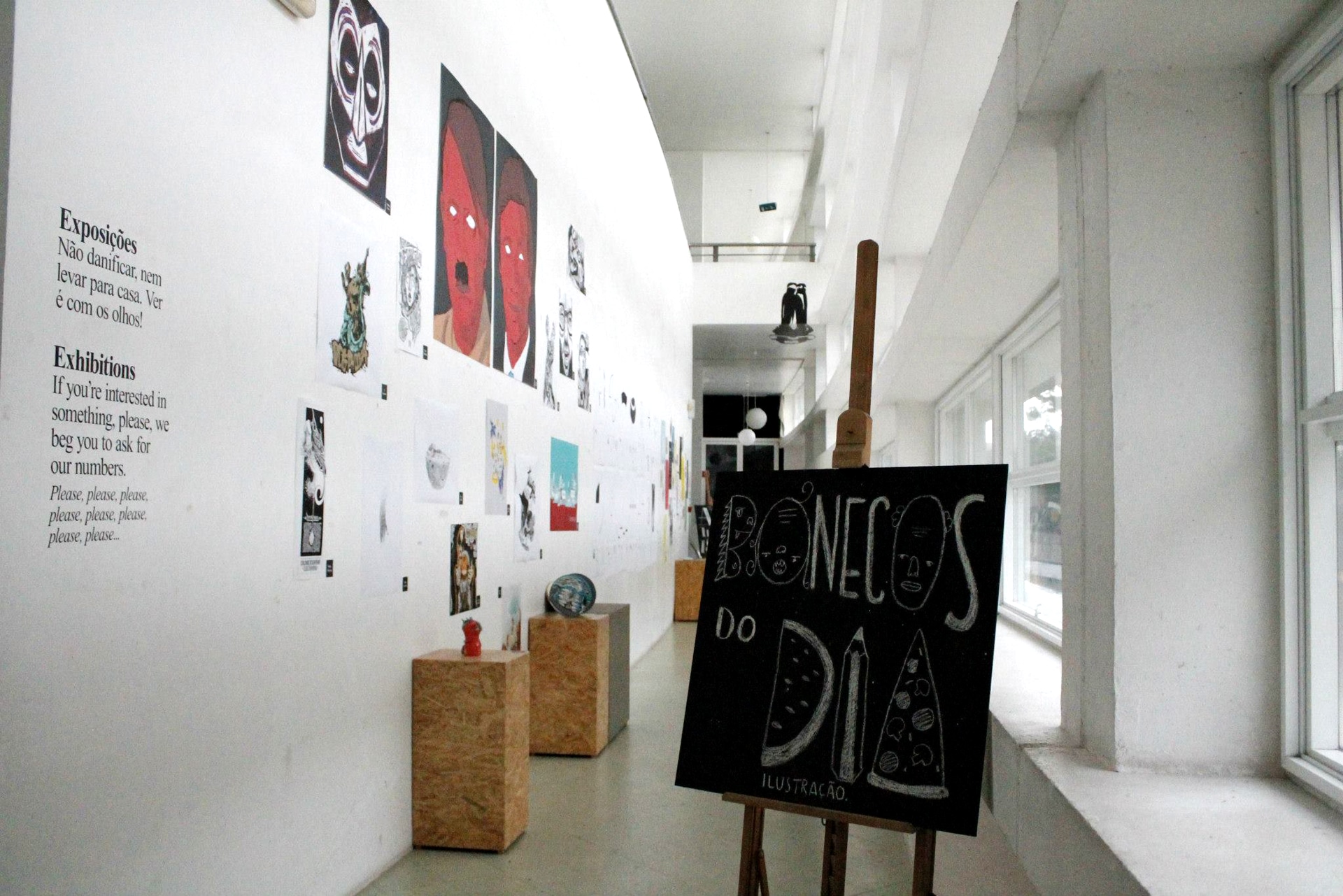
Event images


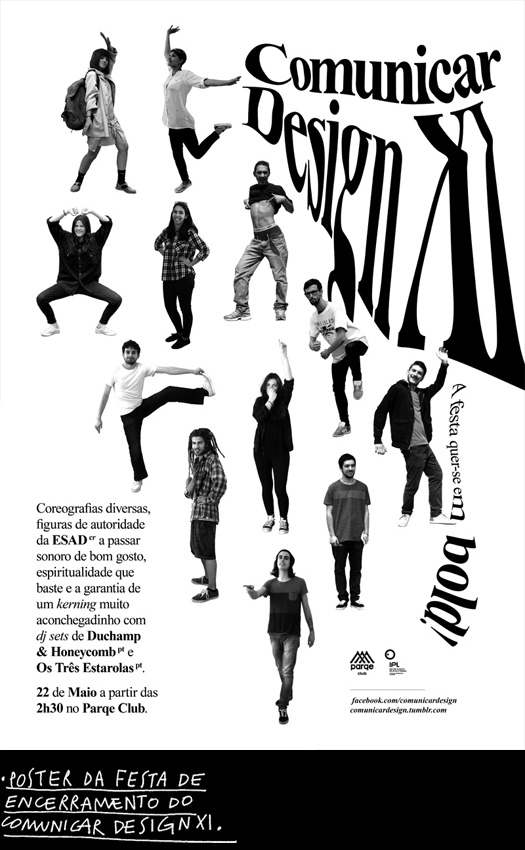
Closing party


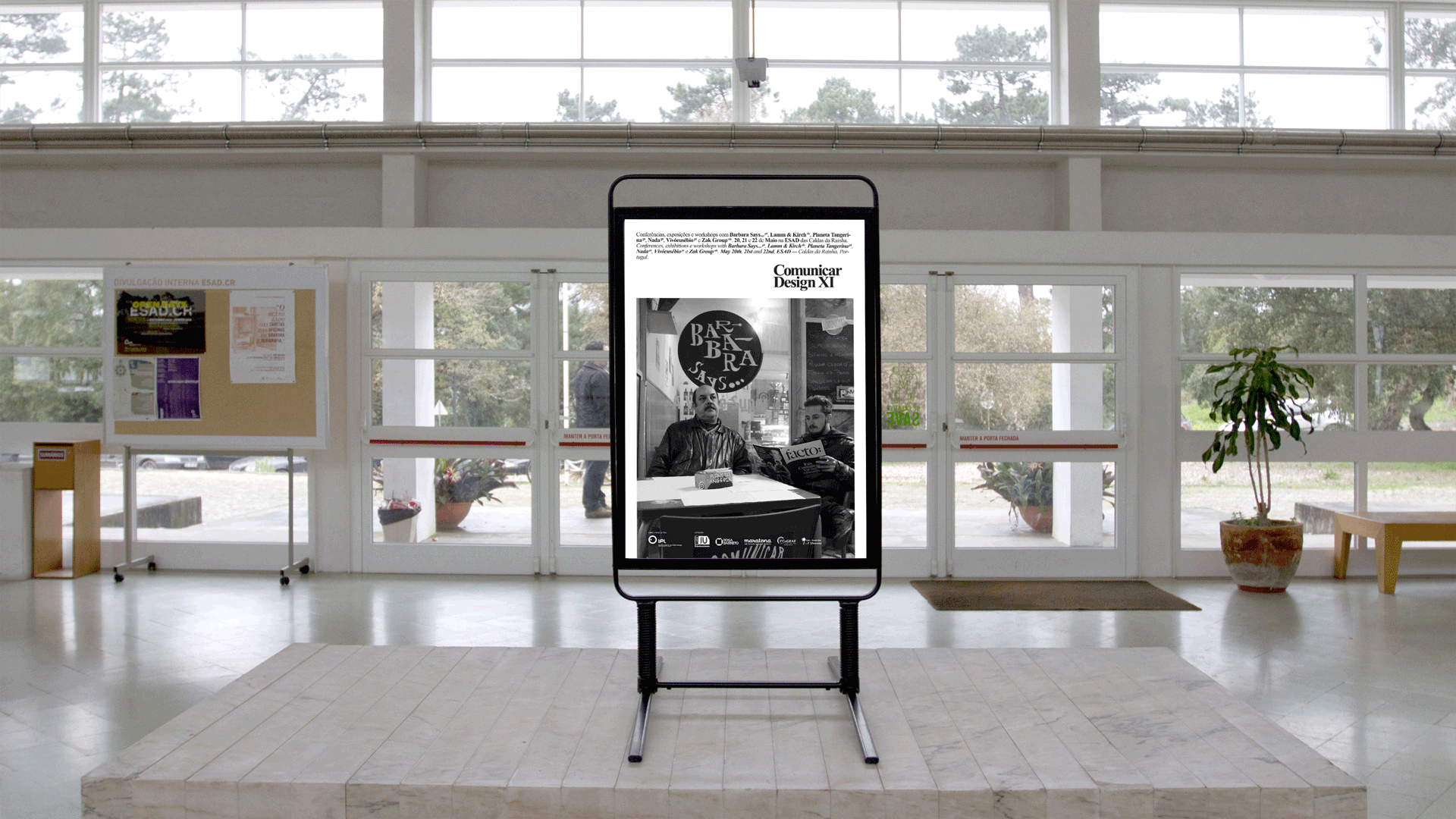
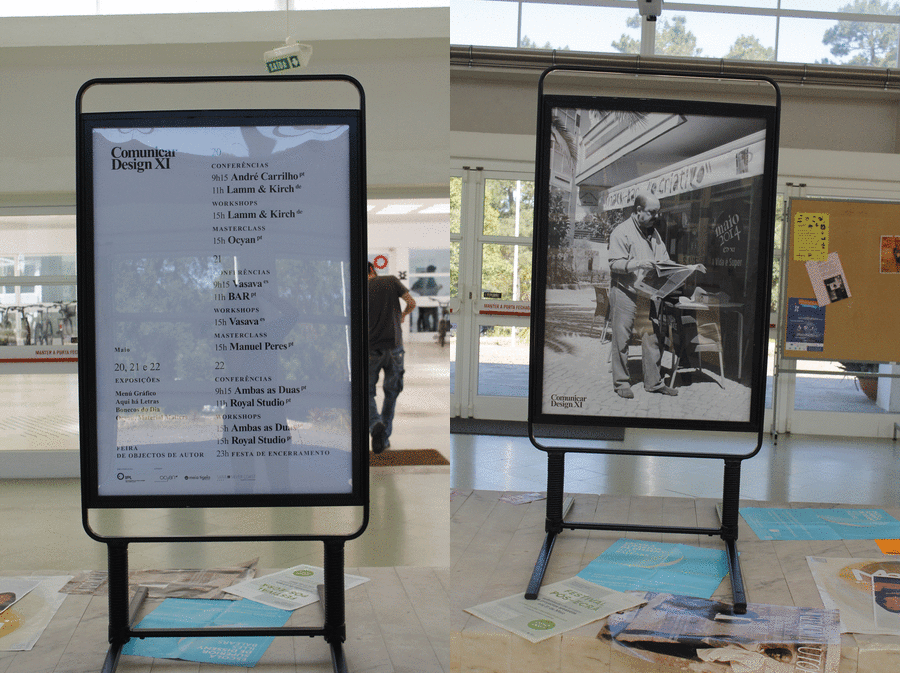
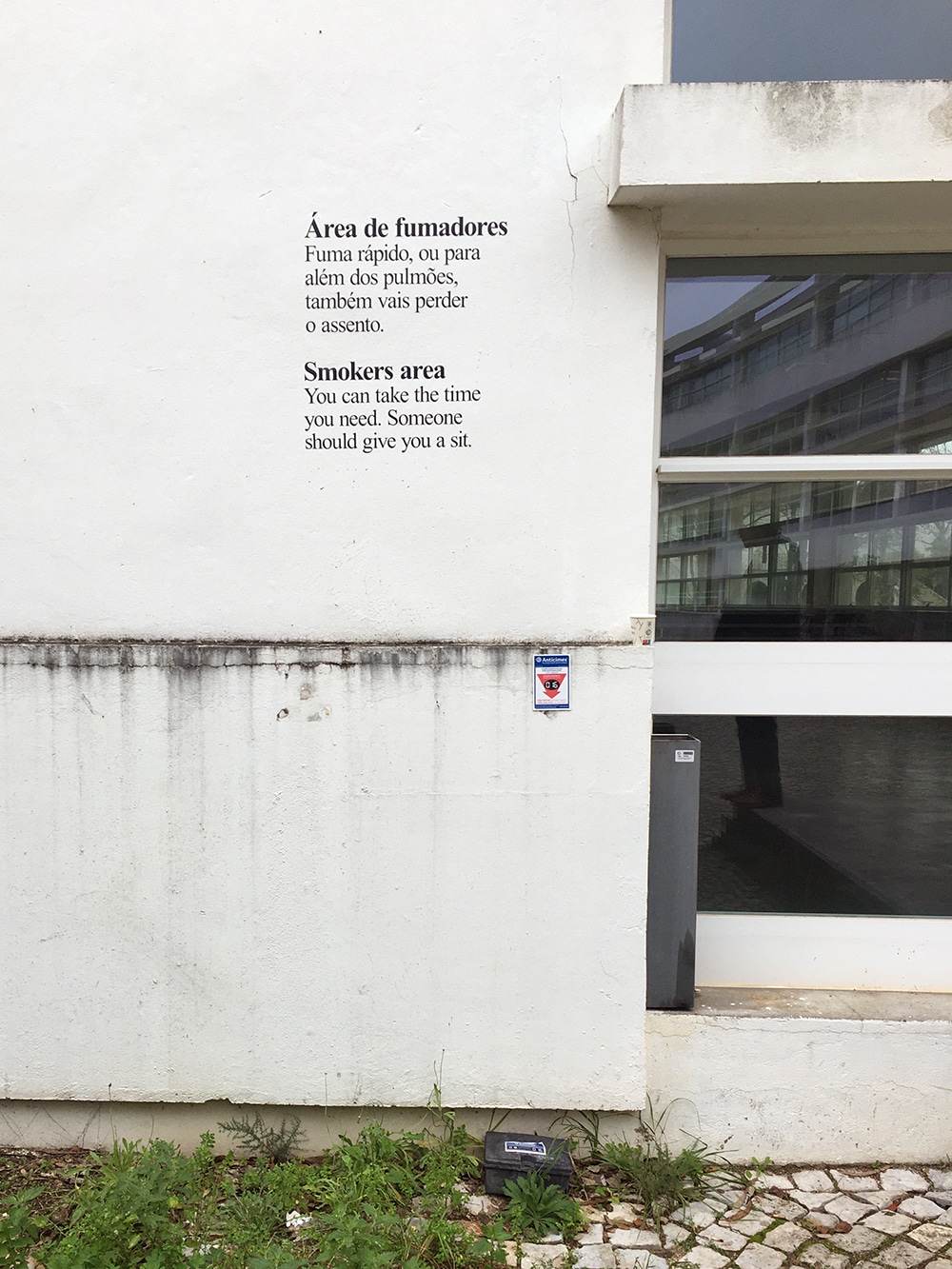
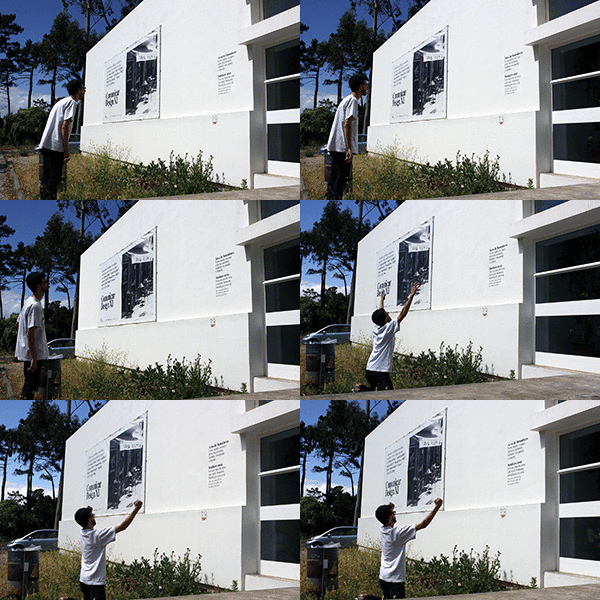
Outdoor